

 Acrylic On CanvasWallArtCubism
 1920
1920 81.0 x 60.0 cm
 레이나 소피아 국립 미술관
작가가 직접 캔버스에 손으로 그린 유화 작품으로, 원하는 크기와 액자로 맞춤 제작해 드립니다. ( 프린트 판매로 전환 디지털 이미지 판매 채널로 전환)





























작품의 원본 비율을 그대로 유지하는 프리셋 사이즈 중에서 선택해 보세요.

액자나 벽면 크기에 맞춰 필요한 가로와 세로 길이를 입력해 주세요. 본 작품은 수작업으로 제작되므로, 요청하신 비율에 따라 작가가 그림의 가장자리를 조금 더 넓게 그리거나 일부를 조정하여 작업할 수 있습니다. 작업 시작 전, 최종 확인을 위해 디지털 목업 이미지를 보내드립니다. 이 페이지에 표시된 이미지는 실제 결과물과 다를 수 있으며, 오직 목업 이미지만이 정확한 결과물을 보여줍니다.
Coffee Grinder
복제본 규격
Juan Gris' "Coffee Grinder and Glass," painted in 1920, isn’t merely a still life; it’s a meticulously constructed microcosm of early 20th-century thought. Emerging from the fertile ground of Cubism, this work represents a pivotal moment in art history – a deliberate fracturing of perspective and form that simultaneously embraced abstraction and retained a surprising degree of recognizable subject matter. The painting captures a fleeting domestic scene: a coffee grinder, a glass, a bottle, a book, and a handbag—everyday objects rendered with an almost unsettling detachment. It’s a visual puzzle, inviting the viewer to reconstruct the scene not through traditional representation, but through intellectual engagement and intuitive understanding.
Gris' approach during this period – often referred to as “Analytical Cubism” – moved beyond simply depicting objects from multiple viewpoints. Instead, he sought to dissect them into their fundamental geometric components, then reassemble these fragments within a flattened picture plane. The painting exemplifies this process brilliantly. The coffee grinder is not realistically rendered; it’s broken down into angular planes of color and line, suggesting its mechanical function without offering a literal depiction. Similarly, the glass appears fragmented, reflecting light in an almost crystalline manner, while the bottle and handbag are reduced to their essential shapes. Yet, despite this deconstruction, Gris masterfully orchestrates these disparate elements into a remarkably balanced composition. The use of black tones – a hallmark of his style during this time – anchors the painting, providing a grounding counterpoint to the vibrant hues and fractured forms.
The color palette is deliberately restrained yet intensely evocative. Gris employs a sophisticated interplay of browns, blues, greens, and yellows, creating a sense of depth and luminosity. The strategic use of black not only defines the forms but also adds a layer of melancholy and introspection – reflecting the artist’s own experiences during this period of personal upheaval. The inclusion of seemingly mundane objects—the coffee grinder, the glass, the handbag—holds symbolic weight. They represent the rhythms of daily life in Paris, a city that served as the epicenter of artistic innovation at the time. The presence of the book hints at intellectual pursuits and the pursuit of knowledge, while the bottle suggests indulgence and pleasure. The painting’s title, “Le moulin à café,” further reinforces this connection to Parisian culture.
Juan Gris' "Coffee Grinder and Glass" stands as a testament to his unique artistic vision. It embodies the spirit of Cubism – a radical departure from traditional representation that paved the way for future generations of artists. His ability to synthesize geometric abstraction with recognizable subject matter, coupled with his masterful use of color and composition, cemented his place as one of the most influential figures in 20th-century art. Reproductions of this work offer a captivating glimpse into a world where reality is fragmented, yet harmony can still be achieved through careful observation and artistic ingenuity. It’s a piece that continues to resonate with viewers today, prompting reflection on the nature of perception, representation, and the beauty found in the everyday.
"Coffee Grinder"은(는) Green to Violet Spectrum 톤에 가깝습니다.
카탈로그에서 후안 그리스의 "Coffee Grinder"은(는) WallArt로 분류되어 있습니다. 이 카테고리를 통해 유사한 작품들을 찾아보실 수 있습니다.
저작권과 관련하여, "Coffee Grinder"은(는) 퍼블릭 도메인 - 저작권 보호 기간이 만료되었습니다 상태입니다.

1887 - 1927 , 스페인
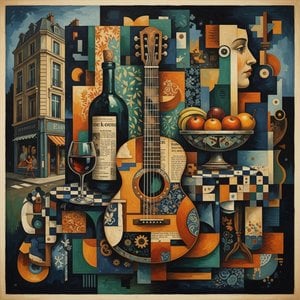
Master the vibrant world of Synthetic Cubism with our expert guide. Explore the revolutionary techniques of Picasso and Braque, from collage to color, and discover how this movement redefined modern art for collectors and connoisseurs alike.

Unveil the radical revolution of Cubism. Explore how masters like Picasso and Braque redefined modern art through fragmented forms and geometric abstraction, offering profound insights for discerning collectors of fine art history and masterpieces.

Embark on a journey through the revolutionary world of Cubism. Discover how masters like Picasso redefined perspective through Analytical and Synthetic techniques in this expert-led guide for art enthusiasts and collectors.

Explore the profound evolution of Cubism through an expert analysis of Pablo Picasso's revolutionary works. From Analytical to Synthetic Cubism, discover the techniques that redefined modern art and learn how to curate these iconic masterpieces for your private collection.

 실제 크기로 보기
 보내기
보내기 공유하기
공유하기
 상세 보기
상세 보기 가이드 보기

 이미지 다운로드
 유사 작품 더 보기
 X-레이
X-레이 슬라이드 쇼 보기
 Q&A
Q&A 통계 정보
통계 정보 상세 보기
상세 보기









 유리 옵션은 110cm 미만 크기에서만 선택 가능합니다.


