
 Oil On CanvasWallArtExpressionism
 1957Early Modern
 75.0 x 50.0 cm
 국립 미술관 (National Gallery of Victoria)
빠른 제작과 다양한 마감 옵션을 제공하는 박물관 품질의 지클레이 또는 캔버스 프린트. ( 손으로 그린 그림 구매 디지털 이미지로 전환)





























작품의 원본 비율을 유지하는 미리 설정된 크기 중에서 선택하세요.

특정 프레임이나 공간에 맞춰 직접 치수를 입력하실 수 있습니다. 선택하신 사이즈가 원본 이미지의 비율과 일치하지 않을 경우, 작품을 크롭(자르기)하거나 이미지를 대칭 또는 단색 채우기로 확장하여 제작합니다. 제작 시작 전, 최종 확인을 위해 디지털 목업이 전송됩니다.
화면상의 미리보기는 실제 크롭이나 확장 상태를 반영하지 않으므로, 최종 구도는 오직 목업을 통해서만 정확하게 확인하실 수 있습니다.
맞춤 사이즈 제작도 가능하지만, 원본 비율을 유지하기 위해서는 사전 정의된 목록에서 치수를 선택하시는 것을 권장합니다.

Niña sujetando un pavo
복제본 크기
Joy St Clair Hester's 1957 work, “Niña sujetando un pavo” (Girl Holding a Turkey), isn’t merely a depiction of a young girl and a bird; it’s a carefully constructed tableau brimming with unspoken emotion and a haunting sense of introspection. Painted during a period of profound personal struggle for the artist – marked by illness and the shadow of her father's early death – the piece resonates with a quiet melancholy that transcends its simple subject matter. Hester, a pivotal figure in Australian Modernism, masterfully employed the stark simplicity of ink and wash to capture not just physical likeness but also the subtle nuances of psychological state. The painting feels less like a portrait and more like a captured moment of vulnerability, inviting viewers into a private world of contemplation.

Hester's signature style is immediately recognizable in “Niña sujetando un pavo.” She eschewed the vibrant colors favored by many of her contemporaries, opting instead for a predominantly monochrome palette dominated by deep browns, blacks, and muted greens. This deliberate restriction forces the viewer to focus on the expressive power of line – long, fluid strokes that delineate form with remarkable precision. The artist’s use of ink is particularly noteworthy; it's applied with a confident hand, creating a sense of immediacy and urgency. The layering of washes adds depth and texture, while the deliberate lack of sharp edges contributes to the painting’s dreamlike quality. Hester’s technique isn’t about replicating reality but rather conveying an emotional truth through controlled marks on the surface.
The inclusion of the turkey itself is laden with symbolic weight. Traditionally associated with abundance, domesticity, and even sacrifice – particularly during Thanksgiving – its presence here introduces a layer of complexity. The girl’s expression, subtly melancholic yet not overtly sorrowful, suggests a detachment from these conventional associations. She holds the bird with a quiet stillness, as if contemplating its significance or perhaps simply acknowledging its presence without fully understanding it. Some interpret this as a reflection on the burdens of family and tradition, while others see it as an exploration of isolation within a domestic setting. The painting’s overall mood evokes a sense of unease—a feeling that something is subtly amiss beneath the surface of everyday life.
To fully appreciate “Niña sujetando un pavo,” it’s crucial to understand the context in which it was created. Joy St Clair Hester lived a life marked by personal tragedy and artistic struggle. Diagnosed with Hodgkin’s lymphoma, she faced her own mortality while navigating the challenges of being a female artist in a predominantly male-dominated art world. Her membership in the Heide Circle and the Angry Penguins—groups known for their experimental approach to art and their engagement with social and political issues—further shaped her artistic vision. Her work often grappled with themes of loss, loneliness, and the fragility of human existence – themes that are powerfully conveyed in this evocative portrait. The painting stands as a poignant testament to Hester’s ability to transform personal pain into enduring works of art.


1920 - 1960 , 호주

Explore the profound artistry of graphite drawing. Discover professional techniques for mastering depth, texture, and detail through a lens of art history, from classical sketches to modern masterpieces. Elevate your understanding of the pencil medium with our expert guide.
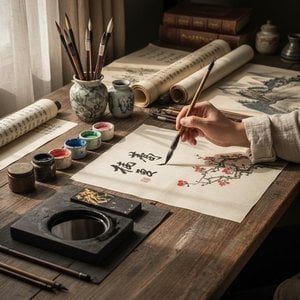
Embark on a sophisticated exploration of ink wash painting and Sumi-e. Uncover the profound historical lineages, Zen philosophies, and technical mastery behind this timeless medium in our authoritative guide for fine art enthusiasts.

Elevate your artistic practice with this expert guide to mastering the line. Discover advanced techniques in graphite, charcoal, and contour drawing designed for art students seeking technical precision and expressive depth in their fine art studies.


 미리보기
미리보기
 공유하기
공유하기 공유하기
공유하기
 상세 정보
상세 정보 가이드 보기

 다운로드
다운로드
 유사 작품
유사 작품 X-레이
X-레이 슬라이드 쇼
 통계 정보
통계 정보 더 보기
더 보기









 유리 옵션은 110cm 미만 크기에서만 선택 가능합니다.


