
x


작품의 원본 비율을 유지하는 미리 설정된 크기 중에서 선택하세요.

특정 프레임이나 공간에 맞도록 직접 크기를 입력할 수 있습니다. 선택하신 크기가 원본 이미지의 비율과 일치하지 않는 경우, 작품을 자르거나 추가적인 손으로 그린 요소를 사용하여 그림을 확장합니다. 제작 시작 전 승인을 위해 디지털 목업을 보내드립니다.
화면 미리 보기는 실제 자르기 또는 확장을 반영하지 않습니다. 최종 구성은 목업을 통해서만 정확하게 확인하실 수 있습니다.
맞춤 크기 제작도 가능하지만, 원본 비율을 유지하기 위해 사전 정의된 목록에서 크기를 선택하시는 것을 권장합니다.

Untitled
복제본 크기

Born in Zaragoza, Spain, in 1747, Joseph Beraton’s life unfolded during a pivotal period of artistic transition – the waning years of the Baroque era and the burgeoning rise of Neoclassicism. His early training under José Luzán, a prominent Aragonese painter, laid the foundation for his technical skill, yet it was his time in Madrid, studying with Francisco Bayeu and ultimately the Royal Academy of Fine Arts, that truly shaped his artistic trajectory. Beraton’s career wasn't marked by grand commissions or widespread fame during his lifetime; instead, he primarily served as a chamber painter, meticulously crafting portraits and landscapes for aristocratic patrons, a role that afforded him a degree of stability but also limited exposure to the broader art world.
Beraton’s artistic style is often described as a nuanced blend of influences. Initially rooted in the academic traditions instilled by Bayeu – characterized by precise draftsmanship, balanced compositions, and a restrained palette – his work gradually absorbed elements of Neoclassicism while retaining a distinctly Spanish sensibility. He demonstrated a remarkable ability to capture subtle nuances of expression, particularly in his portraits, imbuing his subjects with an air of dignified reserve. His landscapes, though less frequently exhibited, reveal a keen eye for detail and a sensitivity to the natural world, often depicting scenes of rural Spain bathed in soft light.
Beraton’s life as a chamber painter offered both opportunities and constraints. He worked primarily on commission, producing works tailored to the specific tastes and requirements of his patrons. This demanded versatility – he was expected to adapt his style and subject matter to suit diverse requests. His correspondence reveals a pragmatic approach to his profession, navigating the complexities of courtly life and managing his finances with careful precision. The documents unearthed by Jesús López Ortega in Badajoz provide invaluable insights into the daily routines and social interactions of an artist operating within the confines of a royal household.
The archival materials shed light on Beraton’s family life, including his marriage to Manuela Marcelina Sánchez de Ahumada and the birth of their two children. His will, meticulously detailing his assets and bequeathing them to his heirs, underscores the importance of familial stability within his world. The meticulous record-keeping reveals a man deeply invested in securing his family’s future, a testament to the social realities of 18th-century Spain.
While primarily known for his oil paintings, Beraton's contribution to the field of lithography is noteworthy. He collaborated with José de Madrazo on the ambitious “Views of the Royal Sites,” a series of over 300 prints documenting the palaces, gardens, and landscapes associated with the Spanish monarchy. This project showcased Beraton’s technical proficiency in printmaking and provided him with a wider audience for his work. The meticulous detail evident in these lithographs reflects his dedication to accuracy and his understanding of the medium's potential.
Furthermore, Beraton produced drawings for the *Retratos de los españoles ilustres* series, commissioned by the Calcografía Nacional. His skillful rendering of figures like Juan José de Austria demonstrates his ability to capture likenesses with remarkable precision and a subtle awareness of character. These engravings served as important visual representations of Spain’s elite during a period of significant political and social change.
Despite not achieving widespread fame during his lifetime, Joseph Beraton's work holds considerable historical significance. He represents a crucial link between the Baroque and Neoclassical traditions in Spanish art, embodying the stylistic shifts that characterized the late 18th century. His meticulous draftsmanship, nuanced portraits, and contributions to lithography offer valuable insights into the artistic practices of his time. The recent research conducted by Jesús López Ortega has brought renewed attention to Beraton’s oeuvre, solidifying his place as a significant, albeit often overlooked, figure in Spanish art history.
His work serves as a reminder that artistic success is not always measured by immediate recognition but can be found in the quiet dedication and skillful execution of one's craft. Beraton’s legacy lies not only in his individual paintings and prints but also in his representation of a specific social milieu – the world of a chamber painter navigating the complexities of courtly life and artistic patronage.

1747 - 1796 , Spain

Explore the profound artistry of graphite drawing. Discover professional techniques for mastering depth, texture, and detail through a lens of art history, from classical sketches to modern masterpieces. Elevate your understanding of the pencil medium with our expert guide.

Elevate your artistic practice with this expert guide to mastering the line. Discover advanced techniques in graphite, charcoal, and contour drawing designed for art students seeking technical precision and expressive depth in their fine art studies.

Discover the sophisticated mastery of graphite drawing. Explore expert techniques for achieving profound depth, intricate texture, and hyper-realistic detail through the alchemy of carbon, curated for the discerning art enthusiast and professional collector.
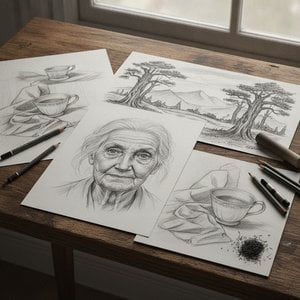
Explore the profound elegance of pencil and charcoal sketching. Discover how masters use line, shadow, and chiaroscuro to capture light and texture, bridging the gap between preparatory studies and timeless fine art masterpieces.

Explore the profound beauty of the sketch. Discover how masters use charcoal and graphite to capture raw emotion, anatomical precision, and fluid movement, bridging the gap between ephemeral marks and eternal oil masterpieces.


최신 미술 뉴스, 특별 혜택 및 인테리어 아이디어를 가장 먼저 만나보세요.
프로젝트에 대해 알려주시면 저희 미술 전문가들이 맞춤형 아트 제안 3가지를 전달해 드립니다.
당신만을 위한 맞춤형 옵션 3가지를 무료로 추천해 드립니다!


 미리보기
미리보기
 프린트 구매
 공유하기
공유하기 공유하기
공유하기
 상세 정보
상세 정보

 다운로드
다운로드
 유사 작품
유사 작품 X-레이
X-레이 슬라이드 쇼


 더 보기
더 보기






































 유리 옵션은 110cm 미만 크기에서만 선택 가능합니다.


