
 Oil On CanvasWallArtNeo-Classical Style
 176519th Century
 101.0 x 126.0 cm
빠른 제작과 다양한 마감 옵션을 제공하는 박물관 품질의 지클레이 또는 캔버스 프린트. ( 손으로 그린 그림 구매 디지털 이미지로 전환)





























작품의 원본 비율을 유지하는 미리 설정된 크기 중에서 선택하세요.

특정 프레임이나 공간에 맞춰 직접 치수를 입력하실 수 있습니다. 선택하신 사이즈가 원본 이미지의 비율과 일치하지 않을 경우, 작품을 크롭(자르기)하거나 이미지를 대칭 또는 단색 채우기로 확장하여 제작합니다. 제작 시작 전, 최종 확인을 위해 디지털 목업이 전송됩니다.
화면상의 미리보기는 실제 크롭이나 확장 상태를 반영하지 않으므로, 최종 구도는 오직 목업을 통해서만 정확하게 확인하실 수 있습니다.
맞춤 사이즈 제작도 가능하지만, 원본 비율을 유지하기 위해서는 사전 정의된 목록에서 치수를 선택하시는 것을 권장합니다.

Mrs.George Watson (Elizabeth Oliver)
복제본 크기
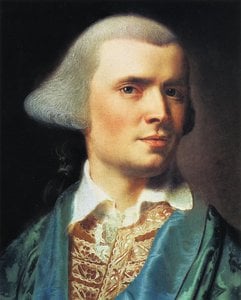
John Singleton Copley’s “Mrs. George Watson (Elizabeth Oliver),” completed in 1765, stands as a cornerstone of American Neoclassical portraiture – a testament to the burgeoning artistic identity taking shape across the Atlantic. This exquisite painting, measuring 101 x 126 cm and executed in oil on canvas, transcends mere representation; it’s an immersive experience of elegance, poised serenity, and the subtle complexities of early 18th-century society. Copley, a Boston native born in 1738, was a true innovator, bridging the gap between European artistic traditions and the developing sensibilities of his American contemporaries. His meticulous attention to detail – evident in the delicate folds of Elizabeth Oliver’s pink silk gown adorned with white lace, the realistic rendering of her flowers, and the carefully considered composition – speaks volumes about his dedication to capturing not just a likeness, but the very soul of his subject.
Copley’s work is firmly rooted in the principles of Neo-Classicism, a style that swept through Europe and America during this period. Inspired by the art and architecture of ancient Greece and Rome, Neo-Classicism championed order, balance, and moral virtue. Notice how Copley employs clean lines, symmetrical proportions, and a restrained palette to evoke a sense of timeless beauty and intellectual seriousness. The composition itself – Elizabeth Oliver standing beside a wall, a symbol of domesticity and societal status – aligns perfectly with the movement’s emphasis on idealized forms and rational thought. This wasn't simply about depicting a fashionable woman; it was about presenting an image of refined virtue, reflecting the values prized within the upper echelons of colonial society.
Copley's technical skill is immediately apparent in the painting’s remarkable detail. He employed a technique known as “impasto,” applying thick layers of paint to create texture and depth, particularly noticeable in the fabric of Elizabeth Oliver’s dress. The subtle gradations of light and shadow – achieved through careful observation and masterful brushwork – lend a luminous quality to the portrait, enhancing the subject's beauty and creating an illusion of three-dimensionality. The artist’s ability to capture the sheen of silk, the delicate petals of the flowers, and the soft texture of Elizabeth Oliver’s skin demonstrates his profound understanding of materials and their effects under light.
Beyond its aesthetic qualities, “Mrs. George Watson” offers a fascinating glimpse into the social and cultural landscape of 1765 Boston. Elizabeth Oliver’s attire – the pink silk gown, the white lace, the flowers – were all indicators of wealth and status within colonial society. The setting itself, a simple wall, suggests a domestic scene, emphasizing her role as a wife and homemaker. Copley's portrait was commissioned by George Watson, reflecting the importance of social connections and familial alliances in this era. The painting’s eventual acquisition by the Smithsonian American Art Museum underscores its significance not just as an artistic masterpiece, but also as a valuable historical document.
Experience the timeless beauty and artistry of “Mrs. George Watson (Elizabeth Oliver)” with a meticulously crafted hand-painted reproduction from WahooArt.com. Our reproductions are created using traditional techniques, ensuring exceptional detail and color accuracy, faithfully capturing Copley’s original vision. Perfect for adorning your home or office, this artwork is more than just decoration; it's an investment in art history.

1738 - 1815 , 영국

Discover the profound elegance of Neoclassicism. Explore how the pursuit of order, symmetry, and Greco-Roman ideals created a timeless aesthetic for collectors seeking grandeur and intellectual depth in fine art and architecture.

Explore the raw energy of Jean-Michel Basquiat and Neo-Expressionism. Discover how urban rebellion redefined modern art through a lens of luxury, identity, and profound emotional intensity for the discerning collector.

Discover the profound beauty of Academic Classicism. Explore the principles of order, anatomical precision, and the enduring legacy of Neoclassical masters through this expert guide to timeless elegance and technical perfection in fine art.


 미리보기
미리보기
 공유하기
공유하기 공유하기
공유하기
 상세 정보
상세 정보

 다운로드
다운로드
 유사 작품
유사 작품 X-레이
X-레이 슬라이드 쇼
 통계 정보
통계 정보 더 보기
더 보기









 유리 옵션은 110cm 미만 크기에서만 선택 가능합니다.


