
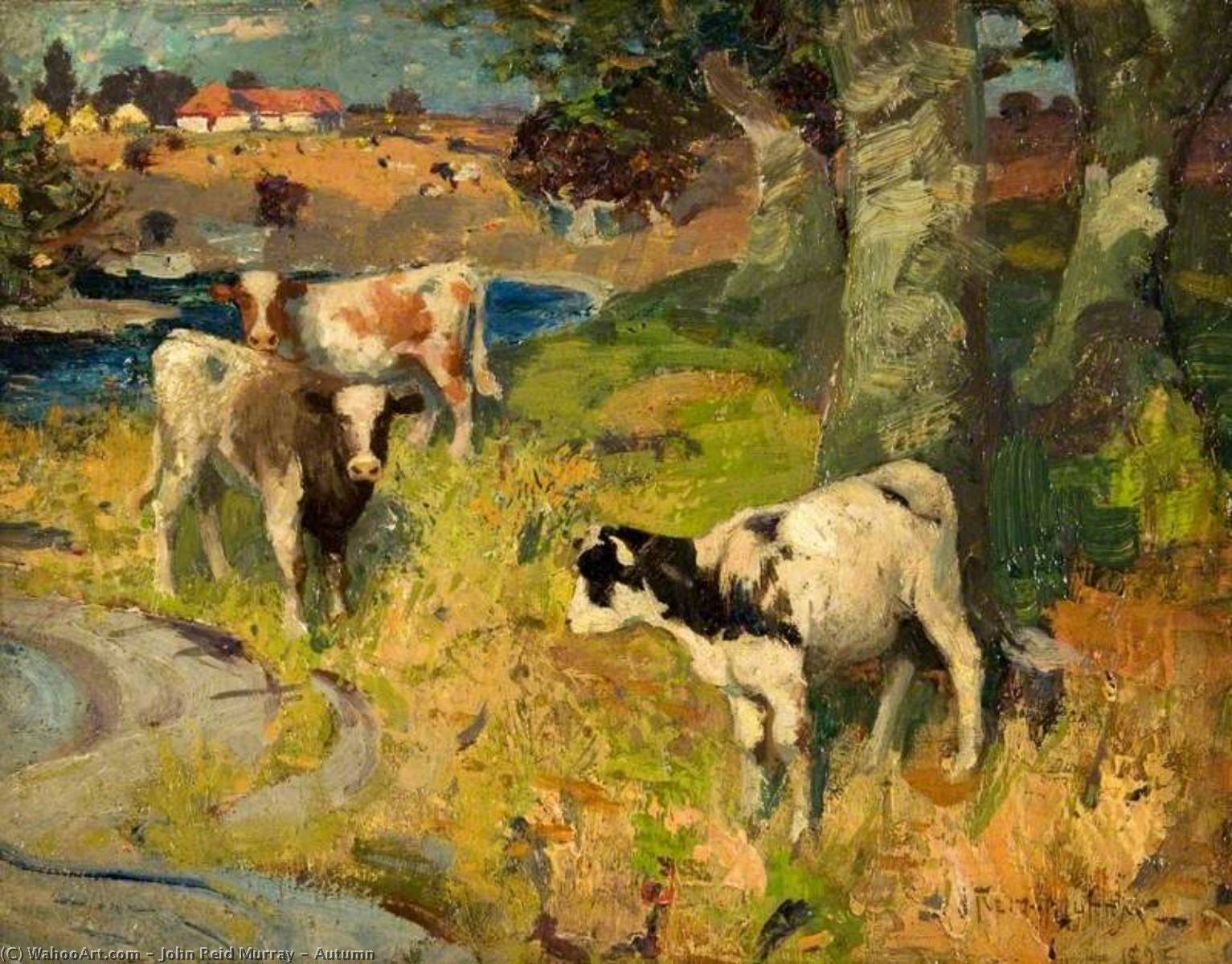
 1895
1895 31.0 x 41.0 cm
빠른 제작과 다양한 마감 옵션을 제공하는 박물관 품질의 지클레이 또는 캔버스 프린트. ( 손으로 그린 그림 구매 Switch to Digital Image)
작품의 원본 비율을 유지하는 미리 설정된 크기 중에서 선택하세요.

특정 프레임이나 공간에 맞춰 직접 치수를 입력하실 수 있습니다. 선택하신 사이즈가 원본 이미지의 비율과 일치하지 않을 경우, 작품을 크롭(자르기)하거나 이미지를 대칭 또는 단색 채우기로 확장하여 제작합니다. 제작 시작 전, 최종 확인을 위해 디지털 목업이 전송됩니다.
화면상의 미리보기는 실제 크롭이나 확장 상태를 반영하지 않으므로, 최종 구도는 오직 목업을 통해서만 정확하게 확인하실 수 있습니다.
맞춤 사이즈 제작도 가능하지만, 원본 비율을 유지하기 위해서는 사전 정의된 목록에서 치수를 선택하시는 것을 권장합니다.

Autumn
복제본 크기

John Reid Murray remains a captivating figure in the annals of British landscape painting, an artist whose work serves as a window into the serene and pastoral rhythms of a bygone era. Born in 1861 in Helensburgh, Scotland, Murray’s artistic journey was shaped by a profound connection to the natural world and a rigorous academic foundation. His early training at the Glasgow School of Art provided him with the technical scaffolding necessary to pursue his vision, which he later refined through studies in Antwerp. This blend of Scottish sensibility and Continental technique allowed him to develop a style that was both grounded in local tradition and enriched by the broader European landscape movement. Throughout his life, Murray sought to capture not just the physical geography of the countryside, but the very atmosphere—the light, the moisture, and the quietude—that defines the soul of the rural landscape.
The evolution of Murray’s work reflects a deep engagement with the masters of the past, particularly the enduring legacies of the Renaissance and Baroque traditions. His approach to painting was characterized by an emphasis on tonal harmony and atmospheric perspective, techniques that allowed him to create a sense of immense depth within the confines of his canvases. Rather than pursuing the grand, dramatic narratives often found in contemporary academic art, Murray turned his gaze toward the intimate and the fleeting. He found profound beauty in the mundane: the gentle movement of a shepherd tending his flock, the soft light of a moonrise over a tranquil lake, or the sturdy presence of calves in a verdant meadow. His ability to distill these moments into visual poetry made him a master of pastoral reverie.
To observe a Murray landscape is to witness a masterclass in subtle texture and luminous color. His palette was often dominated by muted, earthy tones—deep greens, rich browns, and soft blues—which he blended with extraordinary skill to evoke the shifting moods of the seasons. There is a deliberate, understated quality to his brushwork; he eschewed ostentation in favor of a meticulous attention to detail that honors his subject matter. In his works, one can find the delicate texture of sheep's fleece or the precise glint of dew on a blade of grass, rendered with an accuracy that speaks to a lifetime of disciplined observation. This commitment to realism was never merely about imitation, but rather about capturing the essence of life within the landscape.
His stylistic influences were both local and international, drawing strength from the works of artists such as Henry and Hornel. This connection to the "Glasgow Boys" era infused his work with a certain modern sensitivity toward light and color, even as he maintained a respect for classical composition. The following elements define his technical mastery:
Though his life was relatively short, ending in 1906, John Reid Murray left behind a body of work that continues to resonate with those drawn to the tranquility of the natural world. His exhibitions at prestigious institutions—including the Royal Scottish Academy, the Royal Academy, and the Royal Glasgow Institute of Fine Arts—cemented his reputation as a significant contributor to the British landscape tradition. By focusing on the quiet grandeur of the English and Scottish countryside, he participated in a long-standing tradition of pastoral art that celebrates the enduring beauty of the land.
Today, Murray’s paintings are cherished not only for their technical excellence but for the emotional sanctuary they provide. In an increasingly frenetic world, his depictions of shepherds, lambs, and moonlit meadows offer a moment of profound contemplation. His historical significance lies in his ability to bridge the gap between the rigorous academic traditions of the 19th century and a more intimate, emotive way of seeing the world, ensuring that his vision of a peaceful, pastoral existence remains eternally preserved in oil and canvas.

 미리보기
미리보기
 공유하기
공유하기 공유하기
공유하기
 상세 정보
상세 정보

 다운로드
다운로드
 유사 작품
유사 작품 X-레이
X-레이 슬라이드 쇼
 Stats
Stats 더 보기
더 보기






































 유리 옵션은 110cm 미만 크기에서만 선택 가능합니다.


