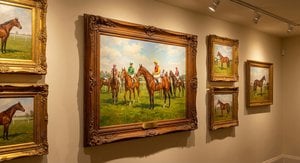
John James Syer: A Master of Atmospheric English Landscapes
John James Syer, a name perhaps less familiar than his contemporaries Turner or Constable, nevertheless stands as a significant figure in 19th-century British landscape painting. Born in Warwickshre in 1815 and passing away in 1885, Syer’s artistic journey was marked by a quiet dedication to capturing the subtle beauty of England's coastlines, castles, and churches – scenes imbued with a profound sense of atmosphere and mood. His work, often characterized by its restrained palette and meticulous detail, reveals an artist deeply influenced by the Romantic movement while forging his own distinctive style.
Syer’s early artistic development was profoundly shaped by William James Müller, a German painter whose tonal approach to landscape became a cornerstone of Syer's technique. Müller championed the use of subtle gradations of tone and color to create an illusion of depth and atmosphere – a philosophy that resonated deeply with Syer’s own aesthetic sensibilities. This influence is readily apparent in many of Syer’s paintings, where he skillfully employs light and shadow to evoke a sense of tranquility and contemplation. However, unlike Müller, Syer's work never achieved the vibrant color palette of his mentor; instead, he favored muted greens, blues, and browns, prioritizing mood over bold chromatic expression.
Syer’s career unfolded primarily in Bristol and Liverpool, cities that offered a rich source of inspiration for an artist fascinated by the natural world. He began exhibiting his work at the Royal Academy in 1832, steadily gaining recognition for his evocative depictions of coastal scenes, particularly those along the North Wales coast. His paintings of Scarborough, with their dramatic cliffs and turbulent seas, are among his most celebrated works, capturing the raw power and beauty of the English coastline. He also produced a series of meticulously rendered watercolors of castles – including Windsor Castle – showcasing his ability to convey both architectural detail and atmospheric perspective. The River Avon was another frequent subject, offering opportunities for serene depictions of flowing water and verdant riverside landscapes.
Beyond his individual talent, Syer’s work reflects the broader artistic currents of his time. The Romantic movement, with its emphasis on emotion, imagination, and the sublime beauty of nature, provided a crucial framework for his artistic vision. However, Syer's approach was more restrained than that of some of his contemporaries, prioritizing observation and tonal harmony over dramatic gesture or emotional intensity. His paintings are not characterized by sweeping vistas or heroic figures; instead, they offer intimate glimpses into specific moments in time – quiet scenes of coastal life, weathered castles, and the gentle flow of rivers.
Key Works and Notable Paintings
- Sunderland Piers (1843): This dramatic oil painting captures a bustling harbor scene at Sunderland, showcasing Syer’s ability to convey both visual accuracy and emotional resonance. The work is notable for its rich textures and evocative mood, reflecting the dynamism of the industrial port.
- View Of Windsor Castle (circa 1860): A striking abstract geometric painting featuring black, white, and grey layers. This piece demonstrates Syer’s experimentation with form and structure, aligning him with the emerging trends of Cubism and Constructivism – a surprising departure from his predominantly tonal landscapes.
- The River Avon (circa 1870): A serene watercolor depicting the River Avon, capturing its tranquil beauty and reflecting Syer’s mastery of light and shadow. The painting evokes a sense of peace and contemplation, inviting the viewer to lose themselves in the scene.
- Scheveningen (circa 1860): A quintessential coastal scene depicting the Dutch fishing village of Scheveningen. This work exemplifies Syer’s ability to capture the subtle nuances of light and atmosphere, creating a sense of realism and tranquility.
Influences and Artistic Style
Syer's artistic style was deeply rooted in the Romantic tradition, but he developed his own distinctive approach characterized by meticulous detail, restrained color palettes, and an emphasis on atmospheric perspective. He drew inspiration from William James Müller’s tonal landscape painting, adopting his use of subtle gradations of tone to create a sense of depth and mood. However, unlike Müller, Syer's work never achieved the vibrant color palette of his mentor; instead, he favored muted greens, blues, and browns, prioritizing mood over bold chromatic expression.
His compositions are typically characterized by a quiet stillness, reflecting a contemplative approach to landscape painting. He eschewed dramatic gestures or heroic figures, opting instead for intimate glimpses into specific moments in time – capturing the subtle beauty of everyday scenes. Syer’s meticulous attention to detail is evident in his renderings of architectural features, such as the weathered stones of castles and churches, as well as the textures of coastal cliffs and riverbanks.
Historical Significance and Legacy
While John James Syer may not be as widely recognized as some of his contemporaries, his work holds a significant place in British landscape painting. His paintings offer valuable insights into the artistic sensibilities of the Victorian era, reflecting both the influence of Romanticism and the emergence of new aesthetic trends. Syer’s dedication to capturing the subtle beauty of England's landscapes – from its dramatic coastlines to its historic churches – demonstrates a profound appreciation for the natural world.
His legacy lies not in grand, sweeping vistas or revolutionary techniques, but rather in his quiet mastery of tonal harmony and atmospheric perspective. Syer’s paintings continue to resonate with viewers today due to their understated elegance and skillful execution, offering a glimpse into a bygone era and reminding us of the enduring power of landscape painting.



 미리보기
미리보기
 프린트 구매
 공유하기
공유하기 공유하기
공유하기
 상세 정보
상세 정보

 다운로드
다운로드
 유사 작품
유사 작품 X-레이
X-레이 슬라이드 쇼
 더 보기
더 보기






































 유리 옵션은 110cm 미만 크기에서만 선택 가능합니다.