


이 페이지에 표시된 작품은 저작권법의 보호를 받으며, 이에 따라 동일한 복제품을 제작하거나 판매하는 것은 법으로 금지되어 있습니다. 이러한 권리 보호는 다음과 같은 국제 협약에 따라 시행됩니다. 베른 협약 또한 다음에서 명시하는 법률을 포함한 국내법에 의해 보호됩니다. 미국 저작권법 제17조.
이 방식은 저작권 보호를 받는 예술 작품을 복제하거나 그대로 재현하는 것이 아니기에 저작권 규정을 완벽히 준수합니다. 대신, 이는 창의적인 재해석의 과정을 거칩니다. 즉, 원작에서 영감을 받되 원작과 동일하지 않은 새로운 회화 작품을 의미합니다.
빠른 제작과 다양한 마감 옵션을 제공하는 박물관 수준의 지클레이 및 캔버스 프린트. ( 수작업 채색 복제본 주문하기 디지털 이미지로 전환)
작품의 원본 비율을 그대로 유지하는 프리셋 사이즈 중에서 선택해 보세요.

액자나 벽면 크기에 맞춰 필요한 가로와 세로 길이를 입력해 주세요. 프린트는 원본 이미지보다 크게 제작할 수 없으며 오직 자르는 것만 가능하므로, 비율이 다른 사이즈를 선택할 경우 이미지의 일부가 잘려 나갈 수 있습니다. 인쇄 작업에 들어가기 전, 최종 확인을 위해 디지털 목업을 보내드립니다. 이 페이지에 표시된 이미지는 실제 잘리는 영역을 나타내지 않으며, 오직 목업을 통해서만 정확한 확인이 가능합니다.
John Schanck
복제본 크기

The story of John James Masquerier is one inextricably linked to the dramatic shifts of the late eighteenth and early nineteenth centuries. Born in October 1778 in Chelsea, London, his very identity was a tapestry of cultural intersections; he was a British painter of French Huguenot descent, a heritage that placed him at the heart of the intellectual and political currents flowing between London and Paris. His childhood was marked by the vibrant, often perilous atmosphere of the French Revolution. Taken to Paris by his mother, Barbot, who had established a school in the prestigious Champs-Elysées, the young Masquerier found himself a witness to history in its most raw and violent forms. While studying painting under the esteemed François Vincent at the Tuileries Academy, he stood amidst the chaos of the massacre of the Swiss Guards in 1792. This early exposure to political upheaval did more than just shape his biography; it instilled in his art a profound sensitivity to the human condition during times of profound transition.
The volatility of the era eventually forced a retreat to England, but Masquerier carried the spirit of Paris with him. In 1792, he enrolled at the Royal Academy Schools, marking the beginning of a formal engagement with the British artistic establishment. His early talent was so striking that a self-portrait, executed when he was a mere fourteen years old, was presented to King George III—a testament to a precocious mastery of form and character that would define his professional trajectory.
Masquerier’s oeuvre is characterized by a remarkable ability to capture both the monumental and the intimate. While he is perhaps most celebrated for his portraiture, his work serves as a vital historical record of the era's most notable figures. His brush possessed a unique capacity for psychological depth, moving beyond mere likeness to reveal the inner essence of his subjects. This was particularly evident in his depictions of individuals such as Lady Hamilton, where he utilized masterful chiaroscuro to create a sense of drama and presence that commanded the viewer's attention.
Beyond the studio, Masquerier acted as an ocular chronicler of the French Revolution. Driven by an acute impulse to document the zeitgeist, he produced meticulous sketches from personal observation of pivotal, often harrowing, events. His drawings captured the trial of the King and the tragic demise of the Princesse de Lamballe, offering a visceral connection to the era's political tremors. This duality—the ability to execute refined, neoclassical portraiture while maintaining the gritty, observational eye of a war correspondent—distinguishes his contribution to the history of art.
As his career progressed, Masquerier’s reputation expanded through significant commissions and high-profile patronage. His work reached new heights of complexity with large-scale religious and historical compositions, such as The Incredulity of St. Thomas, which served as a monumental altar-piece in Westminster. Even as he navigated the complexities of the Napoleonic era, his connection to the French political landscape remained a source of artistic inspiration; he famously claimed to have produced a drawing of Napoleon Bonaparte during his time as First Consul.
The enduring significance of John James Masquerier lies in his role as a bridge between cultures and eras. He was an artist who did not merely paint the world around him but felt its pulse. Through his portraits, he immortalized the faces of the Enlightenment and the Napoleonic age, while his sketches preserved the fleeting, often terrifying moments of revolutionary change. His legacy remains a profound testament to the power of art to act as both a mirror to society and a vessel for historical memory.

1778 - 1855 , United Kingdom

Step into the haunting dreamscapes of Giorgio de Chirico. Explore 25 iconic Metaphysical and Surrealist masterpieces, from enigmatic shadows to timeless architecture. Find inspiration for museum-quality art reproductions and decor. Discover all masterpieces on WahooArt.com.
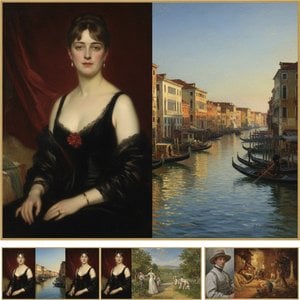
존 싱어 사전트의 대표작 25선을 만나보세요. 인상주의 초상화부터 빛과 색채가 아름다운 유화까지, 그의 예술 세계를 탐험하고 WahooArt에서 고품질 아트 프린트로 거실 장식을 완성하세요. 지금 온라인 컬렉션을 확인하세요!

Explore the life & art of Sir James Jebusa Shannon, a leading Victorian portrait painter. Discover his elegant style, technical mastery, and lasting influence on British art. Shop high-quality reproductions at WahooArt.
 미리보기
미리보기
 공유하기
공유하기 공유하기
공유하기
 상세 정보
상세 정보 가이드 보기

 다운로드
다운로드
 유사 작품 더 보기
 X-레이
X-레이 슬라이드 쇼 보기
 질의응답
질의응답
 통계 정보
통계 정보
 더 보기
더 보기






































 유리 옵션은 110cm 미만 크기에서만 선택 가능합니다.


