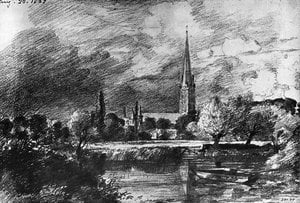
Acrylic On PaperWallArtRomanticism
 1835Modern
 218.0 x 181.0 cm
 스코틀랜드 국립 미술관
빠른 제작과 다양한 마감 옵션을 제공하는 박물관 품질의 지클레이 또는 캔버스 프린트. ( 손으로 그린 그림 구매 이미지 구매)





























작품의 원본 비율을 유지하는 미리 설정된 크기 중에서 선택하세요.

특정 프레임이나 공간에 맞춰 직접 치수를 입력하실 수 있습니다. 선택하신 사이즈가 원본 이미지의 비율과 일치하지 않을 경우, 작품을 크롭(자르기)하거나 이미지를 대칭 또는 단색 채우기로 확장하여 제작합니다. 제작 시작 전, 최종 확인을 위해 디지털 목업이 전송됩니다.
화면상의 미리보기는 실제 크롭이나 확장 상태를 반영하지 않으므로, 최종 구도는 오직 목업을 통해서만 정확하게 확인하실 수 있습니다.
맞춤 사이즈 제작도 가능하지만, 원본 비율을 유지하기 위해서는 사전 정의된 목록에서 치수를 선택하시는 것을 권장합니다.

View on the River Severn at Worcester
복제본 크기
John Constable's “View on the River Severn at Worcester,” painted in 1835, isn’t merely a depiction of a river scene; it’s a carefully constructed meditation on light, movement, and the quiet drama of everyday life. This monochrome study, rendered with an almost obsessive attention to detail, invites us into a fleeting moment captured by one of England's most beloved Romantic landscape painters. The work immediately possesses a captivating immediacy – a sense that we are witnessing something just as it unfolded, a transient glimpse into the heart of rural Worcestershire.
Constable’s genius lies in his ability to imbue the commonplace with profound emotional resonance. He eschewed grand vistas and heroic subjects, instead focusing on the subtle shifts of light and atmosphere within a familiar landscape. The River Severn here isn't presented as an imposing force of nature but rather as a living entity, its surface rippling with reflected light and shadowed depths. The composition is deliberately unheroic; a cluster of small boats – likely working vessels – are scattered along the riverbank, their presence suggesting industry and human connection within this vast natural setting. The dense bank of trees in the background provides a grounding element, framing the scene and hinting at the surrounding countryside.
What immediately strikes the viewer is Constable’s masterful use of line. This isn't a painting dominated by color; instead, it’s a symphony of graphite or charcoal strokes – thick, thin, broken, and continuous – that build up texture and define form with remarkable precision. Short, choppy lines mimic the turbulence of the water, while longer, more deliberate marks delineate the shapes of the boats and the tangled branches of the trees. The artist doesn’t simply *draw* the scene; he *sculpts* it with his lines, creating a tactile quality that invites close inspection. The layering of these lines generates an incredible sense of depth and volume, transforming what could have been a flat depiction into a remarkably three-dimensional space.
“View on the River Severn at Worcester” is deeply rooted in the Romantic movement, but it avoids the bombast often associated with that style. Instead of dramatic storms or sublime mountains, Constable offers a quieter, more intimate exploration of nature's beauty and its relationship to human experience. The implied activity – the boats, the figures – suggests a sense of urgency, perhaps even a hint of potential distress, adding a subtle layer of emotional complexity. The painting’s monochrome palette further enhances this feeling, stripping away distractions and focusing our attention on the tonal variations that define form and atmosphere. It's a scene brimming with quiet observation, inviting us to contemplate the beauty of the ordinary and the fleeting nature of time.
Painted in 1835, this work reflects Constable’s evolving artistic philosophy. He was increasingly interested in capturing atmospheric conditions – light, mist, and rain – as they directly impacted the appearance of his subjects. His dedication to observing nature firsthand, often working *en plein air*, is evident in the painting's immediacy and authenticity. Constable’s focus on depicting familiar landscapes, particularly those surrounding his home in Suffolk, was a deliberate rejection of academic conventions that favored grand historical or mythological scenes. He sought to capture the essence of England – its beauty, its rhythms, and its people – with honesty and emotional depth. This particular sketch was created during a brief visit to Worcestershire, where Constable was delivering lectures on landscape painting, solidifying his position as a leading voice in the English art world.


1776 - 1837 , 영국

Explore the profound legacy of John Constable. Discover how his mastery of light, atmosphere, and the English landscape redefined Romanticism through timeless, museum-quality oil reproductions for discerning collectors.

Explore the profound beauty of American art history. From the Hudson River School to iconic landscapes, discover a curated journey through the masterpieces that defined a nation's spirit and the enduring legacy of American Romanticism.

Explore the profound beauty of American Romanticism. Discover how the Hudson River School captured the wild frontier through masterful landscapes, exploring the legacy of legends like Thomas Cole and Asher Durand in this deep dive into art history.


 미리보기
미리보기
 공유하기
공유하기 공유하기
공유하기
 상세 정보
상세 정보

 다운로드
다운로드
 유사 작품
유사 작품 X-레이
X-레이 슬라이드 쇼
 더 보기
더 보기









 유리 옵션은 110cm 미만 크기에서만 선택 가능합니다.