A Pastoral Vision: Unveiling John Constable’s *Mill at Gillingham, Dorset*
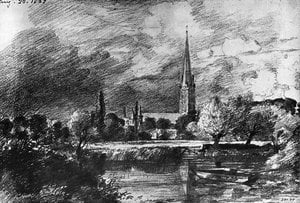
Mill at Gillingham, Dorset*, painted in 1805 by the celebrated British Romantic artist John Constable, is more than just a landscape; it's an evocative poem rendered in oil paint. This captivating scene transports viewers to the idyllic English countryside, offering a glimpse into a world of tranquil beauty and harmonious rural life.
Subject & Composition: A Scene of Rural Industry
The painting centers around a working watermill nestled within the rolling hills of Dorset, England. Constable masterfully arranges the composition to draw the eye through layers of visual interest. The mill itself, a focal point of activity, is flanked by lush vegetation and figures engaged in daily life – likely villagers tending to their tasks. A cascading waterfall adds dynamic energy to the scene, while the gently flowing river reflects the sky’s subtle hues. The overall effect is one of balanced harmony between nature and human endeavor.
Style & Technique: Romanticism and Observational Mastery
Constable was a pivotal figure in the Romantic movement, and *Mill at Gillingham, Dorset* exemplifies its core tenets. Unlike the highly polished academic paintings of his time, Constable embraced a more naturalistic approach. His technique is characterized by loose, expressive brushwork that captures the fleeting effects of light and atmosphere. He wasn’t striving for photographic realism but rather an emotional response to the landscape. The use of *chiaroscuro* – the dramatic interplay of light and shadow – adds depth and dimensionality to the scene, enhancing its visual impact.
Historical Context: A Nostalgic Gaze at a Changing Landscape
Painted during a period of significant social and industrial change in England, Constable’s work can be seen as a nostalgic response to the encroaching modernization of rural life. He sought to preserve the beauty of the countryside before it was irrevocably altered by progress. His frequent visits to Gillingham, facilitated by his friendship with local clergyman John Fisher, allowed him to intimately study and document the region's unique character. The painting reflects a deep connection to place and a reverence for the traditions of rural England.
Symbolism & Emotional Impact: Harmony and Tranquility
The watermill itself is symbolic of industry and human ingenuity working in concert with nature. It represents a sustainable way of life, deeply rooted in the land. The surrounding landscape evokes feelings of peace, tranquility, and harmony. Constable’s masterful use of color – earthy tones punctuated by vibrant greens and blues – further enhances this emotional resonance. *Mill at Gillingham, Dorset* invites viewers to escape the pressures of modern life and reconnect with the restorative power of nature.
A Timeless Masterpiece for Your Space
- For Art Lovers: A quintessential example of Romantic landscape painting by one of Britain’s most beloved artists.
- For Collectors: An investment in a historically significant and aesthetically captivating work of art.
- For Interior Designers: A versatile piece that complements a wide range of interior styles, bringing warmth, serenity, and a touch of English countryside charm to any space. Its muted palette works beautifully in both traditional and contemporary settings.
Owning a reproduction of *Mill at Gillingham, Dorset* allows you to experience the beauty and emotional power of Constable’s vision firsthand, adding a timeless masterpiece to your collection or home décor.