Oil On PanelRomanticism
 1815
1815 34.0 x 51.0 cm
빠른 제작과 다양한 마감 옵션을 선택할 수 있는 박물관 수준의 지클레이 및 캔버스 프린트. ( 수작업 채색 복제본 주문하기 디지털 이미지 판매 채널로 전환)





























작품의 원본 비율을 그대로 유지하는 프리셋 사이즈 중에서 선택해 보세요.

특정 프레임이나 공간에 맞춰 직접 치수를 입력하실 수 있습니다. 선택하신 사이즈가 원본 이미지의 비율과 일치하지 않을 경우, 작품을 크롭(자르기)하거나 이미지를 대칭 또는 단색 채우기로 확장하여 제작합니다. 제작 시작 전, 최종 확인을 위해 디지털 목업이 전송됩니다.
화면상의 미리보기는 실제 크롭이나 확장 상태를 반영하지 않으므로, 최종 구도는 오직 목업을 통해서만 정확하게 확인하실 수 있습니다.
맞춤 사이즈 제작도 가능하지만, 원본 비율을 유지하기 위해서는 사전 정의된 목록에서 치수를 선택하시는 것을 권장합니다.

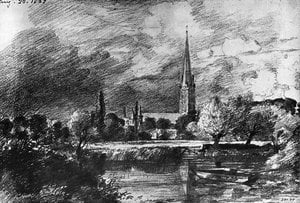
Dedham Vale, with a view to Langham church from the fields just east of Vale Farm, East Bergholt
복제본 규격
John Constable's *Dedham Vale*, painted in 1815, isn’t merely a landscape; it’s a deeply personal and profoundly evocative meditation on the English countryside. Born in East Bergholt, Suffolk – a village inextricably linked to his life and art – Constable sought to capture not just what he saw, but the very *feeling* of that land. This oil-on-panel work, measuring 34 x 51 cm, offers a serene yet subtly complex view of Vale Farm, framed by the distant Langham church, a scene intimately familiar to the artist and, through him, now accessible to us across centuries.
The composition is deceptively simple. A gently undulating field dominates the foreground, punctuated by scattered trees that act as silent witnesses to the passage of time. Cows graze peacefully, adding a touch of domesticity to this otherwise wild vista, while sheep dot the landscape, their forms rendered with Constable’s characteristic sensitivity to light and texture. Above, a cloudy sky – not aggressively dark, but imbued with a sense of atmospheric depth – suggests both the beauty and the unpredictable nature of the English weather. It's a scene that invites contemplation, drawing the viewer into its quiet tranquility.
Constable’s genius lay not just in his subject matter but in his masterful technique. He was a pioneer in capturing the fleeting effects of light and shadow – a skill he honed through countless outdoor studies. Notice how he employs broken brushstrokes, layering thin washes of color to create an illusion of shimmering atmosphere. The paint itself seems to vibrate with reflected light, particularly on the distant hills and the water below. This technique, developed largely through his direct observation of nature, moved away from the static, idealized landscapes favored by earlier artists.
The use of white pigment is crucial here. Constable liberally applied it to create highlights and suggest the sparkle of sunlight on water and foliage – a technique that adds an incredible sense of realism and vibrancy. He wasn’t simply painting what he *saw*; he was conveying how light *felt* upon the landscape, imbuing the scene with a palpable energy.
*Dedham Vale* firmly places Constable within the burgeoning Romantic movement of the early 19th century. Rejecting the rigid rules of academic art, the Romantics prioritized emotion, imagination, and a deep connection to nature. Constable’s work echoes the sentiments of artists like Claude Lorrain, whose idealized landscapes provided an initial inspiration, but he ultimately forged his own distinct style – one rooted in direct observation and intensely personal feeling.
The painting's subject matter—the humble beauty of rural England—was deliberately chosen to resonate with a public increasingly disillusioned by the industrial revolution. It offered a nostalgic glimpse into a simpler time, a celebration of the natural world’s restorative power. The inclusion of Langham church subtly anchors the scene within a recognizable community, reinforcing the painting's connection to place and identity.
More than two centuries after its creation, *Dedham Vale* continues to captivate viewers with its serene beauty and emotional resonance. It’s a reminder of the enduring power of nature and the artist's ability to capture its essence on canvas. WahooArt.com offers meticulously crafted oil painting reproductions that faithfully recreate Constable’s masterful technique and atmospheric depth, allowing you to bring this iconic landscape into your home or office.
Owning a reproduction is not simply acquiring an image; it's gaining access to a moment in art history—a testament to John Constable’s vision and his profound love for the English countryside. It’s a piece that speaks of peace, tranquility, and the timeless beauty of the natural world.


1776 - 1837 , 영국

Explore the profound legacy of John Constable. Discover how his mastery of light, atmosphere, and the English landscape redefined Romanticism through timeless, museum-quality oil reproductions for discerning collectors.

 실제 크기로 보기
 보내기
보내기 공유하기
공유하기
 상세 보기
상세 보기 가이드 보기

 이미지 다운로드
 유사 작품 더 보기
 X-레이
X-레이 슬라이드 쇼 보기
 통계 정보
통계 정보 상세 보기
상세 보기









 유리 옵션은 110cm 미만 크기에서만 선택 가능합니다.