

 OilWallArtDüsseldorf School
 183619th Century
 880.0 x 720.0 cm
 Kunstpalast
작가가 직접 캔버스에 손으로 그린 유화 작품으로, 원하는 크기와 액자로 맞춤 제작해 드립니다. ( 프린트 판매로 전환 디지털 이미지 판매 채널로 전환)





























작품의 원본 비율을 그대로 유지하는 프리셋 사이즈 중에서 선택해 보세요.

액자나 벽면 크기에 맞춰 필요한 가로와 세로 길이를 입력해 주세요. 본 작품은 수작업으로 제작되므로, 요청하신 비율에 따라 작가가 그림의 가장자리를 조금 더 넓게 그리거나 일부를 조정하여 작업할 수 있습니다. 작업 시작 전, 최종 확인을 위해 디지털 목업 이미지를 보내드립니다. 이 페이지에 표시된 이미지는 실제 결과물과 다를 수 있으며, 오직 목업 이미지만이 정확한 결과물을 보여줍니다.
Studio Scene
복제본 규격
In the vibrant heart of the Düsseldorf School of Painting, Johann Peter Hasenclever captures a moment that transcends mere studio documentation to become a profound manifesto of artistic identity. His 1836 masterpiece, Studio Scene, presents us with a meticulously orchestrated tableau vivant, where a group of genre painters—including A. Greven, J. P. Hasenclever, J. Wilms, O. Grashof, W. Heine, and C. Engel von der Rabenau—assemble as if upon a theatrical stage. This is not a scene drawn from the lofty, often detached realms of classical literature, but one rooted deeply in the textures and truths of real life. The atmosphere is electric with the energy of a creative collective, a lively gathering where the boundaries between work, camaraderie, and social interaction blur into a single, spirited event.
The composition invites the viewer to wander through a workshop teeming with life and movement. At least twelve individuals populate this expansive space, some caught in quiet moments of reading or contemplation, others engaged in animated dialogue or focused on their artistic endeavors. The room is a rich tapestry of objects: chairs are scattered with an organic randomness that suggests a lived-in space, while dining tables, books, and vases add layers of domesticity to the professional setting. There is a palpable sense of a workshop where ideas are not just conceived but shared, making the painting feel less like a static portrait and more like a breathing, pulse-filled environment.
Beneath the surface humor of this gathering lies a sophisticated layer of symbolic rebellion. Hasenclever uses the studio setting to signal a definitive break from the outdated pedagogical traditions of the past. We see the discarded remnants of an era defined by poetic-idealist history painting: ancient plaster models of fencers, manikins, and even a knight’s helmet are cast aside, treated as relics of a bygone way of seeing. By depicting these items as mere clutter or even refuse, the artist asserts that the new generation of painters is no longer interested in the artificiality of academic tropes.
Instead, the true focus shifts to the gritty, authentic details of contemporary existence. The presence of mouse traps and a map of Düsseldorf serves as a poignant reminder that the true subject of art lies in the tangible world—the space between the pawn shop and the brothel. Even the use of a large history painting as a mere wind trap or a rag to wipe brushes is a daring statement of intent. It suggests that the grand, sweeping narratives of the past are being repurposed to serve the practical, immediate needs of a new, realistic art form. This programmatic approach transforms the studio into a site of revolution, where the "true image" of life is being painstakingly constructed.
For the discerning collector or interior designer, Studio Scene offers much more than visual splendor; it provides a window into a pivotal moment of art history. The painting’s technique, characterized by its ability to render both the grand scale of the gathering and the minute, humorous details of the studio, makes it a captivating centerpiece for any sophisticated collection. It evokes an emotional response of warmth, intellectual curiosity, and a sense of belonging to a community of creators.
Integrating a high-quality reproduction of this work into a space brings with it an aura of cultured vitality. It is a piece that rewards prolonged study, revealing new layers of meaning—from the camaraderie of the "drinking companions" to the profound shift in art theory—each time it is viewed. Whether placed in a library, a creative studio, or a grand living area, Studio Scene serves as a timeless tribute to the enduring power of realism and the beautiful chaos of the creative process.
"Studio Scene"은(는) Conversation 용도로 추천하며, Living Room 공간에 배치하기 좋습니다.
"Studio Scene"에서 Earthy 색조는 Playful 분위기를 자아냅니다.
Johann Peter Hasenclever의 "Studio Scene"은(는) Living Room에 추천하는 작품입니다. 이 제안은 작품의 주제, 색상 및 분위기를 바탕으로 합니다.


1810 - 1853 , Germany
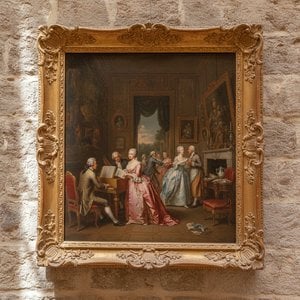
Explore the profound beauty of genre painting. From Dutch Golden Age masters to global traditions, discover how artists capture the essence of everyday life through masterful realism and timeless storytelling.
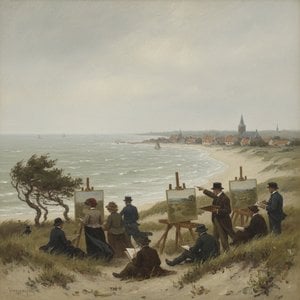
Explore the ethereal beauty of the Hague School art movement. Discover how masters like Jan Weissenbruch captured the atmospheric grey light of the Dutch landscape through unparalleled technique and emotive, misty compositions.

 실제 크기로 보기
 보내기
보내기 공유하기
공유하기
 상세 보기
상세 보기 가이드 보기

 이미지 다운로드
 유사 작품 더 보기
 X-레이
X-레이 슬라이드 쇼 보기
 통계 정보
통계 정보 상세 보기
상세 보기









 유리 옵션은 110cm 미만 크기에서만 선택 가능합니다.


![Stanze Vaticane - The School Of Athens (detail) [05] — 라파엘로, Renaissance](/media/artworks/images-thumb/ca/a9/caa9f9be8f76fbc617e906bfcb543fad.jpg)


