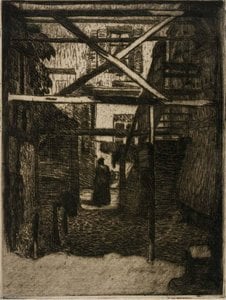
Post-Impressionism
 1911
1911 18.0 x 25.0 cm
작가가 직접 캔버스에 손으로 그린 유화 작품으로, 원하는 크기와 액자로 맞춤 제작해 드립니다. ( 프린트 판매로 전환 디지털 이미지 판매 채널로 전환)
작품의 원본 비율을 그대로 유지하는 프리셋 사이즈 중에서 선택해 보세요.

액자나 벽면 크기에 맞춰 필요한 가로와 세로 길이를 입력해 주세요. 본 작품은 수작업으로 제작되므로, 요청하신 비율에 따라 작가가 그림의 가장자리를 조금 더 넓게 그리거나 일부를 조정하여 작업할 수 있습니다. 작업 시작 전, 최종 확인을 위해 디지털 목업 이미지를 보내드립니다. 이 페이지에 표시된 이미지는 실제 결과물과 다를 수 있으며, 오직 목업 이미지만이 정확한 결과물을 보여줍니다.
The Aviators
복제본 규격
Jerome Blum의 작품 세계에서 "The Aviators"은 post-impressionist techniques, early aviation era themes, urban progress & technology, humanity amidst change, american modernism's edge, exploring industrial growth라는 주제와 더불어 Post-Impressionism 양식을 보여줍니다.
"The Aviators"의 색조는 채도가 Balanced Soft입니다.
Jerome Blum의 "The Aviators"은(는) 퍼블릭 도메인 - 저작권 보호 기간이 만료되었습니다 상태입니다. 저작권 보호 기간은 작가 사후를 기준으로 산정되며, Jerome Blum은(는) 1956년에 작고하였습니다.

Jerome Samuel Blum (1884-1956) wasn’t merely a painter; he was an explorer, both of the world and of his own artistic voice. Born in Chicago amidst the bustling energy of late 19th-century America, Blum's life unfolded as a vibrant tapestry woven with travel, intense observation, and a relentless pursuit of color – a pursuit that ultimately defined his distinctive style. His career, spanning several decades, reveals a fascinating evolution from early academic training to a bold embrace of Fauvist and Post-Impressionistic principles, culminating in a uniquely personal approach to depicting the landscapes and people he encountered.
Blum’s initial artistic education took place at the Francis J. Smith Art Academy and later at the prestigious Art Institute of Chicago. However, it was his 1906 journey to Paris that proved transformative. This immersion in European art, particularly the burgeoning Fauvist movement with its emphasis on intense color and subjective experience, irrevocably altered his perspective. He found himself captivated by the radical departures from traditional representation championed by artists like Matisse and Gauguin – a shift away from muted tones and realistic depictions towards a celebration of pure color and emotional expression. As he described it, Paris became a catalyst for “modernization,” prompting him to shed the constraints of brown and embrace the vibrant spectrum of the rainbow.
Following his Parisian awakening, Blum’s life became inextricably linked with travel. He embarked on extended journeys throughout Europe, North Africa, Cuba, China, and the South Seas – experiences that profoundly shaped his artistic vision. These weren't simply vacations; they were deliberate expeditions into unfamiliar cultures and landscapes. Each journey brought a new palette of colors, textures, and perspectives, which he meticulously absorbed and translated onto canvas. The vibrant hues of Moroccan markets, the dramatic light of the Chinese countryside, and the exotic flora and fauna of the South Pacific all found their way into his paintings, infused with his personal interpretation and emotional resonance.
This constant exposure to new environments wasn’t just about collecting visual data; it was a deeply immersive process. Blum sought to understand the essence of each place through its colors, light, and the lives of its inhabitants. He painted not merely what he *saw*, but what he *felt* – capturing the atmosphere, mood, and spirit of each location with an almost palpable intensity. This approach is particularly evident in works like “The Aviators,” a dynamic etching depicting early aviation, which showcases his ability to convey movement, energy, and a sense of technological wonder.
Blum’s artistic style evolved significantly over time, reflecting the diverse influences he encountered. Initially, his work exhibited a more traditional academic sensibility, characterized by careful draftsmanship and realistic depictions. However, as he embraced Fauvist principles, his paintings became increasingly bold and expressive, marked by vibrant color combinations, loose brushwork, and an emphasis on capturing fleeting moments of light and atmosphere. His use of color was particularly striking – often employing complementary hues to create a sense of visual excitement and dynamism. He wasn’t afraid to experiment with unconventional color palettes, pushing the boundaries of traditional representation and creating paintings that were both visually arresting and emotionally evocative.
His technique also evolved, moving from detailed renderings to looser, more gestural brushstrokes. This shift reflected his growing desire to capture not just the appearance of a subject, but its essence – its feeling and mood. He frequently employed layering techniques, building up color and texture through multiple applications of paint, creating surfaces that were rich in visual interest and depth.
Despite facing challenges during his lifetime, Jerome Blum’s work gradually gained recognition within the American art world. His paintings are now held in several prominent collections, including the Smithsonian American Art Museum and the Archives of American Art. His unique approach to color and his commitment to capturing the spirit of travel have earned him a place as a significant figure in 20th-century American art. He stands as an example of an artist who wasn’t afraid to embrace new influences, experiment with unconventional techniques, and ultimately forge a distinctive artistic identity rooted in personal experience and passionate observation.
Further research into his papers at the Smithsonian Archives reveals a wealth of information about his life and work, including correspondence, sketches, and notes that offer valuable insights into his creative process. The Hollis Taggart Galleries exhibition, “Jerome Blum: Journeys into Color,” showcased a selection of his most compelling paintings, highlighting the vibrant colors and evocative imagery that defined his artistic vision.

1884 - 1956

Explore the vibrant evolution of Post-Impressionism. From Seurat's revolutionary Pointillism to the emotional depth of masters, discover how this movement redefined modern art history through color, structure, and unparalleled creative expression.

Explore the transformative era of Post-Impressionism. Discover how masters like Cézanne and Matisse revolutionized color and form, moving beyond Impressionism to shape modern art history through structural innovation and expressive emotion.

인상주의의 빛나는 찰나와 후기 인상주의의 강렬한 감정을 깊이 있게 탐구합니다. 모네부터 고흐까지, 거장들의 예술적 혁명을 통해 클래식 미술의 정수를 만나보세요. WahooArt는 숙련된 화가들이 100% 수작업으로 재현하는 프리미엄 유화 복제와 맞춤형 초상화 서비스를 통해 당신의 공간에 품격 있는 예술적 가치를 선사합니다.

 실제 크기로 보기
 보내기
보내기 공유하기
공유하기
 상세 보기
상세 보기 가이드 보기

 이미지 다운로드
 유사 작품 더 보기
 X-레이
X-레이 슬라이드 쇼 보기
 통계 정보
통계 정보 상세 보기
상세 보기






































 유리 옵션은 110cm 미만 크기에서만 선택 가능합니다.