
원하는 크기와 액자로 주문 제작되는, 작가들이 직접 캔버스에 손으로 그린 유화 작품입니다. ( 프린트 판매로 전환 디지털 이미지로 전환)
작품의 원본 비율을 유지하는 미리 설정된 크기 중에서 선택하세요.

특정 프레임이나 공간에 맞도록 직접 크기를 입력할 수 있습니다. 선택하신 크기가 원본 이미지의 비율과 일치하지 않는 경우, 작품을 자르거나 추가적인 손으로 그린 요소를 사용하여 그림을 확장합니다. 제작 시작 전 승인을 위해 디지털 목업을 보내드립니다.
화면 미리 보기는 실제 자르기 또는 확장을 반영하지 않습니다. 최종 구성은 목업을 통해서만 정확하게 확인하실 수 있습니다.
맞춤 크기 제작도 가능하지만, 원본 비율을 유지하기 위해 사전 정의된 목록에서 크기를 선택하시는 것을 권장합니다.

The low hours
복제본 크기
“The Low Hours” is a striking artwork by Jean Dubuffet, a pivotal figure in the development of Art Brut – literally “raw art.” This piece exemplifies Dubuffet’s rejection of traditional artistic conventions and his embrace of unconventional materials and techniques. The composition presents a fragmented landscape populated with stylized human figures arranged in an overlapping, collage-like manner. It's characterized by bold outlines, simplified forms, and a stark contrast between black and white, punctuated by splashes of red and blue. The overall effect is energetic, somewhat chaotic, yet possesses an underlying sense of playful abstraction.
Dubuffet’s style defies easy categorization but aligns strongly with Abstract Expressionism and demonstrates influences from Pop Art due to its graphic quality. He deliberately sought inspiration from sources outside the established art world, including children's drawings, graffiti, and tribal art. This approach was central to his concept of Art Brut, which aimed to capture a direct, unfiltered expression of human experience, free from academic training or intellectual constraints.
The technique employed in "The Low Hours" is as unconventional as the subject matter. It appears to involve both painting and collage elements. Visible brushstrokes, stippling, and layering suggest the use of acrylic paint alongside potentially paper or other found materials. The texture created through these varied techniques contributes significantly to the work's tactile quality and raw aesthetic.
Dubuffet developed his Art Brut philosophy in post-World War II France, a period marked by societal upheaval and questioning of established norms. His work was a direct response to what he perceived as the artificiality and intellectualism of mainstream art. He sought instead to tap into a more primal, authentic form of expression – one rooted in instinct and experience rather than learned technique. The use of seemingly crude materials and deliberately “primitive” forms were intended to challenge viewers' expectations and provoke a visceral reaction.
“The Low Hours” evokes a sense of alienation and fragmentation through its disjointed arrangement and simplified forms. The distorted human figures, rather than representing individuals realistically, function as symbolic representations – archetypes embodying aspects of the human condition. The bold colors and dynamic lines create an energetic visual experience that can be both unsettling and captivating. Ultimately, Dubuffet’s work invites viewers to confront their own perceptions of beauty, art, and the complexities of human existence with a refreshing honesty.


1901 - 1985 , 프랑스

Journey through Wassily Kandinsky's 25 most iconic abstract paintings. Explore his revolutionary use of color, form & spiritual expressionism. Find museum-quality Kandinsky reproductions and elevate your home decor with WahooArt.com. Discover all masterpieces on WahooArt.com!

Explore the profound emotional depth of Lyrical Abstraction. Discover how masters like Raymond Parker used color and form to bridge Impressionism and Abstract Expressionism. Learn about this pivotal movement through our expert-led art history guide.

Explore 10 iconic paintings dominated by black tones, from Rembrandt’s chiaroscuro to Goya's dark expressions. Discover the stories behind these masterpieces & find museum-quality art reproductions for your home at .
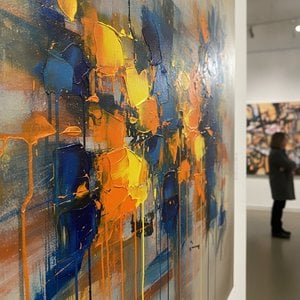
Master the high-impact world of contemporary abstraction. Discover how bold colors, textures, and modern movements like Abstract Expressionism can transform your space with premium, high-energy art curated for the design-conscious professional.

추상표현주의의 심장을 뛰게 한 10대 걸작을 만나보세요. 폴록, 로스코 등 거장의 작품 비하인드 스토리와 예술적 영감을 WahooArt에서! 지금 바로 미술품 컬렉션을 탐험하고, 당신의 공간에 특별한 예술적 감성을 더하세요. WahooArt.com


 미리보기
미리보기
 공유하기
공유하기 공유하기
공유하기
 상세 정보
상세 정보

 다운로드
다운로드
 유사 작품
유사 작품 X-레이
X-레이 슬라이드 쇼
 통계 정보
통계 정보

 더 보기
더 보기






































 유리 옵션은 110cm 미만 크기에서만 선택 가능합니다.


![Abstract Composition [triptych] — Vaclav Vytlacil, Abstract Expressionism](/media/artworks/images-thumb/08/3c/083c0675045645fd42d4e6c6d63f1ced.jpg)


