
 2019Contemporary
 59.0 x 64.0 cm
 시드니 비엔날레
빠른 제작과 다양한 마감 옵션을 제공하는 박물관 품질의 지클레이 또는 캔버스 프린트. ( 손으로 그린 그림 구매 디지털 이미지로 전환)





























작품의 원본 비율을 유지하는 미리 설정된 크기 중에서 선택하세요.

특정 프레임이나 공간에 맞춰 직접 치수를 입력하실 수 있습니다. 선택하신 사이즈가 원본 이미지의 비율과 일치하지 않을 경우, 작품을 크롭(자르기)하거나 이미지를 대칭 또는 단색 채우기로 확장하여 제작합니다. 제작 시작 전, 최종 확인을 위해 디지털 목업이 전송됩니다.
화면상의 미리보기는 실제 크롭이나 확장 상태를 반영하지 않으므로, 최종 구도는 오직 목업을 통해서만 정확하게 확인하실 수 있습니다.
맞춤 사이즈 제작도 가능하지만, 원본 비율을 유지하기 위해서는 사전 정의된 목록에서 치수를 선택하시는 것을 권장합니다.

I Haven
복제본 크기

Born in the heart of Alice Springs, Australia, Janie Nungala (also known as Janie Karpa) carries within her the profound echoes of the Hermannsburg School. Her artistry is not merely a collection of landscapes but a vibrant testament to Aboriginal resilience and an enduring connection to Country. Growing up amidst the arid, breathtaking expanses of Central Australia, Nungala’s creative identity was nurtured by the very soil she depicts. Her journey is deeply intertwined with the legacy of Albert Namatjira, the legendary figure who revolutionized Australian art by bringing the ethereal beauty of the desert vistas to the global stage. Through her work, Nungala continues this lineage, translating the ancient stories of her ancestors into a contemporary visual language that resonates with both local and international audiences.
The foundations of Nungala’s technique were laid organically within the Hermannsburg Lutheran Mission. Rather than seeking formal academic training in distant urban centers, her education was an immersion in the ancestral lands and the wisdom of her elders. This method of learning—rooted in storytelling and a deep observation of the natural world—imbued her work with an authenticity that distinguishes it from more detached explorations of landscape. She absorbed the aesthetic sensibilities championed by Namatjira, specifically the mastery of delicate watercolor washes used to capture the shifting light and atmospheric depth of the Outback. By adopting the use of simplified forms and bold, evocative color palettes, she honors a tradition that rejects European oil painting conventions in favor of a medium that breathes with the fluidity of the Australian landscape.
Nungala’s work serves as a bridge between the physical beauty of the Northern Territory and the urgent socio-political realities facing Aboriginal communities. Her participation in significant cultural exhibitions, such as the 22nd Biennale of Sydney, highlights her role as an artist who uses the landscape to raise awareness about contemporary struggles. Through her art, she explores themes of:
In her contributions to collective projects, such as those with the Iltja Ntjarra Many Hands Art Centre, Nungala’s work becomes part of a larger narrative of survival and strength. Her paintings do more than capture scenery; they act as witnesses to the cycles of dispossession and the powerful assertion of identity. By painting the landscapes of the Northern Territory for those in urban environments, she invites the viewer into a world where the beauty of the earth is inseparable from the struggles and triumphs of its traditional custodians. Through her brush, the desert is not just a place of sand and stone, but a living, breathing entity of immense historical and spiritual significance.

Australia

Commission bespoke art that tells *your* story. WahooArt offers museum-quality reproductions & custom paintings by skilled artists. Expert guidance, personalized service & lasting heirlooms.

Explore the fascinating world of Art Brut – from Dubuffet's origins to its lasting impact on contemporary art. Discover key artists, characteristics & how to collect this powerful form of self-taught expression.
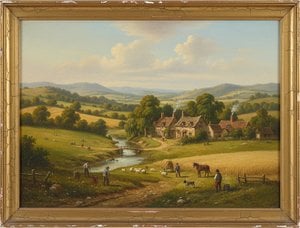
Explore the rich history of rural life in painting! Discover Impressionist masterpieces, Italian Macchiaioli scenes & the enduring appeal of pastoral landscapes. Find your perfect artwork at WahooArt.

Explore the captivating world of 19th-century landscape painting! Discover renowned artists like Friedrich & Monet, key movements, and find the perfect artwork to bring nature's serenity into your home. Expert insights at WahooArt.

Explore the captivating landscapes of George Elbert Burr, a pioneer of American Tonalism. Discover his masterful etchings, drypoints & watercolors – and learn about collecting this influential artist's work.


 미리보기
미리보기
 공유하기
공유하기 공유하기
공유하기
 상세 정보
상세 정보

 다운로드
다운로드
 유사 작품
유사 작품 X-레이
X-레이 슬라이드 쇼
 통계 정보
통계 정보 더 보기
더 보기









 유리 옵션은 110cm 미만 크기에서만 선택 가능합니다.


