작가 약력
A Witness to the Telling Moments: The World of Jane Dickson
Jane Dickson, born in Chicago in 1952, is an artist whose work functions as a vibrant, often unsettling chronicle of American culture’s undercurrents. Her paintings aren't grand statements about history; they are intimate observations—the small, telling moments that define a time and place. This dedication to the overlooked began early, Dickson herself noting a childhood impulse to “locate myself within a chaotic family” through image-making. That initial need for definition blossomed into a lifelong project of mapping the psychogeography of American experience, particularly as it unfolded within the dynamic, often abrasive landscape of New York City. After studying at institutions including the École Nationale Supérieure des Beaux-Arts in Paris and Harvard University, Dickson arrived in New York in 1977, a city then “burning, broke, and dangerous,” as she describes it. This was not a place for polite aesthetics; it demanded a raw, immediate response, and Dickson found hers in the neon glare of Times Square.
Forged in Counterculture: Early Work and Collective Spirit
Dickson’s arrival coincided with a surge of artistic ferment in downtown New York. She quickly became immersed in the city's alternative art scene, taking a job programming visuals for the first digital billboard in Times Square—a pivotal experience that would profoundly shape her aesthetic. This wasn’t simply a commercial endeavor; it was an opportunity to intervene in public space, to disrupt the flow of consumer imagery with something unexpected. She soon became involved with artist collectives like Fashion Moda, Collaborative Projects (Colab), ABC No Rio, and Group Material, organizations dedicated to challenging conventional artistic boundaries and fostering direct engagement with the community. Colab, in particular, proved formative, culminating in landmark exhibitions such as *The Times Square Show* in 1980—a sprawling, DIY spectacle that launched the careers of artists like Jean-Michel Basquiat, Keith Haring, and Kiki Smith. Dickson’s participation wasn't merely as an exhibitor; she was a key organizer, embodying the collaborative spirit of the era. This period instilled in her a deep commitment to art as a social practice, a means of questioning power structures and amplifying marginalized voices.
The Constructed World and its Psychological Freight
Dickson’s paintings are instantly recognizable for their distinctive style—a blend of hyperreal detail and unsettling surrealism. She employs unusual surfaces like AstroTurf, vinyl, sandpaper, felt, and carpet, materials that carry their own implicit references and textural possibilities. These aren't neutral grounds; they actively contribute to the work’s meaning, evoking the artificiality and psychological weight of the environments she depicts. Her subjects are often drawn from the spectacle of urban life: Times Square (a recurring motif throughout her career), demolition derbies, carnivals, suburban homes, and highways. These aren't idyllic scenes; they are charged with a sense of unease, hinting at the darker undercurrents beneath the surface of American culture. Dickson’s work examines “the constructed world, and its psychological freight, the social structuring of desire and its disruption by the uncanny.” She is fascinated by artificial light, creating environments that pulse with movement and energy, yet also feel strangely detached and alienating. Her paintings often feature sexually transgressive elements, challenging societal norms and exploring the complexities of human desire.
Public Interventions and Enduring Legacy
Beyond her studio practice, Dickson has consistently sought to engage with the public sphere. From 1982 to 1990, she organized “Messages to the Public,” a series of monthly artist projects for Spectacolor’s Times Square billboard, inviting artists like Keith Haring and Jenny Holzer to contribute digital artwork. This initiative transformed a commercial space into a platform for artistic expression, demonstrating her commitment to making art accessible to a wider audience. More recently, in 2008, she designed 67 mosaics of New Year's Eve revelers for the Port Authority 42nd Street and Times Square subway stations—a project that brought her distinctive aesthetic into the everyday lives of commuters. Dickson’s work has been featured in over forty solo exhibitions and nearly two hundred group shows internationally, and is held in the permanent collections of major museums including The Metropolitan Museum of Art, MoMA, and the Whitney Museum of American Art. Her inclusion in the 2022 Whitney Biennial cemented her status as a significant figure in contemporary art.
A Continuing Witness
Jane Dickson’s enduring legacy lies in her ability to capture the complexities and contradictions of American culture with unflinching honesty and artistic vision. She is not simply documenting a time and place; she is actively interpreting it, revealing the hidden anxieties and desires that shape our collective experience. Her work continues to resonate today, offering a powerful commentary on consumerism, urban decay, and the search for meaning in a fragmented world. As Dickson herself states, “Everyone lives in a double helix of then and now, new experience entwining with past,” and her paintings serve as a testament to that enduring connection—a poignant reminder of where we’ve been and what it means to be alive in this moment.



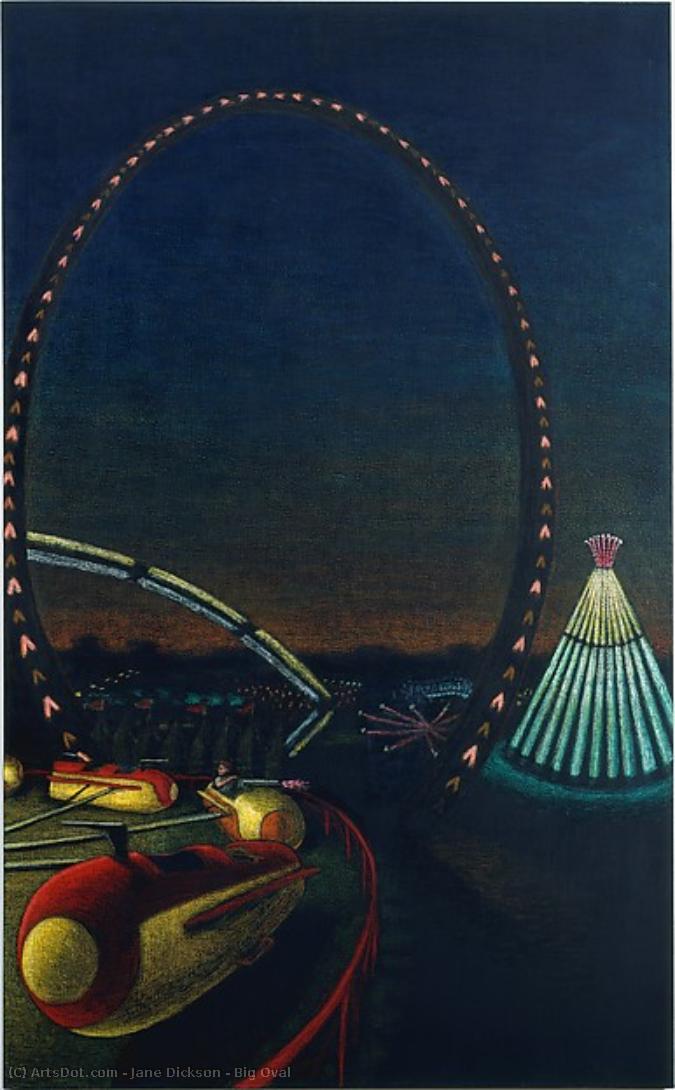
 1985
1985 279.0 x 173.0 cm




 Preview
 프린트 구매하기
 공유하기
공유하기 공유하기
공유하기
 상세 정보
상세 정보

 다운로드
다운로드
 유사 작품
유사 작품 X-레이
X-레이 슬라이드 쇼
 더 보기
더 보기






































 유리 옵션은 110cm 미만 크기에서만 선택 가능합니다.


