실제 크기로 보기 AR로 미리보기 수작업 채색 복제본 주문하기 디지털 이미지 판매 채널로 전환 보내기
상세 보기 가이드 보기 즐겨찾기에 추가 이미지 다운로드 유사 작품 더 보기 X-레이 슬라이드 쇼 보기 통계 정보

Nature morte aux legumes

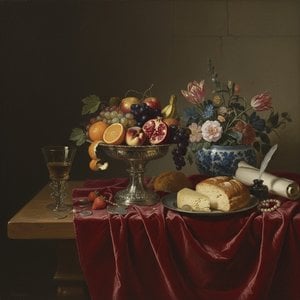
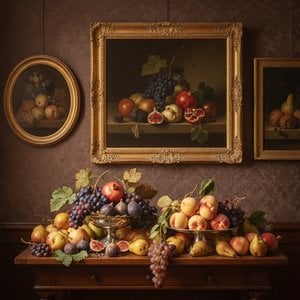
Explore James Ensor's evocative 'Nature morte aux legumes,' a Belgian still life featuring vibrant vegetables like carrots and broccoli alongside apples and bottles—a timeless piece reflecting Ensor’s signature style.

James Ensor는 표현주의와 초현실주의의 선구자였으며 그의 기괴하고 충격적인 작품들로 유명합니다. 가면 예술과 종교적 비판을 통해 인간 본성의 어두운 측면을 탐구하는 그의 독특한 스타일은 미술사에서 중요한 위치를 차지합니다.

지클레 / 아트 프린트

빠른 제작과 다양한 마감 옵션을 선택할 수 있는 박물관 수준의 지클레이 및 캔버스 프린트. ( 수작업 채색 복제본 주문하기 디지털 이미지 판매 채널로 전환)

Corner sample of the P118B picture frame: 성형 폴리스티렌, 5 cm wide and 3 cm thick
P118B ₩10
Corner sample of the P118H picture frame: 성형 폴리스티렌, 5 cm wide and 3 cm thick
P118H ₩10
Corner sample of the P118W picture frame: 성형 폴리스티렌, 5 cm wide and 3 cm thick
P118W ₩10
Corner sample of the P438Z picture frame: 성형 폴리스티렌, 5.5 cm wide and 3.5 cm thick
P438Z ₩10
Corner sample of the P508JH picture frame: 성형 폴리스티렌, 7 cm wide and 3.5 cm thick
P508JH ₩12
Corner sample of the P508YH picture frame: 성형 폴리스티렌, 7 cm wide and 3.5 cm thick
P508YH ₩12
Corner sample of the P805H picture frame: 성형 폴리스티렌, 5 cm wide and 3.5 cm thick
P805H ₩10
Corner sample of the P805Z picture frame: 성형 폴리스티렌, 5 cm wide and 3.5 cm thick
P805Z ₩10
Corner sample of the P919BZ picture frame: 성형 폴리스티렌, 7 cm wide and 3.5 cm thick
P919BZ ₩10
Corner sample of the P919G picture frame: 성형 폴리스티렌, 7 cm wide and 3.5 cm thick
P919G ₩10
Corner sample of the P919XJ picture frame: 성형 폴리스티렌, 7 cm wide and 3.5 cm thick
P919XJ ₩10
Corner sample of the P959ZH picture frame: 성형 폴리스티렌, 5 cm wide and 3 cm thick
P959ZH ₩10
Corner sample of the P968JZ picture frame: 성형 폴리스티렌, 6 cm wide and 4 cm thick
P968JZ ₩12
Corner sample of the W106C picture frame: 원목, 5 cm wide and 3 cm thick
W106C ₩8
Corner sample of the W218G picture frame: 원목, 5 cm wide and 3 cm thick
W218G ₩10
Corner sample of the W218JH picture frame: 원목, 5 cm wide and 3 cm thick
W218JH ₩8
Corner sample of the W218Y picture frame: 원목, 5 cm wide and 3 cm thick
W218Y ₩10
Corner sample of the W307PJ picture frame: 원목, 6 cm wide and 3 cm thick
W307PJ ₩10
Corner sample of the W316G picture frame: 원목, 6 cm wide and 3 cm thick
W316G ₩10
Corner sample of the W316PJ picture frame: 원목, 6 cm wide and 3 cm thick
W316PJ ₩8
Corner sample of the W316Y picture frame: 원목, 6 cm wide and 3 cm thick
W316Y ₩10
Corner sample of the W398PJ picture frame: 원목, 5 cm wide and 3 cm thick
W398PJ ₩8
Corner sample of the W4111J picture frame: 원목, 6.5 cm wide and 3.5 cm thick
W4111J ₩10
Corner sample of the W500HY picture frame: 원목, 7 cm wide and 5 cm thick
W500HY ₩15
Corner sample of the W500JH picture frame: 원목, 7 cm wide and 5 cm thick
W500JH ₩15
Corner sample of the W692G picture frame: 원목, 8 cm wide and 4 cm thick
W692G ₩12
Corner sample of the W849H picture frame: 원목, 5 cm wide and 3 cm thick
W849H ₩8
Corner sample of the W940BG picture frame: 원목, 7.5 cm wide and 4.5 cm thick
W940BG ₩15
Corner sample of the W953PJ picture frame: 원목, 6 cm wide and 3.5 cm thick
W953PJ ₩8

표준 규격
맞춤 제작
CM
INCH

작품의 원본 비율을 그대로 유지하는 프리셋 사이즈 중에서 선택해 보세요.

가로 너비
높이

액자나 벽면 크기에 맞춰 필요한 가로와 세로 길이를 입력해 주세요. 프린트는 원본 이미지보다 크게 제작할 수 없으며 오직 자르는 것만 가능하므로, 비율이 다른 사이즈를 선택할 경우 이미지의 일부가 잘려 나갈 수 있습니다. 인쇄 작업에 들어가기 전, 최종 확인을 위해 디지털 목업을 보내드립니다. 이 페이지에 표시된 이미지는 실제 잘리는 영역을 나타내지 않으며, 오직 목업을 통해서만 정확한 확인이 가능합니다.

전 세계 배송()은 일반적인 4~5주의 소요 기간 대신 2주 이내에 완료됩니다. (26 10월)

전 세계 무료 특급 배송
고품질 린넨 캔버스
배송 전 과정 보험 적용
관세 환급 보장 서비스
원본 색상 일치 보장
제조 결함 발견 시 100일 이내 반품 가능
100% 환불 보장
다량 구매 할인 혜택

총 결제 금액

₩ 92208

Nature morte aux legumes

지클레 / 아트 프린트

복제본 규격

-

총 결제 금액

₩ 92208

주요 정보

  • Artist: James Ensor
  • Artistic style: Expressionist
  • Title: Nature morte aux legumes
  • Medium: Oil on canvas
  • Subject or theme: Still life

아트 퀴즈

각 질문의 정답은 하나뿐입니다.

문항 1:
James Ensor is known for his distinctive style characterized by unsettling imagery and psychological exploration. What artistic movement primarily influenced Ensor’s work?
문항 2:
The painting depicts a still life featuring vegetables like carrots and broccoli alongside apples. What is the predominant color palette employed in this artwork?
문항 3:
Considering Ensor’s upbringing surrounded by carnival masks and souvenirs, how might this experience have shaped his artistic vision?
문항 4:
What technique is most likely utilized by Ensor to achieve the vintage appearance described in the image description?
문항 5:
The painting's composition emphasizes a simple arrangement of objects on a table. What is the primary purpose of this deliberate simplicity?

James Ensor’s Still Life Reverie: A Window into Belgian Symbolism

James Ensor (1860-1949), born in Ostend, Belgium, stands as a singular figure within the landscape of late nineteenth and early twentieth-century art. His artistic journey wasn't marked by adherence to established conventions but rather by a courageous exploration of unsettling imagery and psychological depth—a path that cemented his reputation as one of Belgium’s most distinctive voices. Influenced profoundly by the vibrant atmosphere of Ostend’s seaside resort, where his parents operated a souvenir shop filled with exotic curiosities and carnival masks, Ensor cultivated an imaginative spirit that would permeate his entire oeuvre. Despite initial reservations about formal academic training, he eventually enrolled at the Académie Royale des Beaux-Arts in Brussels, recognizing the necessity of independent artistic expression.
  • Subject Matter: Ensor’s “Nature morte aux legumes” presents a deceptively simple tableau—a meticulously arranged collection of vegetables and fruits upon a tabletop. The centerpiece is undoubtedly a bowl brimming with carrots and broccoli, juxtaposed against scattered apples, creating an interplay of textures and colors that speaks to the beauty inherent in everyday objects.
  • Style: Characteristic of Ensor’s distinctive style, this piece embodies Expressionism rather than Impressionism. Unlike his contemporaries who sought to capture fleeting moments of light and color, Ensor deliberately employed a muted palette—primarily earthy tones—to convey emotion and psychological tension.
  • Technique: Executed in oil paint on canvas, Ensor’s technique is marked by deliberate brushstrokes that contribute to the painting's textural quality. The artist eschewed blending colors extensively, opting instead for visible marks that heighten the sense of immediacy and reinforce the artwork’s emotional resonance.

Historical Context: Belgian Symbolism Amidst Artistic Transformations

Ensor’s artistic vision emerged during a period of significant upheaval in European art history—the waning influence of Impressionism and the burgeoning exploration of psychological realism. The Symbolist movement, which championed subjective experience and esoteric symbolism, provided fertile ground for Ensor's ideas. He deliberately distanced himself from prevailing trends, prioritizing personal expression over stylistic imitation. This decision reflects a broader intellectual preoccupation with confronting anxieties about mortality and exploring the darker recesses of human consciousness—themes that would become recurring motifs in his artwork.

Symbolism and Emotional Resonance: Masks and Hidden Meanings

The pervasive use of masks throughout Ensor’s oeuvre is not merely decorative but deeply symbolic. In “Nature morte aux legumes,” the subtle inclusion of masks – perhaps subtly hinted at within the arrangement of objects – speaks to the artist's fascination with concealing identity and confronting hidden anxieties. The muted color palette amplifies this sense of unease, inviting viewers to contemplate the unspoken emotions beneath the surface of apparent tranquility. It’s a piece that lingers in the mind long after viewing, prompting reflection on themes of vulnerability and repression.

A Legacy of Unease: Why Ensor Remains Relevant Today

James Ensor's “Nature morte aux legumes” transcends its visual simplicity to offer a profound meditation on human psychology and artistic innovation. His uncompromising commitment to expressing inner turmoil—coupled with his masterful technique—continues to inspire artists and collectors alike. Reproductions of this evocative artwork provide an opportunity to appreciate the enduring power of Symbolist art and to engage with Ensor’s unsettling yet undeniably captivating vision of the world.

질의응답

제임스 엔서의 "Nature morte aux legumes"의 재료는 무엇인가요?

"Nature morte aux legumes"은(는) Acrylic On Canvas 기법으로 제작되었습니다.

"Nature morte aux legumes"을(를) 더 자세히 살펴볼 수 있을까요?

제임스 엔서의 "Nature morte aux legumes"의 X선 분석 페이지는 엑스레이 스타일의 뷰를 포함하여 작품 이미지의 11개 광학 레이어를 슬라이드하며 살펴볼 수 있는 인터랙티브 뷰어를 제공합니다.

제임스 엔서의 "Nature morte aux legumes"의 채도는 어느 정도인가요?

"Nature morte aux legumes"의 색조는 채도가 Muted입니다.


작가 소개

James Ensor: A Pioneer of Expressionism and Surrealism

James Sidney Edouard, Baron Ensor (Ostend, 13 April 1860 – 19 November 1949) was a Belgian painter and printmaker who stands as one of the most influential figures in the development of Expressionism and Surrealism. Born into an English father and Belgian mother amidst the vibrant atmosphere of Ostend’s annual Carnival—a formative experience that profoundly shaped his artistic vision—Ensor embarked on a lifelong journey to explore the darker recesses of human psychology and challenge conventional aesthetic standards.

Early Influences and Artistic Training

From a young age, Ensor demonstrated an innate talent for drawing and painting, nurtured by local instructors and fueled by an unwavering fascination with observation. His formative years were spent studying at the College of the Blessed Virgin in Ostend, where he honed his skills alongside fellow artists like Fernand Khnopff and Theo Van Rysselberghe—artists who would later become associated with the influential *Les XX* group.

The Shift Towards Grotesque Expressionism

Ensor’s artistic trajectory took a decisive turn in the late 1880s as he abandoned academic realism for a bold embrace of grotesque expressionism. Influenced by Rembrandt, Francisco Goya, and Japanese woodcuts—artists who championed emotional intensity and unsettling imagery—he began to populate his canvases with disturbing tableaux featuring skeletons battling over a hanged man, masks embodying hidden identities, and allegorical figures confronting existential anxieties.

Key Masterpieces and Recurring Themes

Among Ensor’s most celebrated works are *The Scandalized Masks* (1883), which captures the pervasive influence of disguise and social critique; *Skeletons Fighting over a Hanged Man* (1891), a haunting meditation on mortality and decay; and *Christ's Entry into Brussels* (1888–89)—a monumental painting that satirizes religious hypocrisy with unflinching boldness. Recurring throughout Ensor’s oeuvre are explorations of death, social injustice, psychological torment, and the boundless potential for imaginative distortion—themes that continue to resonate powerfully with audiences today.

A Legacy Beyond Style: Influence on Modern Art

James Ensor's uncompromising artistic vision irrevocably altered the course of modern art. Rejecting academic conventions and embracing subjective experience, he paved the way for subsequent generations of artists who dared to confront uncomfortable truths and challenge established norms. His pioneering use of grotesque imagery—coupled with his masterful manipulation of color and line—established a distinctive stylistic vocabulary that profoundly impacted Expressionist painters like Edvard Munch and Ernst Ludwig Kirchner—artists who similarly sought to convey inner turmoil and psychological complexity.

제임스 엔서

제임스 엔서

1860 - 1949 , 벨기에

작가 정보 요약

  • Artistic Movement Or Style: Expressionism 및 Surrealism
  • Artists Who Influenced This Artist:
    • 피터 브뤼겔 더 엘더
    • 프란시스코 고야
    • 윌스 스미스 휘슬러
  • Date Of Birth: April 13, 1860
  • Date Of Death: November 19, 1949
  • Full Name: James Sidney Edouard Ensor
  • Nationality: Belgian
  • Notable Artworks:
    • The Scandalized Masks
    • Skeletons Fighting...
    • Christ's Entry into Brussels
  • Place Of Birth: Ostend, Belgium
테마, 스타일, 특징별로 큐레이션된 작품들을 만나보세요.