

작가가 직접 캔버스에 손으로 그린 유화 작품으로, 원하는 크기와 액자로 맞춤 제작해 드립니다. ( 프린트 판매로 전환 디지털 이미지 판매 채널로 전환)





























작품의 원본 비율을 그대로 유지하는 프리셋 사이즈 중에서 선택해 보세요.

특정 프레임이나 공간에 맞춰 원하는 크기를 직접 입력하실 수 있습니다. 선택하신 크기가 원본 이미지의 비율과 일치하지 않을 경우, 작품을 자르거나 추가적인 수작업 요소를 더해 그림을 확장하여 제작합니다. 제작 시작 전, 최종 확인을 위해 디지털 목업을 보내드립니다.
화면상의 미리 보기는 실제 크롭(자르기)이나 확장된 상태를 완벽히 반영하지 않을 수 있습니다. 최종 구도는 오직 목업을 통해서만 정확하게 확인하실 수 있습니다.
맞춤 크기 제작도 가능하지만, 원본의 비율을 그대로 유지하기 위해서는 미리 정의된 목록에서 크기를 선택하시는 것을 권장합니다.

Masques Chantants
복제본 규격
James Ensor’s *Masques Chantants* (Masks Singing) stands as a chilling testament to the artist's preoccupation with mortality and societal anxieties—a cornerstone of his Expressionist vision. Painted in 1888, this monumental canvas captures a scene steeped in theatricality and unsettling symbolism, reflecting Ensor’s fascination with the grotesque and challenging viewers to confront uncomfortable truths about human existence.
The masks themselves are central to the painting’s symbolic significance. They represent not merely concealment but also deception, illusion, and the suppression of identity—themes that resonate throughout Ensor's artistic explorations. The figures’ postures convey a sense of solemnity and apprehension, hinting at an impending doom.
*Masques Chantants* is undeniably disturbing yet profoundly evocative. Ensor compels viewers to confront uncomfortable realities about human vulnerability and the inevitability of mortality—a feat achieved through masterful composition, unsettling imagery, and a deliberate rejection of conventional beauty standards. It remains an enduring emblem of Expressionism’s commitment to psychological realism and its unflinching portrayal of the darker aspects of human experience.
This artwork exemplifies Ensor's groundbreaking approach to painting—a bold departure from academic traditions that cemented his place as one of the most influential artists of the late nineteenth century. Its enduring power lies in its ability to provoke contemplation and challenge viewers’ perceptions of life, death, and the human condition.
"Masques Chantants"에 대한 통계 페이지가 존재합니다. 이 페이지에는 해당 작품과 작가의 다른 작품들에 대한 월별 방문자 수가 국가 및 언어별로 상세히 표시됩니다.
"Masques Chantants"은(는) 제임스 엔서의 작품입니다. 이 페이지의 정보는 제임스 엔서의 원작에 대해 설명합니다.
제임스 엔서의 반복되는 주제에는 masks confront death, social satire, expressionist vision, symbolic imagery, ensor’s legacy가 포함되어 있으며, "Masques Chantants"은 masks, carnival, skeletons, figures, belgium, surrealism, portrait에 초점을 맞추고 있습니다.
제임스 엔서의 "Masques Chantants"은(는) Neutrals 색조의 팔레트를 사용합니다. 이 팔레트는 작품 전체의 색채적 특징을 집약적으로 보여줍니다.
제임스 엔서은(는) "Masques Chantants" 작품에 Acrylic On Canvas 기법을 사용했습니다. 이 기법은 원작의 재료적 특성을 잘 보여줍니다.
제임스 엔서의 "Masques Chantants"의 수작업 복제화는 본 웹사이트의 리넨 캔버스 위에 손으로 직접 그린 유화 복제화에서 만나보실 수 있으며, 현재 페이지를 통해 주문 가능합니다.
제임스 엔서의 "Masques Chantants"의 프린트는 현재 페이지에서 바로 주문하실 수 있습니다: 코튼 캔버스 또는 아카이브용 캔버스지에 인쇄된 파인 아트 프린트.
James Sidney Edouard, Baron Ensor (Ostend, 13 April 1860 – 19 November 1949) was a Belgian painter and printmaker who stands as one of the most influential figures in the development of Expressionism and Surrealism. Born into an English father and Belgian mother amidst the vibrant atmosphere of Ostend’s annual Carnival—a formative experience that profoundly shaped his artistic vision—Ensor embarked on a lifelong journey to explore the darker recesses of human psychology and challenge conventional aesthetic standards.
From a young age, Ensor demonstrated an innate talent for drawing and painting, nurtured by local instructors and fueled by an unwavering fascination with observation. His formative years were spent studying at the College of the Blessed Virgin in Ostend, where he honed his skills alongside fellow artists like Fernand Khnopff and Theo Van Rysselberghe—artists who would later become associated with the influential *Les XX* group.
Ensor’s artistic trajectory took a decisive turn in the late 1880s as he abandoned academic realism for a bold embrace of grotesque expressionism. Influenced by Rembrandt, Francisco Goya, and Japanese woodcuts—artists who championed emotional intensity and unsettling imagery—he began to populate his canvases with disturbing tableaux featuring skeletons battling over a hanged man, masks embodying hidden identities, and allegorical figures confronting existential anxieties.
Among Ensor’s most celebrated works are *The Scandalized Masks* (1883), which captures the pervasive influence of disguise and social critique; *Skeletons Fighting over a Hanged Man* (1891), a haunting meditation on mortality and decay; and *Christ's Entry into Brussels* (1888–89)—a monumental painting that satirizes religious hypocrisy with unflinching boldness. Recurring throughout Ensor’s oeuvre are explorations of death, social injustice, psychological torment, and the boundless potential for imaginative distortion—themes that continue to resonate powerfully with audiences today.
James Ensor's uncompromising artistic vision irrevocably altered the course of modern art. Rejecting academic conventions and embracing subjective experience, he paved the way for subsequent generations of artists who dared to confront uncomfortable truths and challenge established norms. His pioneering use of grotesque imagery—coupled with his masterful manipulation of color and line—established a distinctive stylistic vocabulary that profoundly impacted Expressionist painters like Edvard Munch and Ernst Ludwig Kirchner—artists who similarly sought to convey inner turmoil and psychological complexity.

1860 - 1949 , 벨기에
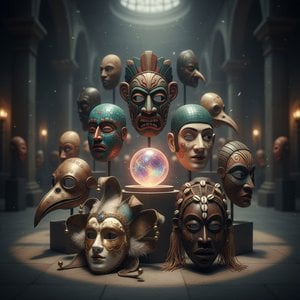
Embark on a profound journey through the world's most iconic mask artworks. Explore the spiritual depth, intricate craftsmanship, and rich cultural heritage of global traditions, from Chhau to Gomira, in this expert-led exploration of ancestral artistry and symbolic beauty.

 실제 크기로 보기
 보내기
보내기 공유하기
공유하기
 상세 보기
상세 보기 가이드 보기

 이미지 다운로드
 유사 작품 더 보기
 X-레이
X-레이 슬라이드 쇼 보기
 통계 정보
통계 정보
 상세 보기
상세 보기









 유리 옵션은 110cm 미만 크기에서만 선택 가능합니다.


