

빠른 제작과 다양한 마감 옵션을 선택할 수 있는 박물관 수준의 지클레이 및 캔버스 프린트. ( 수작업 채색 복제본 주문하기 디지털 이미지 판매 채널로 전환)





























작품의 원본 비율을 그대로 유지하는 프리셋 사이즈 중에서 선택해 보세요.

액자나 벽면 크기에 맞춰 필요한 가로와 세로 길이를 입력해 주세요. 프린트는 원본 이미지보다 크게 제작할 수 없으며 오직 자르는 것만 가능하므로, 비율이 다른 사이즈를 선택할 경우 이미지의 일부가 잘려 나갈 수 있습니다. 인쇄 작업에 들어가기 전, 최종 확인을 위해 디지털 목업을 보내드립니다. 이 페이지에 표시된 이미지는 실제 잘리는 영역을 나타내지 않으며, 오직 목업을 통해서만 정확한 확인이 가능합니다.
L' Attente
복제본 규격
In the quietude of James Ensor’s L'Attente (The Waiting), we are invited into a space that feels simultaneously intimate and profoundly isolated. The painting presents us with a solitary woman, seated at a dining table, her attention entirely consumed by the pages of a book. At first glance, the scene suggests a peaceful domestic vignette, yet there is an unmistakable tension vibrating beneath the surface. Ensor, a master of the Symbolist movement, does not merely aim to replicate a moment in time; he seeks to capture the psychological weight of existence. The composition draws the eye toward her figure, framed by the humble artifacts of daily life—a bowl, a cup, and a bottle—each element contributing to a tableau that feels heavy with unspoken thought.
The atmosphere is one of subdued melancholy, where the stillness of the room seems to press against the subject. As an observer, one cannot help but feel the weight of her waiting, a sense of suspension between what has passed and what is yet to come. For collectors and lovers of fine art, this piece offers more than just visual beauty; it provides a window into the human condition, making it a profound addition to any curated collection or a soulful centerpiece for a thoughtfully designed interior.
Technically, L'Attente is a triumph of oil on canvas, showcasing Ensor’s sophisticated command over tonal modulation. The artist employs a palette dominated by earthy, muted hues—deep browns, somber reds, and flickering yellows—which work in harmony to establish a mood of quiet apprehension. His use of thick impasto is particularly noteworthy; the raised texture of the paint creates a tactile surface that catches the light, lending a physical presence to the objects on the table and a palpable sense of depth to the shadows. This expressive brushwork prevents the scene from feeling static, instead imbuing the stillness with a rhythmic, almost breathing quality.
This deliberate use of texture and color serves to bridge the gap between reality and emotion. The way the light interacts with the heavy paint mimics the flickering uncertainty of memory or thought. For an interior designer, this painting offers a rich, textural element that can anchor a room, providing a sophisticated layer of complexity to a space characterized by modern minimalism or classical elegance.
To understand L'Attente is to delve into the symbolic language of the early 20th century. Painted around 1908-1909, the work emerged from a period of intense intellectual ferment in Europe. Ensor’s style was a reaction against the fleeting opticality of Impressionism, favoring instead the exploration of inner psychological states. Within this frame, every object carries a potential meaning. The vase of flowers, for instance, stands as a poignant symbol of beauty and fragility; their presence amidst the domestic clutter hints at a longing or perhaps a quiet disillusionment with the passage of time.
The painting reflects the broader anxieties of its era—the vulnerability of the individual within the rigid structures of society. Ensor’s ability to weave these complex themes into a seemingly simple portrait is what gives the work its enduring power. It is an artwork that demands contemplation, rewarding the viewer with new layers of meaning upon every encounter. Whether viewed as a masterpiece of Belgian Symbolism or as a captivating study in light and shadow, L'Attente remains a timeless testament to the beauty found within the quietest moments of life.
제임스 엔서의 "L' Attente"의 밝기는 deep_shadow로 기록되었으며, 휘도는 Dark입니다.
제임스 엔서의 "L' Attente"은(는) 디지털 이미지로 고해상도 디지털 이미지 다운로드할 수 있으며, 작품의 다운로드 페이지에서 다운로드 가능합니다.
"L' Attente"에서 Oil On Canvas 기법은 Symbolist Expressionism 사조와 만납니다.

James Sidney Edouard, Baron Ensor (Ostend, 13 April 1860 – 19 November 1949) was a Belgian painter and printmaker who stands as one of the most influential figures in the development of Expressionism and Surrealism. Born into an English father and Belgian mother amidst the vibrant atmosphere of Ostend’s annual Carnival—a formative experience that profoundly shaped his artistic vision—Ensor embarked on a lifelong journey to explore the darker recesses of human psychology and challenge conventional aesthetic standards.
From a young age, Ensor demonstrated an innate talent for drawing and painting, nurtured by local instructors and fueled by an unwavering fascination with observation. His formative years were spent studying at the College of the Blessed Virgin in Ostend, where he honed his skills alongside fellow artists like Fernand Khnopff and Theo Van Rysselberghe—artists who would later become associated with the influential *Les XX* group.
Ensor’s artistic trajectory took a decisive turn in the late 1880s as he abandoned academic realism for a bold embrace of grotesque expressionism. Influenced by Rembrandt, Francisco Goya, and Japanese woodcuts—artists who championed emotional intensity and unsettling imagery—he began to populate his canvases with disturbing tableaux featuring skeletons battling over a hanged man, masks embodying hidden identities, and allegorical figures confronting existential anxieties.
Among Ensor’s most celebrated works are *The Scandalized Masks* (1883), which captures the pervasive influence of disguise and social critique; *Skeletons Fighting over a Hanged Man* (1891), a haunting meditation on mortality and decay; and *Christ's Entry into Brussels* (1888–89)—a monumental painting that satirizes religious hypocrisy with unflinching boldness. Recurring throughout Ensor’s oeuvre are explorations of death, social injustice, psychological torment, and the boundless potential for imaginative distortion—themes that continue to resonate powerfully with audiences today.
James Ensor's uncompromising artistic vision irrevocably altered the course of modern art. Rejecting academic conventions and embracing subjective experience, he paved the way for subsequent generations of artists who dared to confront uncomfortable truths and challenge established norms. His pioneering use of grotesque imagery—coupled with his masterful manipulation of color and line—established a distinctive stylistic vocabulary that profoundly impacted Expressionist painters like Edvard Munch and Ernst Ludwig Kirchner—artists who similarly sought to convey inner turmoil and psychological complexity.

1860 - 1949 , 벨기에

Discover the profound allure of oil on canvas. Explore the mastery of impasto textures, the science of pigment longevity, and expert guides to selecting museum-quality reproductions that elevate your collection with timeless elegance and tactile depth.
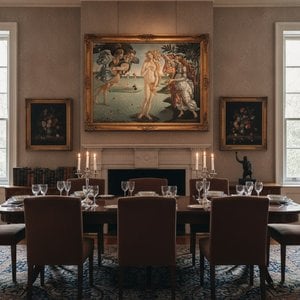
Elevate your dining room with museum-quality handmade oil reproductions. From Old Master grandeur to Impressionist serenity, discover bespoke art solutions for luxury interiors, custom portraits, and large-scale murals curated by WahooArt's master artists.

Discover how curated fine art transforms restaurants into immersive theatrical stages. Learn expert strategies for restaurateurs to elevate brand identity, influence diner emotion, and create unforgettable gastronomic experiences through masterful visual storytelling.

 실제 크기로 보기
 보내기
보내기 공유하기
공유하기
 상세 보기
상세 보기 가이드 보기

 이미지 다운로드
 유사 작품 더 보기
 X-레이
X-레이 슬라이드 쇼 보기
 통계 정보
통계 정보

 상세 보기
상세 보기









 유리 옵션은 110cm 미만 크기에서만 선택 가능합니다.


