x


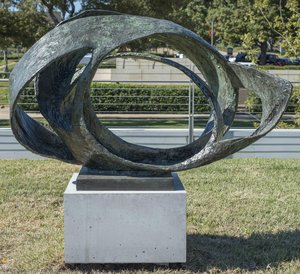
 Contemporary Minimalism
 180.0 x 36.0 cm
 The Moving Museum
빠른 제작과 다양한 마감 옵션을 제공하는 박물관 품질의 지클레이 또는 캔버스 프린트. ( 손으로 그린 그림 구매 이미지 구매)
작품의 원본 비율을 유지하는 미리 설정된 크기 중에서 선택하세요.

특정 프레임이나 공간에 맞춰 직접 치수를 입력하실 수 있습니다. 선택하신 사이즈가 원본 이미지의 비율과 일치하지 않을 경우, 작품을 크롭(자르기)하거나 이미지를 대칭 또는 단색 채우기로 확장하여 제작합니다. 제작 시작 전, 최종 확인을 위해 디지털 목업이 전송됩니다.
화면상의 미리보기는 실제 크롭이나 확장 상태를 반영하지 않으므로, 최종 구도는 오직 목업을 통해서만 정확하게 확인하실 수 있습니다.
맞춤 사이즈 제작도 가능하지만, 원본 비율을 유지하기 위해서는 사전 정의된 목록에서 치수를 선택하시는 것을 권장합니다.

Mountaineer Tooth A
복제본 크기
James Capper, born in London in 1987, emerged as a distinctive voice in contemporary sculpture by challenging conventional notions of the medium itself. His path wasn’t forged in traditional art schools focused solely on form and aesthetics; instead, it was deeply rooted in the practical world of agricultural mechanics. This early exposure instilled in him not just an understanding of materials but also a fascination with movement, power, and the inherent capabilities of engineered systems. While formally trained as a welder at Chelsea College of Art and Design, earning a B.A., Capper’s true education began when he started to combine his technical skills with artistic vision. He wasn't content to simply *create* objects; he wanted them to operate, to interact with their environment, to possess a life beyond static display.
Capper’s breakthrough came with the development of his signature mobile sculptures. Rejecting the stillness often associated with sculpture, he conceived of works that actively engage with space—machines designed to traverse varied terrains. This led to the concept of “divisions,” a self-defined categorization of his work based on operational environments: Earth Marking, Aviation, Materials Handling, and Offshore. Each division isn’t merely a thematic grouping but represents an ongoing technical and aesthetic exploration. The initial prototypes within each division serve as both functional tools and sculptural statements. He doesn't simply build sculptures *of* machines; he builds machines that *are* sculptures.
While Capper’s work is strikingly original, it resonates with several historical currents. The kinetic art of Alexander Calder—with its emphasis on movement and balance—is a clear antecedent, though Capper pushes beyond purely aesthetic considerations into the realm of practical application. There's also an echo of early 20th-century Futurist fascination with technology and dynamism, but Capper tempers this enthusiasm with a grounded understanding of engineering limitations and possibilities. His sculptures aren’t utopian visions of technological progress; they are pragmatic explorations of what machines can *do* within the constraints of reality. Furthermore, his interest in biology—particularly the adaptive mechanisms of natural systems—informs the design of his mobile works, seeking to mimic organic efficiency and resilience. He often speaks of creating sculptures that ‘evolve’ through repeated use and modification.
Capper's career trajectory has been marked by rapid ascent. His first solo show in the US at Paul Kasmin Gallery in 2015, featuring the “MOUNTAINEER TEETH” series, garnered significant attention for its ambitious scale and conceptual depth. Since then, he’s exhibited extensively internationally, with solo exhibitions at Albion Barn, Alex Eagle Studio, and MONA (Barriedale), among others. Notable commissions include MUDSKIPPER WALKING WORKBOAT for Battersea Power Station in 2020 and Camellia for Gallery Town in 2023. He received the Royal Society of British Sculptors Bursary Award in 2011, and was nominated for the Jerwood Sculpture Prize in 2009—early recognition that signaled his potential. In 2023, he uniquely stood as the sole artist featured in a Science Museum exhibition dedicated to leading engineers globally, highlighting the intersection of art and technical innovation.
James Capper’s contribution lies in redefining sculpture for the 21st century. He has successfully bridged the gap between art and engineering, creating works that are both conceptually rigorous and materially compelling. His sculptures challenge viewers to reconsider their relationship with technology—not as a detached force but as an extension of human agency.

United Kingdom

페르낭 레제의 최고 걸작 25선을 만나보세요. 큐비즘, 추상 미술의 거장이 그린 명작들의 탄생 비화와 예술적 의미를 탐구합니다. WahooArt에서 고품질 아트 프린트와 인테리어 액자로 공간에 예술을 더하세요. 지금 바로 컬렉션을 확인하세요!

Journey through art history with our Top 10 bronze sculptures! Explore masterpieces by Rodin, Michelangelo & more. Discover stories behind iconic statues and find museum-quality reproductions for your home decor at WahooArt.com.

Explore the rich history of sculpture from ancient masterpieces to contemporary innovations. Discover key techniques, influential artists & investment potential for discerning art collectors.

몬드리안, 말레비치 등 거장들의 기하학적 추상 미술 명작 10선을 만나보세요. 각 작품의 예술사적 의미와 색채, 구성을 탐구하고 WahooArt.com에서 고품질 아트 프린트를 소장하세요. 지금 바로 온라인 컬렉션을 확인하세요!

제임스 애벗 맥닐 휘슬러의 최고 걸작 25선을 만나보세요. 야간 풍경부터 아랑미술관 소장품까지, 예술가의 삶과 작품 세계를 탐험합니다. 색채와 분위기가 완벽한 조화를 이루는 그림들을 WahooArt.com에서 감상하고 특별한 공간을 완성하세요.


최신 미술 뉴스, 특별 혜택 및 인테리어 아이디어를 가장 먼저 만나보세요.
프로젝트에 대해 알려주시면 저희 미술 전문가들이 맞춤형 아트 제안 3가지를 전달해 드립니다.
당신만을 위한 맞춤형 옵션 3가지를 무료로 추천해 드립니다!


 미리보기
미리보기
 공유하기
공유하기 공유하기
공유하기
 상세 정보
상세 정보

 다운로드
다운로드
 유사 작품
유사 작품 X-레이
X-레이 슬라이드 쇼
 더 보기
더 보기






































 유리 옵션은 110cm 미만 크기에서만 선택 가능합니다.