
x


 Orientalism
 1831
1831 92.0 x 71.0 cm
 영국 도서관




























작품의 원본 비율을 유지하는 미리 설정된 크기 중에서 선택하세요.

특정 프레임이나 공간에 맞도록 직접 크기를 입력할 수 있습니다. 선택하신 크기가 원본 이미지의 비율과 일치하지 않는 경우, 작품을 자르거나 추가적인 손으로 그린 요소를 사용하여 그림을 확장합니다. 제작 시작 전 승인을 위해 디지털 목업을 보내드립니다.
화면 미리 보기는 실제 자르기 또는 확장을 반영하지 않습니다. 최종 구성은 목업을 통해서만 정확하게 확인하실 수 있습니다.
맞춤 크기 제작도 가능하지만, 원본 비율을 유지하기 위해 사전 정의된 목록에서 크기를 선택하시는 것을 권장합니다.

A Sati or Widow Burning
복제본 크기

James Atkinson (1780–1852) was a figure of extraordinary breadth, a true polymath whose life story reads like an epic of the nineteenth century. Born in Darlington, England, to a family of humble origins, Atkinson’s journey from the industrial landscapes of Northern England to the vibrant, complex heart of colonial India is nothing short of remarkable. While history often remembers him as a distinguished surgeon and a profound Persian scholar, his artistic legacy provides a window into the soul of an era defined by exploration, discovery, and the romanticized gaze of the East. His life was a seamless tapestry woven from threads of medical precision, linguistic mastery, and a deeply evocative painterly vision.
His intellectual foundation was forged through rigorous academic discipline, having studied medicine in London and Edinburgh. This scientific training instilled in him an eye for meticulous detail—a quality that would later define his approach to both his scholarly translations and his canvases. Upon arriving in India in 1802 as a surgeon's mate, Atkinson did not merely observe the landscape; he immersed himself in its cultural and linguistic depths. His fascination with Persian culture led him to become a vital bridge between East and West, translating complex texts that brought the nuances of Middle Eastern thought to an English-speaking audience.
As an artist, Atkinson belonged to the burgeoning tradition of Orientalist painting, yet his work possessed a unique intimacy born of lived experience. Unlike many travelers who painted from hearsay or brief excursions, Atkinson’s art was rooted in his deep integration into Indian society. Influenced heavily by the renowned painter George Chinnery, Atkinson developed a style that captured the atmospheric splendor and the poignant realities of life in the subcontinent. His brushwork often reflected the influence of European Romanticism, utilizing light and shadow to imbue scenes of Indian landscapes and village life with a sense of spiritual depth and dramatic tension.
His paintings frequently moved beyond mere documentation, seeking instead to capture the emotional resonance of his surroundings. Whether depicting the ritualistic intensity of A Sati or Widow Burning or the rhythmic energy of festivals like Charakpuja, Atkinson’s work is characterized by a masterful command of color and a profound respect for his subjects. His ability to render the textures of draped fabrics, the heat of the tropical sun, and the solemnity of religious ceremonies allowed him to create works that were both visually stunning and culturally significant.
The significance of James Atkinson lies in his refusal to be confined by a single discipline. He was a man who could navigate the delicate complexities of the Calcutta Mint, edit the Calcutta Gazette, and yet find profound peace in the depiction of an Afghan mountain pass or a Persian garden. His contributions were multifaceted:
Ultimately, Atkinson remains a captivating figure of the Romantic age—a man whose life was defined by an insatiable curiosity and an enduring passion for the beauty found in the unknown. His legacy survives not only in the archives of medical history or linguistic studies but in the vibrant, enduring colors of his paintings, which continue to invite us into the vanished worlds he so lovingly documented.

1780 - 1852

제임스 애벗 맥닐 휘슬러의 최고 걸작 25선을 만나보세요. 야간 풍경부터 아랑미술관 소장품까지, 예술가의 삶과 작품 세계를 탐험합니다. 색채와 분위기가 완벽한 조화를 이루는 그림들을 WahooArt.com에서 감상하고 특별한 공간을 완성하세요.
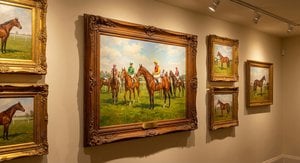
Explore 25 iconic Sir Alfred Munnings paintings! Discover the beauty of British Impressionism, equine art & rural England. Find museum-quality reproductions and elevate your home decor with WahooArt. Explore the full collection online.

Explore the life & art of Raja Ravi Varma, a pioneer who fused European techniques with Indian iconography. Discover his iconic paintings, lasting legacy, and influence on modern Indian art at WahooArt.

Explore the captivating world of John Augustus Atkinson (1775-1830), a key figure in British Romanticism and genre painting. Discover his stunning Russian history scenes, naval art & delicate watercolors. Learn about his legacy at WahooArt.

Explore the captivating landscapes of William James Müller, the leading artist of the Bristol School. Discover his Victorian masterpieces, Egyptian travels & Lycian sketches – a journey through 19th-century art and technique.


최신 미술 뉴스, 특별 혜택 및 인테리어 아이디어를 가장 먼저 만나보세요.
프로젝트에 대해 알려주시면 저희 미술 전문가들이 맞춤형 아트 제안 3가지를 전달해 드립니다.
당신만을 위한 맞춤형 옵션 3가지를 무료로 추천해 드립니다!


 미리보기
미리보기
 프린트 구매
 공유하기
공유하기 공유하기
공유하기
 상세 정보
상세 정보

 다운로드
다운로드
 유사 작품
유사 작품 X-레이
X-레이 슬라이드 쇼
 더 보기
더 보기









 유리 옵션은 110cm 미만 크기에서만 선택 가능합니다.


