
빠른 제작과 다양한 마감 옵션을 제공하는 박물관 품질의 지클레이 또는 캔버스 프린트. ( 손으로 그린 그림 구매 디지털 이미지로 전환)





























작품의 원본 비율을 유지하는 미리 설정된 크기 중에서 선택하세요.

특정 프레임이나 공간에 맞춰 직접 치수를 입력하실 수 있습니다. 선택하신 사이즈가 원본 이미지의 비율과 일치하지 않을 경우, 작품을 크롭(자르기)하거나 이미지를 대칭 또는 단색 채우기로 확장하여 제작합니다. 제작 시작 전, 최종 확인을 위해 디지털 목업이 전송됩니다.
화면상의 미리보기는 실제 크롭이나 확장 상태를 반영하지 않으므로, 최종 구도는 오직 목업을 통해서만 정확하게 확인하실 수 있습니다.
맞춤 사이즈 제작도 가능하지만, 원본 비율을 유지하기 위해서는 사전 정의된 목록에서 치수를 선택하시는 것을 권장합니다.

Annie Seated
복제본 크기
James Abbott McNeill Whistler's "Annie Seated," a monochrome study executed around 1858-59, isn’t merely a portrait; it’s a distilled distillation of the artist’s core philosophy – “art for art’s sake.” Born in Lowell, Massachusetts, and deeply influenced by his time in Russia where he encountered the avant-garde, Whistler sought to liberate painting from the constraints of narrative and moralizing. This piece exemplifies that pursuit, prioritizing tonal harmony, subtle color variations, and a carefully orchestrated arrangement over realistic representation. The work immediately draws the viewer into a world of quiet contemplation, mirroring Whistler’s own desire to create paintings that evoke mood and atmosphere rather than tell a story.
The subject itself, Annie Harriet Haden, was a close friend of Whistler's and a model for numerous portraits during his London years. Her pose – seated in a simple chair, her gaze directed slightly off-camera – is deliberately understated, inviting the viewer to project their own emotions and interpretations onto the scene. The lack of overt detail forces us to engage with the painting on a purely sensory level, appreciating the delicate interplay of light and shadow, the subtle textures created by Whistler’s meticulous application of graphite or charcoal.
Whistler's technique is characterized by an almost obsessive attention to detail in the manipulation of line and tone. The composition relies heavily on hatching and cross-hatching, creating a complex network of lines that build up the forms of Annie’s figure and the chair with remarkable precision. These linear elements aren’t used to define edges sharply; instead, they are blended seamlessly together, resulting in a soft, diffused effect. This deliberate blurring of boundaries contributes significantly to the painting's overall sense of tranquility and ambiguity.
"Annie Seated" transcends a simple portrait; it’s imbued with a profound sense of introspection and quiet dignity. The closed-off nature of Annie’s pose, combined with her averted gaze, suggests a private world within, inviting the viewer to contemplate her thoughts and feelings. The painting's stillness is not static but rather pregnant with unspoken emotions – a subtle melancholy, perhaps, or a gentle acceptance of life’s complexities.
Furthermore, the work aligns perfectly with Whistler’s broader aesthetic concerns. He sought to emulate the harmonies found in music, and “Annie Seated” embodies this principle through its carefully balanced composition and its emphasis on tonal relationships. It's a testament to his belief that beauty could be found not in representation but in the skillful arrangement of visual elements.
Created during Whistler’s time in London, “Annie Seated” reflects the broader artistic climate of the late 19th century. Whistler was a key figure in the Aesthetic movement, which challenged traditional notions of art by prioritizing beauty and sensory experience over narrative or moral content. His work profoundly influenced subsequent generations of artists, including Impressionists and Post-Impressionists, who sought to capture fleeting moments of light and color.
Today, “Annie Seated” remains a captivating example of Whistler’s artistic vision – a poignant meditation on beauty, solitude, and the power of suggestion. Its enduring appeal lies in its ability to evoke a sense of quiet contemplation and invite viewers to engage with art on a purely emotional level.


1834 - 1903 , 미국

Explore the profound beauty of the sketch. Discover how masters use charcoal and graphite to capture raw emotion, anatomical precision, and fluid movement, bridging the gap between ephemeral marks and eternal oil masterpieces.
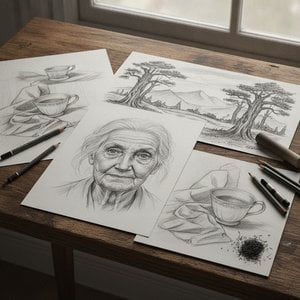
Explore the profound elegance of pencil and charcoal sketching. Discover how masters use line, shadow, and chiaroscuro to capture light and texture, bridging the gap between preparatory studies and timeless fine art masterpieces.

Discover the sophisticated mastery of graphite drawing. Explore expert techniques for achieving profound depth, intricate texture, and hyper-realistic detail through the alchemy of carbon, curated for the discerning art enthusiast and professional collector.

Elevate your artistic practice with this expert guide to mastering the line. Discover advanced techniques in graphite, charcoal, and contour drawing designed for art students seeking technical precision and expressive depth in their fine art studies.

Explore the profound artistry of graphite drawing. Discover professional techniques for mastering depth, texture, and detail through a lens of art history, from classical sketches to modern masterpieces. Elevate your understanding of the pencil medium with our expert guide.


 미리보기
미리보기
 공유하기
공유하기 공유하기
공유하기
 상세 정보
상세 정보 가이드 보기

 다운로드
다운로드
 유사 작품
유사 작품 X-레이
X-레이 슬라이드 쇼
 통계 정보
통계 정보

 더 보기
더 보기









 유리 옵션은 110cm 미만 크기에서만 선택 가능합니다.


