

 Oil On PanelEarly Netherlandish
 1434
1434 57.0 x 52.0 cm
 슈타틸리체 무제엔
빠른 제작과 다양한 마감 옵션을 선택할 수 있는 박물관 수준의 지클레이 및 캔버스 프린트. ( 수작업 채색 복제본 주문하기 디지털 이미지 판매 채널로 전환)





























작품의 원본 비율을 그대로 유지하는 프리셋 사이즈 중에서 선택해 보세요.

액자나 벽면 크기에 맞춰 필요한 가로와 세로 길이를 입력해 주세요. 프린트는 원본 이미지보다 크게 제작할 수 없으며 오직 자르는 것만 가능하므로, 비율이 다른 사이즈를 선택할 경우 이미지의 일부가 잘려 나갈 수 있습니다. 인쇄 작업에 들어가기 전, 최종 확인을 위해 디지털 목업을 보내드립니다. 이 페이지에 표시된 이미지는 실제 잘리는 영역을 나타내지 않으며, 오직 목업을 통해서만 정확한 확인이 가능합니다.
Visitation
복제본 규격
Jacques Daret's "Visitation," painted in 1434-35 during the vibrant artistic milieu of Arras, Belgium, is more than just a religious depiction; it’s a masterclass in Early Netherlandish realism and a poignant meditation on faith, family, and divine grace. This panel painting, now housed within the Gemäldegalerie in Berlin, offers a remarkably intimate glimpse into a pivotal moment from Luke's Gospel – the visit of Mary to Elizabeth, foretelling the birth of John the Baptist. Daret’s skill lies not merely in his technical proficiency but in his ability to imbue this biblical narrative with an almost palpable sense of serenity and profound spiritual significance.
The composition is meticulously balanced, reflecting the influence of Robert Campin, Daret's acknowledged master. The central figures – Mary and Elizabeth – are positioned within a carefully constructed architectural setting, a modest room suggesting domestic tranquility. Daret’s use of linear perspective, though subtly applied, creates a sense of depth and spatial awareness uncommon for the period. Geometric shapes—rectangles defining the walls, ovals forming the faces—are rendered with an astonishing level of detail, showcasing the artist's command of form and his dedication to precise observation. The color palette is restrained yet luminous; rich reds and blues dominate Mary’s garments, contrasting beautifully with the muted tones of Elizabeth’s robes, drawing the viewer’s eye to the central interaction.
Beyond its formal qualities, “Visitation” is laden with symbolic meaning. The halo above Mary's head immediately signifies her divine status and role as the mother of God. Elizabeth’s hand resting gently on Mary’s arm symbolizes mutual support and blessing – a visual representation of the spiritual connection between these two women. The staff held by the monk, subtly included in the background, serves as a reminder of his vocation and the importance of religious devotion within the community. Even the landscape—a rolling, verdant vista—holds symbolic weight, representing the earthly realm from which this miraculous event unfolds.
The inclusion of the angel, hovering discreetly above, reinforces the divine intervention at play. Its wings are rendered with a delicate grace, and its expression conveys both reverence and anticipation. The gesture of blessing – a raised hand – further emphasizes the sacred nature of the encounter. Daret’s careful attention to these details elevates the painting beyond a simple illustration of a biblical story; it becomes a visual poem exploring themes of faith, lineage, and divine providence.
Daret's mastery is evident in his meticulous application of oil paint on panel. The technique employed—extensive layering and glazing—creates an astonishingly smooth surface, rich with subtle color variations and luminous highlights. The artist skillfully manipulated light to sculpt the figures’ forms, emphasizing their volume and creating a sense of three-dimensionality. Close examination reveals the painstaking process involved in building up these layers of paint, each brushstroke contributing to the overall effect of depth and realism.
The use of gold leaf—particularly in the halo and the angel's garments—adds a touch of opulence and further enhances the painting’s spiritual aura. The panel itself, likely made of poplar wood, provides a stable foundation for this intricate work. Daret’s commitment to quality materials and his refined technique are testaments to his artistic skill and dedication.
"Visitation" offers a valuable window into the artistic and cultural landscape of 15th-century Flanders. It exemplifies the growing influence of Early Netherlandish painting, characterized by its realism, attention to detail, and profound psychological insight. Daret’s work stands alongside that of other masters of the period—Robert Campin, Rogier van der Weyden, and Jan van Eyck—contributing to a rich artistic tradition that continues to inspire artists today. Reproductions of this captivating artwork capture not only its visual beauty but also the profound spiritual message at its heart.
자크 다레의 "Visitation"의 기록된 휘도는 Soft Shadow입니다.
자크 다레의 "Visitation"의 기록된 인기도는 Recognized입니다.
자크 다레의 "Visitation"에 대한 가이드 페이지를 이용하실 수 있습니다. 이 페이지는 학생들과 수업용으로 제작된, 인쇄 가능한 작품 정보 시트를 제공합니다.


Explore the profound power of religious symbolism in art history. From Renaissance masterpieces to sacred iconography, uncover the hidden meanings behind divine details in a deep dive into classical art excellence.
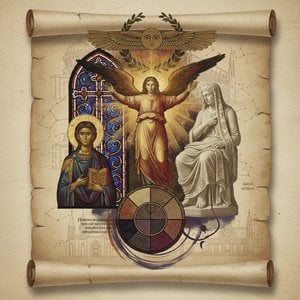
Explore the profound impact of spiritual themes in fine art. From Renaissance iconography to Baroque drama, discover how sacred symbolism and divine visions have shaped art history through a scholarly and reflective lens.

 실제 크기로 보기
 보내기
보내기 공유하기
공유하기
 상세 보기
상세 보기 가이드 보기

 이미지 다운로드
 유사 작품 더 보기
 X-레이
X-레이 슬라이드 쇼 보기
 통계 정보
통계 정보 상세 보기
상세 보기









 유리 옵션은 110cm 미만 크기에서만 선택 가능합니다.


