

 Oil On CanvasWallArtMood Landscape
 1895
1895 60.0 x 75.0 cm
 트레티야코프 미술관
빠른 제작과 다양한 마감 옵션을 선택할 수 있는 박물관 수준의 지클레이 및 캔버스 프린트. ( 수작업 채색 복제본 주문하기 디지털 이미지 판매 채널로 전환)





























작품의 원본 비율을 그대로 유지하는 프리셋 사이즈 중에서 선택해 보세요.

액자나 벽면 크기에 맞춰 필요한 가로와 세로 길이를 입력해 주세요. 프린트는 원본 이미지보다 크게 제작할 수 없으며 오직 자르는 것만 가능하므로, 비율이 다른 사이즈를 선택할 경우 이미지의 일부가 잘려 나갈 수 있습니다. 인쇄 작업에 들어가기 전, 최종 확인을 위해 디지털 목업을 보내드립니다. 이 페이지에 표시된 이미지는 실제 잘리는 영역을 나타내지 않으며, 오직 목업을 통해서만 정확한 확인이 가능합니다.
March
복제본 규격
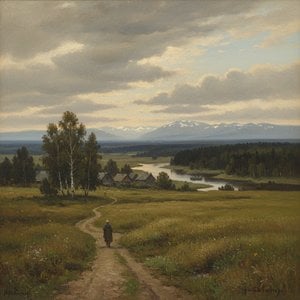
Isaac Ilyich Levitan's "March" isn't merely a depiction of a winter landscape; it’s a profound distillation of the Russian soul, captured in oil on canvas with an almost palpable sense of melancholy and quiet contemplation. Painted in 1895 during his time in the Gorka estate near Vyshnevolotsky, this work embodies Levitan's signature style – what he himself termed “mood landscapes.” He wasn’t interested in grand vistas or dramatic events; instead, he sought to convey the emotional atmosphere of a place, imbuing it with a feeling that resonated deeply within him. The painting isn’t about the coldness of winter, but rather the introspection and solitude it evokes – a theme central to much of his oeuvre.
Levitan's masterful technique is immediately apparent in "March." He employs a restrained palette dominated by muted blues, greys, and browns, punctuated by subtle hints of ochre and the stark white of the snow. The light, diffused and soft, seems to emanate from an unseen source, bathing the scene in a gentle glow. Notice how he builds up layers of paint – delicate washes for the sky, textured strokes for the trees, and precise details for the dog and the distant house. This layering creates a remarkable sense of depth and atmosphere, drawing the viewer into the heart of the winter landscape. The brushwork is loose and expressive, reflecting the artist’s emotional response to his subject matter – not a photographic representation, but an interpretation.
To fully appreciate "March," it's crucial to understand its place within the broader context of Russian art at the end of the 19th century. Levitan was a key figure in the *Peredvizhniki* (Wanderers), a group of artists who rejected the academic traditions of the Imperial Academy of Arts and instead sought to depict everyday life and rural Russia with honesty and empathy. The *Peredvizhniki* championed realism, often focusing on scenes of hardship and social injustice, but Levitan’s work transcends mere social commentary. He was deeply influenced by the Barbizon School in France, particularly their emphasis on capturing the essence of nature through light and color. His connection to Chekhov, a prominent writer of the time, further shaped his artistic vision – both men shared a sensitivity to the beauty and melancholy of the Russian landscape.
The inclusion of the dog, walking along the snow-covered road, is particularly evocative. It represents not just companionship but also a sense of journey and perhaps even loneliness. The distant house suggests a refuge, a place of warmth and security, yet it’s dwarfed by the vastness of the winter landscape, reinforcing the feeling of isolation. The two birds, perched high in the trees, offer a fleeting moment of beauty and hope amidst the prevailing stillness. "March" isn't simply a winter scene; it’s an exploration of human emotions – solitude, longing, and the quiet dignity of existence—a reflection on the Russian soul itself.
“March” stands as one of Levitan’s most celebrated works, exemplifying his unique ability to capture the emotional heart of the Russian landscape. It's a testament to his profound understanding of light, color, and atmosphere, and his remarkable sensitivity to the human condition. Reproductions of this painting continue to resonate with viewers today, offering a glimpse into a world of quiet beauty and enduring contemplation. It’s a piece that invites us to slow down, breathe deeply, and connect with the timeless power of nature.
"March"은(는) 이삭 이리히 레비탄의 예술적 생애 중 Mature Period 시기에 해당합니다. 이 분류는 해당 작품을 작가의 예술적 발전 과정과 연결해 줍니다.
이삭 이리히 레비탄은(는) 레비탄 이삭 이리히(으)로도 알려져 있습니다.
이삭 이리히 레비탄의 "March"의 기록된 인기도는 Recognized입니다.

1860 - 1900 , 리투아니아
Explore the captivating world of Fyodor Vasilyev, a pioneering Russian landscape painter. Discover his lyrical style, influential works like 'Clouds' & lasting legacy. Learn about his life, artistic journey & impact on Russian art history.

낭만주의 시대, 예술혼을 불태운 10대 풍경화 걸작! 터너부터 프리드리히까지, 시대를 초월하는 아름다움을 와후아트에서 만나보세요. 고흐의 색채와 코로의 섬세함이 당신의 공간에 영감을 더합니다. 지금 바로 와후아트에서 명품 미술 작품을 감상하고 구매하세요!

Explore the poetic realism of Aleksey Savrasov, founder of Russian lyrical landscape painting. Discover his masterpieces like 'The Rooks Have Returned' and learn about his lasting influence on 19th-century art. WahooArt offers high-quality reproductions.

Explore 10 famous snow paintings by Monet, Degas & more! Discover the stories behind these serene winter landscapes and iconic artworks. Find museum-quality art reproductions for your home at WahooArt.com.

Explore the rich history of landscape art with WahooArt. Discover renowned artists, movements like Impressionism & Romanticism, and expert guidance for collecting timeless pieces. Find your perfect serene escape today!

 실제 크기로 보기
 보내기
보내기 공유하기
공유하기
 상세 보기
상세 보기 가이드 보기

 이미지 다운로드
 유사 작품 더 보기
 X-레이
X-레이 슬라이드 쇼 보기
 Q&A
Q&A 통계 정보
통계 정보 상세 보기
상세 보기









 유리 옵션은 110cm 미만 크기에서만 선택 가능합니다.


