Ichidon Shōzui (1394–1428): A Master of Zen Brushwork
Ichidon Shōzui, born around 1394 in Hitachi Prefecture, Ibaraki, Japan, stands as a pivotal figure within the Muromachi period’s artistic landscape—a time marked by profound cultural transformation and burgeoning Zen Buddhism. His legacy resides primarily in his exceptional ink paintings on paper, particularly “Not Clever,” which exemplifies the stylistic innovations of Kikuchi Yosai and embodies the core tenets of Zen aesthetics. Little is known about Shōzui's early life beyond his training under Fukuan Sōki at Hōunji Temple, a formative experience that instilled in him the disciplined rigor characteristic of Rinzai Zen practice. This dedication to meditation profoundly shaped his artistic vision—a vision rooted in spontaneity and aimed at capturing the essence of enlightenment itself.
- Training & Patronage: Shōzui’s apprenticeship under Fukuan Sōki provided him with invaluable instruction in calligraphy and Zen philosophy, establishing a connection to influential figures who championed artistic excellence within the context of Buddhist ideals.
- Style & Technique: Shōzui's distinctive style—often termed bokuseki—characterized by bold brushstrokes and deliberate asymmetry—was a conscious rejection of prevailing conventions. He sought to convey spiritual transcendence through visual form, prioritizing expressive energy over meticulous detail.
The Significance of “Not Clever”
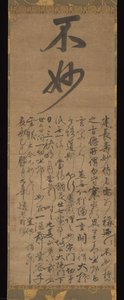
“Not Clever,” created around 1425, is arguably Shōzui’s most celebrated work and serves as a compelling illustration of his artistic philosophy. The composition—featuring two large characters reading 不妙 (Fumyō)—represents a pointed critique of Monk Jūmyō Jisha, whose name deliberately incorporates the character 妙 (“marvelous”), symbolizing enlightenment. This juxtaposition underscores Shōzui’s belief that true wisdom transcends superficial brilliance and demands an honest confrontation with one's own limitations—a concept central to Zen meditation. The brushwork itself is masterful: a sweeping stroke of ink on paper conveys rhythm and dynamism, reflecting the artist’s intention to capture not merely visual beauty but also the profound spiritual experience associated with Zen practice.
- Symbolism & Critique: The deliberate use of Fumyō—a term laden with negative connotations—highlights Shōzui's critique of conventional notions of achievement and virtue.
- Zen Aesthetics: The bokuseki style embodies the Zen ideal of spontaneity and effortless expression, prioritizing intuitive understanding over intellectual analysis.
Influence & Legacy
Ichidon Shōzui’s work exerted considerable influence on subsequent generations of Japanese artists, establishing a precedent for stylistic innovation within Rinzai Zen calligraphy. His embrace of bold brushstrokes and asymmetrical compositions challenged established artistic norms—promoting a visual language that prioritized spiritual depth over decorative embellishment. Furthermore, his inscription on Mokuan Reien's painting exemplifies the broader cultural context of Muromachi art—a period characterized by patronage from powerful samurai clans and a fervent devotion to Buddhist principles. Shōzui’s legacy continues to inspire artists today who strive to capture the elusive essence of enlightenment through artistic expression.
Further Exploration
To delve deeper into Ichidon Shōzui's artistic contributions, consider examining his oeuvre alongside works by other prominent Zen masters of the Muromachi period—particularly Kikuchi Yosai—whose stylistic innovations profoundly shaped Japanese calligraphy and visual culture. Research resources available at The Metropolitan Museum of Art offer invaluable insights into Shōzui’s life and work, furthering our understanding of this remarkable artist's enduring impact on Japanese art history.



 1425
1425 92.0 x 36.0 cm






 미리보기
미리보기
 프린트 구매
 공유하기
공유하기 공유하기
공유하기
 상세 정보
상세 정보

 다운로드
다운로드
 유사 작품
유사 작품 X-레이
X-레이 슬라이드 쇼
 더 보기
더 보기






































 유리 옵션은 110cm 미만 크기에서만 선택 가능합니다.


