웹 미리보기 화면을 훨씬 뛰어넘는 인쇄용 파일을 만나보세요. 저희가 판매하는 모든 디지털 이미지는 스톡 데이터베이스 내의 고해상도 마스터 파일(일반적으로 가로 5,000~15,000픽셀)을 기반으로 합니다. 따라서 대형 인쇄나 정밀한 크롭 작업 시에도 세밀한 디테일을 자신 있게 구현할 수 있습니다.
저희 스튜디오를 거치는 모든 파일은 정교한 손길을 거칩니다. 디지털 전문가가 원작과 대조하여 색상을 점검하고 필요 시 보정하며, 전문 리터칭 도구를 사용하여 선명도와 디테일을 높입니다. 이 과정에서 작가의 붓 터치와 화풍을 충실히 유지하는 것을 원칙으로 합니다. 그 결과, 단순한 스캔본에 필터를 입힌 듯한 느낌이 아닌, 마치 실제 회화 작품을 보는 듯한 이미지를 구현해냅니다.
최종 완료 전 확인 단계가 있습니다. 전문가가 검토하실 수 있도록 72시간 이내에 이미지를 이메일로 보내드립니다. 결과물이 만족스럽지 않으신가요? 수정이나 보완을 요청하시거나, 품질이 기대에 미치지 못할 경우 환불을 요청하실 수 있습니다.
출판사, 디자인 스튜디오, 갤러리 및 인쇄소가 신뢰하는 바로 그 품질입니다.
개인 소장 및 전시, 인쇄, 창작 프로젝트를 위한 고해상도 파일을 다운로드하세요. ( 프린트 판매로 전환 수작업 채색 복제본 주문하기)
WahooArt.com를 선택하시면 단순히 이미지를 받는 것을 넘어, 정밀한 보정 과정을 거쳐 완성된 전문적인 디지털 예술 작품을 만나보실 수 있습니다. 모든 주문에는 만족 보장 서비스가 포함되어 있으며, 다음과 같은 사항들이 자동으로 제공됩니다:
주문 후 72시간 이내에 고해상도 디지털 이미지 파일이 이메일로 발송되며, 즉시 사용하실 수 있습니다.
귀하의 작품은 첨단 AI 기술과 정교한 수동 편집 과정을 거쳐 전문적으로 최적화되며, 이를 통해 디테일과 선명도, 색상의 정확도를 극대화합니다.
파일을 실수로 삭제하거나 분실하셨나요? 걱정 마세요. 언제든 무료로 다시 보내드립니다.
관세, 부가세, 배송비 부담 없이 작품을 즉시 소장하세요 - 디지털 다운로드는 언제나 면세 혜택이 적용됩니다.
전문적인 도구와 색상 관리 시스템을 통해 디지털 이미지가 원본의 색상을 최대한 정확하게 구현하도록 보장합니다.
구매하신 디지털 이미지에 만족하지 못하실 경우, 100일 이내에 별도의 조건 없이 수정 또는 100% 환불을 진행해 드립니다.
만족스럽지 않으신가요? 디지털 파일을 받으신 후 100일 이내라면 어떤 이유로든 조건 없이 전액 환불해 드립니다.
이미지 3매 구매 시 10% 할인 - 5매 구매 시 15% 할인 - 10매 이상 구매 시 20% 할인. 크리에이티브 프로젝트, 갤러리, 에이전시에 매우 유용합니다.
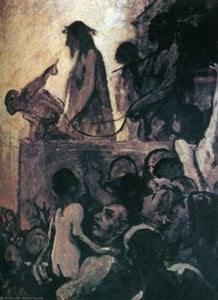
Honoré Daumier’s “The Republic” (1848) isn't merely a painting; it’s a potent distillation of the anxieties and aspirations swirling within post-revolutionary France. Captured with his signature blend of realism and biting satire, this oil on canvas presents a scene both familiar and profoundly unsettling – a woman, presumably a mother, holding her children close while simultaneously embodying the ideals of republican virtue. The composition immediately draws the eye to her central position; she’s not a regal figure or an idealized Madonna, but a common woman, weathered yet resolute, clutching a flag and a bottle—symbols that speak volumes about the precarious balance between nourishment and civic duty in a nation grappling with its new identity.
Daumier was deeply invested in documenting the social realities of his time. Born in Marseille in 1808, he witnessed firsthand the upheavals of the French Revolution and the subsequent political instability. His art became a relentless critique of the established order – the monarchy, the aristocracy, the Church, and the burgeoning bourgeoisie—all perceived as obstacles to genuine republicanism. “The Republic” is no exception; it’s a pointed commentary on the challenges faced by women in particular during this period of transition. The flag she holds isn't simply a symbol of national pride, but a visual representation of the ideals – liberty, equality, fraternity – that were supposed to underpin the new republic. The bottle, often interpreted as representing sustenance and motherhood, subtly suggests the vital role of family in sustaining these values.
Daumier’s technique is characterized by a remarkable directness and emotional intensity. He eschewed the polished surfaces and idealized forms favored by many of his contemporaries, opting instead for a rougher, more immediate style. The brushstrokes are visible, conveying a sense of urgency and immediacy. The palette is muted—earthy browns, ochres, and greys—reflecting the somber mood of the scene and emphasizing the weight of responsibility borne by the central figure. Notice how he uses light and shadow to sculpt her face, highlighting the lines etched by hardship yet radiating an undeniable strength. The background, featuring a simple chair and hinting at a boat, grounds the scene in a domestic setting, further emphasizing the woman’s role as the heart of the family and the embodiment of republican values.
He was heavily influenced by artists like Rubens, particularly in his use of dramatic chiaroscuro – the stark contrast between light and dark—to create a sense of theatricality. This technique amplifies the emotional impact of the painting, drawing attention to the woman’s face and gestures while simultaneously suggesting the turbulent political landscape surrounding her. Daumier's skill lay not just in his technical proficiency but also in his ability to imbue ordinary subjects with extraordinary significance.
Beyond its immediate depiction, “The Republic” is laden with symbolism. The flag, as mentioned earlier, represents the ideals of the republic, while the bottle speaks to the fundamental needs of family and community. However, the scene isn’t entirely optimistic. The woman's posture suggests a quiet determination rather than triumphant celebration. She’s not basking in victory; she’s enduring—a testament to the ongoing struggle for republican values. Some scholars have suggested that the children represent the future of France, entrusted to this woman’s care as she navigates the complexities of the new political order.
Daumier's work was often controversial during his lifetime, and “The Republic” is no exception. His unflinching critique of social injustice earned him both admirers and enemies. Yet, it remains a powerful and enduring image—a poignant reminder of the challenges inherent in establishing a truly democratic society and the vital role played by ordinary citizens in upholding its ideals.
Reproductions of “The Republic” capture the essence of Daumier’s artistic vision. Available in various sizes, this iconic artwork offers a unique opportunity to bring a touch of historical significance and social commentary into any space. The rich textures and dramatic lighting are faithfully reproduced, allowing you to appreciate the depth and complexity of Daumier's masterful technique. Whether displayed as a statement piece or incorporated into a more subtle interior design scheme, “The Republic” is sure to spark conversation and inspire reflection on the enduring values of liberty, equality, and fraternity.
오노레 도미에의 "The Republic"의 원작 크기는 73 x 60 cm입니다. 복제화는 동일한 비율을 유지하면서 다른 크기로도 주문 가능합니다.
시각적 밝기 측면에서 볼 때, 오노레 도미에의 "The Republic"은(는) deep_shadow 수준입니다.
오노레 도미에의 "The Republic"의 저작권 정보: 해당 작품은 퍼블릭 도메인 - 저작권 보호 기간이 만료되었습니다 상태입니다. 이는 이미지 복제 가능 여부를 결정하는 기준이 됩니다.

1808 - 1879 , 프랑스
 미리보기
미리보기
 공유하기
공유하기 공유하기
공유하기
 상세 정보
상세 정보 가이드 보기

 다운로드
다운로드
 유사 작품 더 보기
 X-레이
X-레이 슬라이드 쇼 보기
 질의응답
질의응답
 통계 정보
통계 정보


 더 보기
더 보기