EtchingWallArtContemporary Realism
 187019th Century
 20.0 x 27.0 cm
 Courtauld Gallery
빠른 제작과 다양한 마감 옵션을 제공하는 박물관 품질의 지클레이 또는 캔버스 프린트. ( 손으로 그린 그림 구매 디지털 이미지로 전환)





























작품의 원본 비율을 유지하는 미리 설정된 크기 중에서 선택하세요.

특정 프레임이나 공간에 맞춰 직접 치수를 입력하실 수 있습니다. 선택하신 사이즈가 원본 이미지의 비율과 일치하지 않을 경우, 작품을 크롭(자르기)하거나 이미지를 대칭 또는 단색 채우기로 확장하여 제작합니다. 제작 시작 전, 최종 확인을 위해 디지털 목업이 전송됩니다.
화면상의 미리보기는 실제 크롭이나 확장 상태를 반영하지 않으므로, 최종 구도는 오직 목업을 통해서만 정확하게 확인하실 수 있습니다.
맞춤 사이즈 제작도 가능하지만, 원본 비율을 유지하기 위해서는 사전 정의된 목록에서 치수를 선택하시는 것을 권장합니다.

The Hypochondriac (Le Malade imaginaire)
복제본 크기
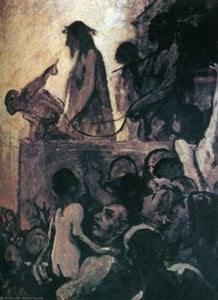
In the realm of French Realism, few works capture the biting wit and social scrutiny of Honoré Daumier quite like "The Hypochondriac" (Le Malade imaginaire). Executed around 1870, this evocative drawing serves as a profound visual distillation of Molière’s legendary satirical play. Daumier does not merely illustrate a theatrical moment; he breathes life into the very essence of human folly and the absurdity of medical pretension. The scene presents a dramatic tableau where the boundaries between stagecraft and reality blur, inviting the viewer to witness the tension between the delusional patient, Argan, and the self-important physician, Purgon. It is a work that transcends its 19th-century origins, offering a timeless commentary on how easily authority can be used to mask incompetence.
The composition is anchored by a palpable sense of atmosphere, achieved through Daumier’s masterful command of light and shadow. The room feels intimate yet claustrophobic, mirroring the psychological entrapment of the hypochondriac himself. Through his use of chiaroscuro-like effects, Daumier directs our gaze across the figures—from the bearded doctor engaged in intense dialogue to the whimsical presence of a jester holding a bottle. This interplay of light does more than define form; it sculpts the emotional weight of the scene, highlighting the dramatic friction between the characters and creating a sense of theatrical depth that pulls the observer into the heart of the drama.
To behold "The Hypochondriac" is to appreciate the technical brilliance of Daumier’s dry etching process. By applying acid to a zinc plate coated with bitumen, the artist achieved a remarkable level of detail that allows for incredible textural nuance. Every line carries intention, contributing to a sense of movement and life that is rare in works of this period. The tonal modulations are particularly striking; they provide a velvety richness to the shadows and a sharp clarity to the highlights, lending the black and white medium a near-painterly quality. This meticulous draftsmanship allows the viewer to feel the heavy fabrics of the costumes and the somber stillness of the room.
For the discerning collector or interior designer, this piece offers a sophisticated aesthetic that balances historical gravity with expressive energy. The monochromatic palette makes it an exceptionally versatile choice for high-end decor, capable of anchoring a gallery wall or serving as a focal point in a study lined with books. It possesses that rare quality of "living art"—a work that does not merely sit on a wall but actively engages the room, sparking conversation and inviting deep contemplation of the human condition.
Beyond its technical merits, the emotional impact of Daumier’s work lies in its unapologetic honesty. As a chronicler of the tumultuous currents of 19th-century France, Daumier used his art as a weapon against hypocrisy. In "The Hypochondriac," he captures the precise moment where medical authority meets theatrical farce. The symbolism is subtle yet pervasive: the bottles, the costumes, and the exaggerated gestures all serve to lampoon the inflated egos of those who claim expertise over life and death. It is an invitation to look beneath the surface of societal roles and recognize the comedy—and the tragedy—inherent in our shared delusions.
Owning a high-quality reproduction of this masterpiece allows one to preserve a fragment of art history’s most sharp-witted era. Whether you are drawn to its connection to Molière, its exquisite Realist technique, or its ability to add a layer of intellectual depth to a modern space, "The Hypochondriac" remains an enduring icon of artistic bravery and observational genius.


1808 - 1879 , 프랑스

Explore 10 defining masterpieces of Romantic Realism! Discover Courbet, Millet & Daumier's powerful paintings—capturing emotion and social realities. Find museum-quality reproductions for your home at WahooArt.com.

현실을 충실히 담아낸 리얼리즘 명작 10선! 쿠르베, 밀레 등 거장의 작품으로 미술사의 흐름을 만나보세요. 와후아트에서 고품질 예술 작품과 인테리어 영감을 얻고, 당신의 공간에 예술적 감성을 더하세요. 지금 바로 와후아트에서 모든 명작을 발견해보세요!

Explore the captivating world of 19th-century Realism! Discover key artists like Courbet & Millet, masterpieces, and the powerful social commentary behind this influential art movement. Expert insights at WahooArt.

Explore the captivating world of Realism! Discover key artists like Courbet, defining techniques & its lasting impact on art history. Expert insights and high-quality reproductions at WahooArt.

Explore the life & work of Honoré Daumier, a master of 19th-century French realism and satire. Discover his powerful lithographs, paintings, and sculptures critiquing society – and his lasting influence on modern art.


 미리보기
미리보기
 공유하기
공유하기 공유하기
공유하기
 상세 정보
상세 정보

 다운로드
다운로드
 유사 작품
유사 작품 X-레이
X-레이 슬라이드 쇼
 통계 정보
통계 정보 더 보기
더 보기









 유리 옵션은 110cm 미만 크기에서만 선택 가능합니다.