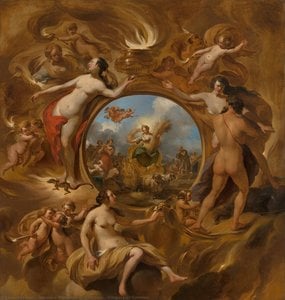
1905
1905 89.0 x 109.0 cm
온라인 미리보기보다 훨씬 뛰어난 품질의 고해상도 디지털 이미지를 구매해 보세요.
각 파일은 사내 전문가가 고급 도구와 숙련된 수동 리터칭 기술을 사용하여 세심하게 준비합니다. 우리는 모든 이미지가 탁월한 선명도, 정확한 색상 재현력, 그리고 미세한 디테일까지 완벽하게 갖추도록 보장합니다.
최종 파일은 전문적인 편집 및 인쇄 환경에서 즉시 사용할 수 있도록 최적화되어 72시간 이내에 이메일로 발송됩니다. 이는 세계적인 디자인 스튜디오, 출판사 및 갤러리가 신뢰하는 것과 동일한 품질입니다.
개인 소장 및 전시, 인쇄, 창작 프로젝트를 위한 고해상도 파일을 다운로드하세요. ( 프린트 구매 손으로 그린 그림 구매)
WahooArt.com를 선택하시면 단순히 이미지를 받는 것을 넘어, 정밀한 보정 과정을 거친 전문적인 디지털 예술 작품을 만나보실 수 있습니다. 모든 작품에는 만족 보장 서비스가 함께 제공되며, 주문 시 다음과 같은 사항들이 자동으로 포함됩니다:

주문 후 72시간 이내에 고해상도 디지털 이미지 파일이 이메일로 발송되며, 즉시 사용하실 수 있습니다.

귀하의 작품은 고급 AI 도구와 수동 편집 과정을 거쳐 전문적으로 최적화되며, 이를 통해 디테일과 선명도, 색상의 정확도를 극대화합니다.

파일을 실수로 삭제하거나 분실하셨나요? 걱정 마세요. 언제든 무료로 다시 보내드립니다.

관세나 부가세, 배송비 부담 없이 작품을 즉시 감상하세요 - 디지털 다운로드는 언제나 면세 혜택이 적용됩니다.

전문적인 도구와 색상 관리 시스템을 통해 디지털 이미지가 원본의 색상을 최대한 정확하게 구현하도록 보장합니다.

구매하신 디지털 이미지에 만족하지 못하실 경우, 100일 이내에 별도의 조건 없이 수정 또는 100% 환불을 진행해 드립니다.

만족스럽지 않으신가요? 디지털 파일을 받으신 후 100일 이내에 어떠한 조건 없이 전액 환불해 드립니다.

이미지 3매 구매 시 10% 할인 - 5매 구매 시 15% 할인 - 10매 이상 구매 시 20% 할인. 크리에이티브 프로젝트, 갤러리, 에이전시에 매우 유용합니다.

In the grand tapestry of late nineteenth-century art, few figures possess the dual mastery of scientific precision and poetic sensibility found in Henrik Grø.nvold. Born in Præstø, Denmark, in 1858, Grønvold was a man whose soul was inextricably bound to the rhythms of the natural world. While many of his contemporaries sought the abstract or the purely emotive, Grønvold found his muse in the delicate plumage of a songbird and the shifting light over a Nordic fjord. His life was a continuous dialogue with nature, a pursuit that saw him transition from a student of machine drawing in Copenhagen to one of the most respected natural history illustrators of his era.
Grønvold’s artistic journey was shaped by a rigorous academic foundation and an insatiable curiosity. After honing his technical skills at the Copenhagen Technical College, he sought further refinement at the Königliche Kunstakademie Düsseldorf. It was here, under the guidance of the master Wilhelm Leibl, that Grønvold encountered the nuances of German Impressionism. This pivotal influence infused his work with a luminous quality, teaching him to use color not merely as a descriptive tool, but as a means to capture the very atmosphere of the Scandinavian landscape. His technique became a sophisticated blend of meticulous anatomical accuracy and a loose, expressive brushwork that breathed life into every subject he touched.
What truly distinguishes Grønvold from the traditional landscape painters of his time was his profound ornithological obsession. He did not merely observe birds; he studied them with the intensity of a scientist and the reverence of a devotee. This passion led him on extensive expeditions across Denmark, Norway, and Sweden, where he painstakingly documented avian life in its most authentic habitats. His work as an illustrator for the Biological Research Station of Copenhagen and his later tenure at the Natural History Museum in London allowed him to merge the worlds of taxidermy, anatomy, and fine art. He was among the final generation of natural history illustrators to master the delicate art of lithography, ensuring that his scientific contributions were as visually breathtaking as they were biologically accurate.
His oeuvre is a testament to this duality, ranging from sweeping oil paintings to intimate watercolor studies:
As the twentieth century dawned, Grønvold’s work stood at a unique crossroads between the era of classical naturalism and the rising tide of modernism. While his commitment to scientific truth remained steadfast, his ability to embrace the light-filled aesthetics of Post-Impressionism allowed his art to remain relevant in a changing artistic landscape. He lived through a period of immense transition, yet he remained anchored by his devotion to the organic world. Even when his travels took him far from his Danish roots—including a significant period in London where he worked alongside renowned naturalists—his heart remained tethered to the landscapes of Scandinavia.
Today, the legacy of Henrik Grønvold resides in the quiet beauty of his subjects and the enduring accuracy of his observations. He remains a singular figure who proved that the line between the scientist’s ledger and the artist’s canvas is beautifully thin. To look upon a Grønvold painting is to experience a moment of profound stillness, an invitation to witness the intricate, often overlooked wonders of the natural world through the eyes of a true master of light and life.

1858 - 1940


 미리보기
미리보기
 공유하기
공유하기 공유하기
공유하기
 상세 정보
상세 정보

 다운로드
다운로드
 유사 작품
유사 작품 X-레이
X-레이 슬라이드 쇼
 더 보기
더 보기