A Symphony in Color: Exploring Henri Matisse’s Untitled (9243)
This captivating painting by Henri Matisse—simply titled “Untitled (9243)”—offers a glimpse into the heart of Fauvist art, a movement that irrevocably altered the course of twentieth-century painting. Created sometime between 1906 and 1915, during Matisse’s formative years as a painter, it exemplifies his masterful command of color and expressive draughtsmanship – qualities that cemented his place among the giants of modern art alongside Picasso.
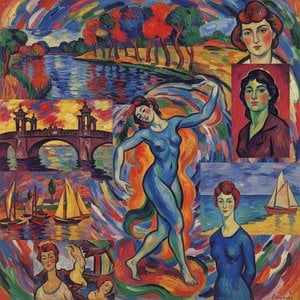
- Subject Matter: The scene depicts a tranquil courtyard featuring a building with a prominent staircase ascending towards the upper floors. Dominating the composition is a solitary tree, positioned strategically to frame the architectural element and contribute to the overall sense of serenity.
- Style & Technique: Matisse’s approach aligns perfectly with Fauvism's core tenets—a deliberate rejection of naturalistic representation in favor of intense color palettes applied directly onto the canvas without blending or shading. The artist employs bold, flattened planes of pigment, prioritizing visual impact over meticulous detail. This technique allows for a vibrant and emotionally resonant portrayal of everyday life.
Historical Context: Fauvism’s Bold Rebellion
Fauvism emerged in Paris during the early 1900s as a reaction against Impressionism's subtle gradations of light and color. Artists like Matisse, André Derain, Maurice Denis, and Henri Rousseau sought to liberate color from its descriptive function, using it instead as an expressive tool—a conduit for conveying emotion and capturing the essence of their subjects. This audacious stylistic choice challenged artistic conventions and paved the way for subsequent developments in abstraction.
Color Palette & Symbolic Resonance
Matisse’s masterful use of color is undeniably the painting's defining characteristic. Dominated by hues of ochre, terracotta, and crimson—particularly vibrant reds—the palette evokes feelings of warmth, passion, and vitality. The tree itself serves as a symbol of resilience and growth, anchoring the composition while simultaneously representing life force amidst urban surroundings. These colors aren’t merely decorative; they are deliberately chosen to stimulate the viewer's senses and communicate an underlying emotional state.
Emotional Impact & Artistic Legacy
“Untitled (9243)” transcends mere visual representation, inviting contemplation on themes of simplicity, beauty, and human connection. Matisse’s ability to distill complex ideas into a deceptively straightforward composition speaks volumes about his artistic genius. It remains an enduring testament to the transformative power of color—a cornerstone of Fauvist aesthetics—and continues to inspire artists and collectors alike. Its quiet grandeur embodies Matisse's belief that art should be accessible, joyful, and above all, truthful to its inner vision.
질의응답
"untitled (9243)"과(와) 유사한 작품이 더 있을까요?
앙리 마티스의 "untitled (9243)"의 유사한 작품들 페이지에서 관련 작품들을 만나보세요.
"untitled (9243)"은(는) 어떤 분위기를 자아내나요?
앙리 마티스의 "untitled (9243)"의 전반적인 분위기는 Elegant입니다. 이 분위기는 작품이 자아내는 전반적인 공기를 잘 나타냅니다.
"untitled (9243)"의 재료와 화풍은 무엇인가요?
"untitled (9243)"에서 Acrylic On Canvas 기법은 Fauvist Expression 사조와 만납니다.