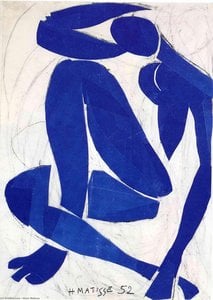
Henri Matisse: Blue Eyes – A Symphony of Color and Quiet Contemplation
Henri Matisse, a French artist renowned for his innovative use of color and fluid draughtsmanship, left an indelible mark on the world of modern art. Among his numerous works,
Blue Eyes, created in 1934, stands out as a testament to his mastery of capturing human emotion through vibrant hues and expressive brushstrokes. This painting isn’t merely an image; it's a distillation of Matisse’s artistic philosophy—a belief that color could convey feeling more powerfully than representation itself.
The Painting: A Study in Fauvism
- Fauvism: Blue Eyes exemplifies the Fauvist style, characterized by bold, vivid colors and energetic brushwork. Matisse's deliberate choice of blue—ranging from deep indigo to pale cerulean—dominates the palette, creating a sense of serenity and contemplation that transcends mere visual appeal. It’s as if he sought to distill emotion into its purest form.
- Composition: The subject, a woman with striking blue eyes, is depicted in a relaxed pose, resting her head on her hand while gazing downward. This posture speaks volumes about introspection and quiet reflection—a deliberate contrast to the turbulent artistic currents of his time. Matisse skillfully employs geometric shapes and simplified forms to achieve this effect.
- Size: Measuring 38 x 46 cm, Blue Eyes’ compact size belies its powerful impact, inviting the viewer to engage intimately with the subject. The scale allows for a detailed appreciation of the textures created by Matisse's brushstrokes.
Matisse's Artistic Journey
Matisse’s artistic career spanned multiple styles and mediums, but his work in Fauvism remains particularly celebrated. His ability to balance color and form established a new language of art that influenced generations of artists. He began experimenting with color early on, rejecting the muted tones favored by Impressionists in favor of hues that seemed almost unnatural—a bold defiance of artistic convention. This approach foreshadowed developments in Cubism and Surrealism.
- Influence on Modern Art: Matisse’s contributions to modern art are undeniable. His explorations with color and composition paved the way for various avant-garde movements, demonstrating his profound understanding of artistic innovation.
- Collaborations and Rivalries: Notably, his relationship with Pablo Picasso was marked by both collaboration and competition, as seen in their respective works like Les Demoiselles d’Avignon and Bathers with a Turtle. Their contrasting styles reflected the diverse artistic visions of their era.
- Museum Collections: Many of Matisse’s works are housed in prestigious museums around the world, such as The Baltimore Museum of Art, which boasts an impressive collection of modern and contemporary art. Visiting these institutions offers a chance to experience Matisse’s genius firsthand.
Reproductions at WahooArt.com
For those who wish to bring a piece of Matisse’s brilliance into their own space,
WahooArt.com offers high-quality, handmade oil painting reproductions. These meticulous recreations capture the essence and beauty of Matisse’s original works—allowing you to appreciate his vision without the expense or logistical challenges of acquiring an authentic masterpiece.
Conclusion
Blue Eyes by Henri Matisse is a masterpiece that encapsulates the artist’s unique vision and skill. Through its vibrant colors and contemplative subject, it invites viewers to reflect on the harmony between art and emotion—a timeless testament to Matisse's enduring legacy. As we continue to explore the rich tapestry of modern art, works like
Blue Eyes remind us of the transformative power of artistic expression.
For more information on Matisse’s life and work, visit
Henri Matisse at WahooArt.com.