

 PaintingContemporary Realism
 Contemporary
 198.0 x 198.0 cm
 Barjeel Art Foundation
빠른 제작과 다양한 마감 옵션을 선택할 수 있는 박물관 수준의 지클레이 및 캔버스 프린트. ( 수작업 채색 복제본 주문하기 디지털 이미지 판매 채널로 전환)
작품의 원본 비율을 그대로 유지하는 프리셋 사이즈 중에서 선택해 보세요.

특정 프레임이나 공간에 맞춰 직접 치수를 입력하실 수 있습니다. 선택하신 사이즈가 원본 이미지의 비율과 일치하지 않을 경우, 작품을 크롭(자르기)하거나 이미지를 대칭 또는 단색 채우기로 확장하여 제작합니다. 제작 시작 전, 최종 확인을 위해 디지털 목업이 전송됩니다.
화면상의 미리보기는 실제 크롭이나 확장 상태를 반영하지 않으므로, 최종 구도는 오직 목업을 통해서만 정확하게 확인하실 수 있습니다.
맞춤 사이즈 제작도 가능하지만, 원본 비율을 유지하기 위해서는 사전 정의된 목록에서 치수를 선택하시는 것을 권장합니다.

Corporeal Mappings
복제본 규격
In the hauntingly beautiful masterpiece Corporeal Mappings, Hayv Kahraman invites the viewer into a labyrinth of identity and reflection. The painting presents a profound visual meditation on the female form, captured through a series of layered, kaleidoscopic reflections that seem to ripple across the canvas. At first glance, one is struck by the central figure—a woman whose face is caught in a moment of deep introspection, her hands pressed against her skin as if trying to anchor herself amidst a sea of shifting perceptions. The composition utilizes a mesmerizing technique where multiple iterations of the subject appear within the frame, creating a sense of temporal and spatial distortion. This use of mirrors does not merely serve a decorative purpose; it acts as a psychological tool, fragmenting the subject into various states of being, much like the fractured experience of displacement that defines Kahraman’s own life story.
The artist’s background, rooted in the turbulent history of Baghdad and the subsequent migration to Sweden, breathes an undeniable emotional weight into every brushstroke. Through her formal training in Florence, Kahraman mastered a technique that blends classical precision with a contemporary, surrealist sensibility. In Corporeal Mappings, the texture of the wooden background provides a grounded, organic contrast to the ethereal, almost ghostly quality of the reflections. This juxtaposition between the solid, tactile reality of the wood and the fluid, multiplying faces creates a tension that is both unsettling and deeply captivating. The way the light catches the edges of each reflected silhouette suggests a search for clarity in an era of uncertainty, making the piece a powerful symbol of the struggle to maintain a cohesive sense of self when one's environment is in constant flux.
For the discerning collector or interior designer, this artwork offers much more than visual splendor; it provides a profound intellectual and emotional anchor for any space. The large-scale presence of the 198 x 198 cm canvas demands attention, making it an ideal centerpiece for a sophisticated gallery wall or a contemplative corner in a modern living suite. Its palette, rich with depth and subtle tonal shifts, complements both minimalist and classical decor, adding a layer of narrative complexity to a room's atmosphere. To possess a reproduction of Corporeal Mappings is to invite a conversation about memory, heritage, and the enduring resilience of the human spirit into one's home. It is a piece that does not merely hang on a wall but breathes within a space, prompting viewers to look deeper into their own reflections and the many layers that constitute their own histories.

Born in the heart of Baghdad, Iraq, in 1981, Hayv Kahraman’s life has been profoundly shaped by displacement – a theme that resonates powerfully throughout her haunting and evocative paintings. Her early years were spent amidst the vibrant chaos of Iraqi culture, attending music and ballet school before the tumultuous events of the Gulf War forced her family to seek refuge in Sweden. This journey, marked by loss and uncertainty, became the bedrock upon which her artistic vision was built, informing a deeply personal exploration of identity, memory, and the complexities of belonging.
Kahraman’s artistic trajectory began with a formal education at the Academy of Art and Design in Florence, Italy. This immersion in European art history provided a crucial foundation, yet it was her own lived experiences – the echoes of war, the disorientation of migration, and the fragmented nature of selfhood – that ultimately dictated her unique style. She doesn’t simply depict these events; she excavates them, layering symbolism and technique to create works that are both intensely personal and universally resonant.
Kahraman's work is frequently characterized by a palpable sense of unease, reflecting the trauma of war and displacement. The recurring motif of violence isn’t gratuitous; it stems from her own memories of Baghdad during the Iran-Iraq War, where she spent much of her childhood sheltering in basements with family, illuminated only by candlelight and the sounds of card games – a poignant image that speaks to resilience amidst adversity. Central to her artistic practice is the exploration of fractured identities—a direct consequence of war and population displacement. She consistently examines the ways boundaries and borders are broken down, arguing that our sense of self is inextricably linked to our location.
Her paintings often depict figures caught in states of flux, embodying the disorientation and vulnerability experienced by refugees and migrants. The recurring image of the “migrant” – a contorted dancer, a fragmented figure – serves as a powerful metaphor for the deformation of self that can result from forced movement and cultural assimilation. Kahraman’s work directly confronts questions of gender, body politics, migration, and diaspora, offering a nuanced perspective on the human cost of displacement.
Kahraman's artistic approach is remarkably diverse, drawing upon a rich tapestry of influences. She skillfully blends traditional techniques with contemporary methods, creating a distinctive visual language. The influence of Chinese ink painting and Japanese woodblock prints is evident in her use of line and composition, while the meticulous detail of Russian nesting dolls hints at an interest in layered narratives and hidden meanings.
Beyond these historical influences, Kahraman employs innovative techniques to explore her themes. She utilizes 3D scanning technology to deconstruct and reconstruct her own body, creating a series of striking self-portraits that challenge conventional notions of representation. Her work with science—specifically the use of pattern and geometry—is particularly noteworthy, as she incorporates decorative textile patterns into her paintings, mirroring the intricate designs found in Iraqi carpets and textiles. The “War-aq” series, referencing the Arabic word for playing cards, is a testament to this approach, combining personal memories with a broader commentary on displacement and loss.
Several of Kahraman’s paintings stand out as particularly significant examples of her artistic vision. “Flayed Lamb” (D4GH66) powerfully depicts the vulnerability and suffering of displaced individuals, while "To the Land of the Waqwaq I" (DD293X) evokes a sense of longing for home and the enduring impact of exile. Her 2024 exhibition, “Look Me in the Eyes,” at the Institute of Contemporary Art San Francisco, further explored themes of surveillance, nationalism, and mobility through the motif of eyes – a recurring element in her work that symbolizes both observation and vulnerability.
Other notable works include "Not Quite Human," a series of unsettling self-portraits depicting figures in extreme poses, and “Re-Weaving Migrant Inscriptions,” which reimagines traditional Iraqi woven fans as a means of reclaiming cultural heritage. Her installation work, “Body Screen,” is particularly innovative, utilizing laser scanning to create a lattice screen that obscures the viewer’s perception of her own body, challenging conventional notions of gaze and power.
Hayv Kahraman's art is not merely a reflection of personal experience; it is an urgent and compelling statement about the human condition in the face of displacement, violence, and loss. Her work invites viewers to confront uncomfortable truths and grapple with the complexities of identity in a world increasingly defined by borders and boundaries.

1981 - , Iraq

Explore the profound symbolism of mirrors in fine art history. From Surrealist distortions to Vanitas themes, discover how masters use reflections to capture reality and the metaphysical soul.
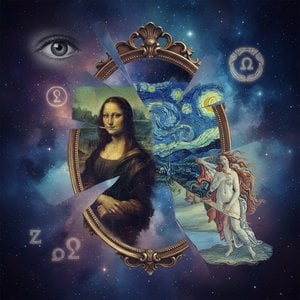
Explore the profound symbolism of mirror images in fine art. From Surrealist distortions to classical self-portraits, discover how masters use reflections to explore reality, identity, and the infinite through a sophisticated art-historical lens.

Embark on a sophisticated journey through art history's most captivating masterpieces of reflection. Explore how legendary artists used mirrors to explore identity, surrealism, and the soul through expert art historical analysis.

Explore the profound beauty of fragmentation in art history. From Picasso's Cubism to Kandinsky's abstraction, discover how broken forms create masterpiece-level depth for discerning collectors and modern interiors.
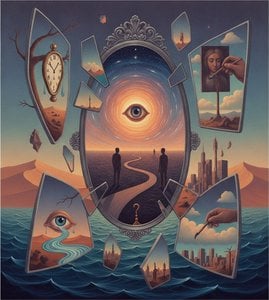
Explore the profound symbolism of mirror art through a journey of Surrealist mastery. From Dalí's fractured realities to technical brilliance, discover how reflections redefine art history and inspire sophisticated modern collections.

 실제 크기로 보기
 보내기
보내기 공유하기
공유하기
 상세 보기
상세 보기 가이드 보기

 이미지 다운로드
 유사 작품 더 보기
 X-레이
X-레이 슬라이드 쇼 보기
 통계 정보
통계 정보 상세 보기
상세 보기






































 유리 옵션은 110cm 미만 크기에서만 선택 가능합니다.


