
x


빠른 제작과 다양한 마감 옵션을 제공하는 박물관 품질의 지클레이 또는 캔버스 프린트. ( 손으로 그린 그림 구매 이미지 구매)
작품의 원본 비율을 유지하는 미리 설정된 크기 중에서 선택하세요.

특정 프레임이나 공간에 맞춰 직접 치수를 입력하실 수 있습니다. 선택하신 사이즈가 원본 이미지의 비율과 일치하지 않을 경우, 작품을 크롭(자르기)하거나 이미지를 대칭 또는 단색 채우기로 확장하여 제작합니다. 제작 시작 전, 최종 확인을 위해 디지털 목업이 전송됩니다.
화면상의 미리보기는 실제 크롭이나 확장 상태를 반영하지 않으므로, 최종 구도는 오직 목업을 통해서만 정확하게 확인하실 수 있습니다.
맞춤 사이즈 제작도 가능하지만, 원본 비율을 유지하기 위해서는 사전 정의된 목록에서 치수를 선택하시는 것을 권장합니다.

Cliff End, Studland, Dorset
복제본 크기

The life of Harry van der Weyden was a remarkable journey that spanned continents, bridging the gap between the traditional roots of his American birth and the sophisticated artistic circles of Europe. Born on September 8, 1868, in Boston, Massachusetts, Van der Weyden’s early years were far removed from the misty coasts of France or the bustling studios of London that would later define his career. Despite his New England origins, he was never a product of the Boston School; instead, his artistic destiny was shaped by a profound pull toward the European avant-garde. At the tender age of nineteen, his talent earned him a prestigious scholarship to the Slade School in London, an opportunity that would set him on a path of rigorous classical training and eventual mastery over the atmospheric nuances of landscape painting.
As he matured, Van der Weyden sought the heart of the art world, moving to Paris during the pivotal years of 1890-1891. Under the tutelage of masters such as Jean-Paul Laurens, Benjamin Constant, and Jules-Joseph Lefebvre at the Académie Julian, he refined a technique that balanced academic precision with an emerging sensitivity to light. This period of intense study allowed him to absorb the evolving currents of French art, preparing him for a life spent capturing the ephemeral beauty of the natural world. His work during this era began to reflect a deep connection to the landscape, often finding inspiration in the coastal regions of France, particularly near Étaples, where he lived for many years before the tides of history changed his life forever.
Van der Weyden’s artistic legacy is most vibrantly felt in his ability to evoke mood through Tonalism—a style characterized by a limited palette and an emphasis on atmosphere. He possessed a rare gift for translating the subtle shifts of twilight, the heavy mist of a harbor, and the dramatic tension of coastal cliffs into oil on canvas. His paintings often feel less like static images and more like captured breaths of air. In works such as Night Fishing at Étaples, one can witness his masterful use of light to create a sense of profound tranquility, where Impressionistic brushstrokes dance across the surface to suggest the movement of water and the soft glow of distant lanterns.
His fascination with the sea and coastal landscapes led him to capture some of the most evocative scenes of his era. Whether depicting the rugged majesty of Cliff End, Studland in Dorset or the serene, monochromatic effects of a sunset over a bay, his work remains anchored in a deep emotional realism. There is an inherent poetry in his approach; he did not merely paint what he saw, but rather how the light felt against the skin and how the salt air shaped the horizon. This ability to merge the physical reality of a landscape with a subjective, emotional atmosphere allowed him to stand alongside great Tonalist figures like James McNeill Whistler.
The trajectory of Van der Weyden’s life was irrevocably altered by the onset of the Great War. The very landscapes he loved became theaters of conflict. From 1916 to 1918, his artistic eye was pressed into service for a different kind of observation; serving as a camouflage officer with the British Royal Engineers, he utilized his understanding of color, texture, and light to aid in the concealment of military movements. This period of intense, practical application of his artistic skills added a layer of gravity and complexity to his perspective on the natural world.
In the twilight of his life, Van der Weyden remained a figure of quiet significance within the international art community. Though much of his work resides in private collections today, his contribution to the evolution of landscape painting—specifically the bridge between late 19th-century realism and the atmospheric depth of Tonalism—remains undeniable. He passed away in London in 1952, leaving behind a body of work that continues to invite viewers into a world of serene coastal vistas and timeless, luminous beauty. His life stands as a testament to the wandering spirit of an artist who found his true home not in the city of his birth, but in the shifting lights of the European coast.
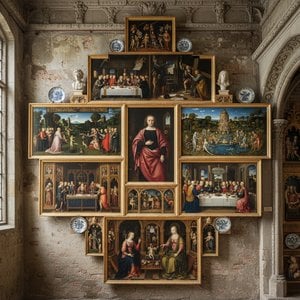
Journey into the Early Netherlandish Renaissance! Explore 10 iconic paintings by Jan van Eyck, Rogier van der Weyden & more. Discover stunning detail, symbolism, and oil painting techniques. Find museum-quality art reproductions for your home at WahooArt.com.

Explore the revolutionary art of Rogier van der Weyden, a pivotal figure of the Early Netherlandish Renaissance. Discover his emotional realism, innovative compositions, and lasting impact on painting history.
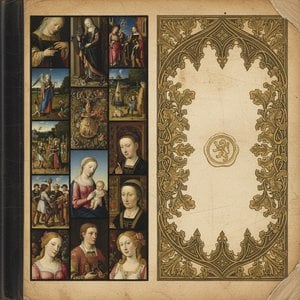
Journey into the world of Early Netherlandish painting! Explore 10 masterpieces by Jan van Eyck, Rogier van der Weyden & more. Discover stunning detail, symbolism & Renaissance art for your home decor. Find museum-quality reproductions on WahooArt.com

Explore the revolutionary art of Hugo van der Goes – a master of Early Netherlandish painting renowned for his dramatic realism, psychological depth & profound influence on Renaissance artists. Discover his iconic works and lasting legacy.

렘브란트 반 레인 명작 25선을 만나보세요. 빛과 그림자의 거장이 그린 역사화, 초상화 속 예술의 정수를 감상하고, 네덜란드 황금시대 바로크 미술의 깊이를 느껴보세요. WahooArt.com에서 고품질 복제화를 컬렉션하세요.


최신 미술 뉴스, 특별 혜택 및 인테리어 아이디어를 가장 먼저 만나보세요.
프로젝트에 대해 알려주시면 저희 미술 전문가들이 맞춤형 아트 제안 3가지를 전달해 드립니다.
당신만을 위한 맞춤형 옵션 3가지를 무료로 추천해 드립니다!


 미리보기
미리보기
 공유하기
공유하기 공유하기
공유하기
 상세 정보
상세 정보

 다운로드
다운로드
 유사 작품
유사 작품 X-레이
X-레이 슬라이드 쇼


 더 보기
더 보기






































 유리 옵션은 110cm 미만 크기에서만 선택 가능합니다.


