
x


 Expressionism
 11.0 x 9.0 cm
빠른 제작과 다양한 마감 옵션을 제공하는 박물관 품질의 지클레이 또는 캔버스 프린트. ( 손으로 그린 그림 구매 이미지 구매)
작품의 원본 비율을 유지하는 미리 설정된 크기 중에서 선택하세요.

특정 프레임이나 공간에 맞춰 직접 치수를 입력하실 수 있습니다. 선택하신 사이즈가 원본 이미지의 비율과 일치하지 않을 경우, 작품을 크롭(자르기)하거나 이미지를 대칭 또는 단색 채우기로 확장하여 제작합니다. 제작 시작 전, 최종 확인을 위해 디지털 목업이 전송됩니다.
화면상의 미리보기는 실제 크롭이나 확장 상태를 반영하지 않으므로, 최종 구도는 오직 목업을 통해서만 정확하게 확인하실 수 있습니다.
맞춤 사이즈 제작도 가능하지만, 원본 비율을 유지하기 위해서는 사전 정의된 목록에서 치수를 선택하시는 것을 권장합니다.

Only Gradually Did Kuan uin
복제본 크기

The American artist Harry Cimino (1898-1969) remains a captivating figure in the realm of early 20th-century art, particularly renowned for his evocative wood engravings and paintings that masterfully capture the essence of nature and the human experience. Born in Marion, Indiana, and later residing primarily in Falls Village, Connecticut, Cimino’s work is characterized by a distinctive atmospheric quality—a sense of quiet contemplation, subtle emotion, and an almost dreamlike realism. His art wasn't merely representation; it was a carefully constructed mood, achieved through meticulous detail and a deep understanding of light and shadow.
Cimino’s artistic journey began with formal training at the Art Institute of Chicago and further honed his skills at the prestigious Art Students League in New York. These formative experiences exposed him to diverse artistic styles and techniques, ultimately shaping his unique approach. He quickly established himself as a sought-after illustrator and engraver, contributing significantly to publications like “Sutter’s Gold” and “The Perilous Isle,” works that cemented his reputation for capturing the rugged beauty of the American West. His work wasn't confined to landscapes; he also explored themes of human interaction with nature, often depicting solitary figures within expansive natural settings.
Cimino’s most celebrated medium was undoubtedly wood engraving. This painstaking process demanded immense patience and technical skill, requiring him to carve intricate designs into a block of wood, then ink the raised surfaces and press them onto paper. The result was prints imbued with remarkable depth, texture, and tonal variation—qualities that perfectly suited his atmospheric style. His engravings for “The Print Connoisseur,” a leading publication dedicated to fine printmaking, are particularly noteworthy, showcasing his mastery of line and shading. These weren't simply illustrations; they were miniature works of art in themselves, often featuring intricate details and subtle color palettes achieved through the use of multiple blocks.
The artist’s process was deeply rooted in observation and a profound connection to the natural world. He spent considerable time studying landscapes, meticulously capturing their forms, textures, and light conditions. This dedication translated directly into his artwork, imbuing each piece with a palpable sense of authenticity and immediacy. His work reflects an appreciation for the quiet beauty of everyday life—a celebration of the simple pleasures found in nature’s embrace.
Cimino's art is often described as belonging to the broader category of American Impressionism, though he possessed a distinctly individual style. He was influenced by the works of artists like Albert Bierstadt and Thomas Moran, both renowned for their romanticized depictions of the American West. However, Cimino’s work moved beyond mere imitation, imbuing these influences with his own unique sensibility—a sensitivity to light, color, and mood that set him apart. His subjects frequently included landscapes, portraits, and scenes of rural life, often imbued with a sense of melancholy or nostalgia.
Furthermore, Cimino’s artistic vision was shaped by his personal experiences and philosophical leanings. He was a member of the Unitarian Church, a progressive religious movement that emphasized reason, social justice, and individual conscience. These values are subtly reflected in his artwork—a quiet reverence for nature, a concern for human dignity, and a rejection of superficiality.
Despite not achieving widespread fame during his lifetime, Harry Cimino’s work has gained increasing recognition in recent decades. His evocative landscapes and masterful engravings are now included in the collections of major museums, including the Smithsonian American Art Museum, testament to the enduring quality and artistic merit of his creations. His prints continue to be appreciated for their atmospheric beauty, technical skill, and profound emotional resonance.
Cimino’s legacy extends beyond his individual artworks—he represents a pivotal moment in American art history, bridging the gap between traditional illustration and modern painting. His dedication to craftsmanship, his deep connection to nature, and his subtle yet powerful artistic vision ensure that Harry Cimino's work will continue to captivate and inspire audiences for generations to come.

1898 - 1969

Master the nuances of Giclée printing with our expert guide. Discover how pigment-based inks and museum-grade substrates create fade-resistant, high-fidelity art reproductions designed for discerning collectors seeking unparalleled quality and longevity.
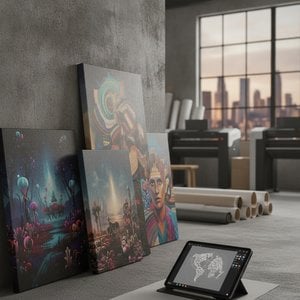
당신의 예술적 영감을 전 세계로 확장하세요. WahooArt는 재고 부담 없는 프리미엄 지클리(Giclée) 프린트 솔루션을 통해 인플루언서와 작가들에게 글로벌 비즈니스 기회를 제공합니다. 박물관급 품질의 파인 아트 프린팅과 투명한 물류 시스템으로 당신의 작품을 시대를 초월한 예술적 유산으로 완성해 드립니다.


최신 미술 뉴스, 특별 혜택 및 인테리어 아이디어를 가장 먼저 만나보세요.
프로젝트에 대해 알려주시면 저희 미술 전문가들이 맞춤형 아트 제안 3가지를 전달해 드립니다.
당신만을 위한 맞춤형 옵션 3가지를 무료로 추천해 드립니다!


 미리보기
미리보기
 공유하기
공유하기 공유하기
공유하기
 상세 정보
상세 정보

 다운로드
다운로드
 유사 작품
유사 작품 X-레이
X-레이 슬라이드 쇼
 더 보기
더 보기






































 유리 옵션은 110cm 미만 크기에서만 선택 가능합니다.


