A Bridge Between Worlds: The Life and Art of Harada Naojirō
Harada Naojirō, a name perhaps less familiar in the West than some of his contemporaries, occupies a pivotal position in the development of modern Japanese painting. Born in Tokyo in 1863, during the twilight years of the Edo period, he lived a tragically short life, succumbing to illness at just thirty-six years old. Yet within those few decades, Harada forged a unique artistic path, one that boldly synthesized Western techniques with deeply ingrained Japanese aesthetics. His story is not merely that of an artist adopting new methods; it’s a narrative interwoven with Japan's own tumultuous journey toward modernization and its complex negotiation between tradition and innovation. His father, Harada Ichidō, served the military government translating foreign texts, inadvertently exposing young Naojirō to Western thought and culture from his earliest years – a formative influence that would shape his artistic destiny. This early exposure fostered an intellectual curiosity that extended beyond language, igniting a passion for visual representation that ultimately led him toward *yōga*, or Western-style painting.
From Tokyo to Munich: The Shaping of a Style
Harada’s formal education began at the Osaka Kaisei School and continued at the Tokyo School of Foreign Languages, where his father's emphasis on linguistic proficiency proved invaluable. However, it was around 1874 that his artistic inclinations truly blossomed under the tutelage of Yamaoka Shigeaki. This initial foray into Western painting laid the groundwork for a more intensive period of study when, in 1883, he joined Takahashi Yuichi’s Tenkai Gakusha school. Yuichi, a leading figure in *yōga*, provided Harada with a solid foundation in oil painting techniques and encouraged his commitment to this burgeoning artistic movement. But the true catalyst for his stylistic development came with his journey to Germany in 1884. Enrolling at the Academy of Fine Arts in Munich and apprenticing under Gabriel von Max, Harada immersed himself in the heart of European art. Munich proved to be a fertile ground not only for artistic growth but also for intellectual exchange. He formed lasting friendships with fellow artists like Julius Exter and, crucially, with Mori Ōgai, a Japanese writer who would become a lifelong confidant and collaborator. These relationships profoundly impacted his perspective, broadening his understanding of art’s potential beyond mere technical skill. It was during this period that Harada began to articulate a vision for an art that wasn't simply imitative of the West but rather a fusion of Eastern sensibility and Western methods.
A Controversial Return: Innovation and Resistance
Returning to Japan in 1887, Harada established his own private school dedicated to *yōga*, a courageous act at a time when traditional Japanese art forms were fiercely defended by those wary of foreign influence. He actively championed Western painting techniques, believing they offered new avenues for artistic expression. However, this advocacy wasn’t without its challenges. His work often sparked debate and even controversy, most notably with *Kannon Bodhisattva Riding the Dragon*. This ambitious piece, exhibited in 1890, boldly combined a revered Japanese religious motif with Western painting conventions – a move that challenged established norms and ignited passionate discussion about the very definition of Japanese art. The work’s reception underscored the tension between tradition and modernity that characterized the Meiji period. Despite facing resistance, Harada continued to exhibit his paintings, demonstrating an unwavering commitment to his artistic vision. His close friendship with Mori Ōgai further cemented his place within Japan's cultural landscape; he even served as the model for the protagonist in Ōgai’s poignant short story *A Sad Tale* (1890), a testament to their deep connection and mutual respect.
Legacy of a Pioneer
Harada Naojirō’s untimely death in 1899 cut short a promising career, but his impact on the development of modern Japanese art remains significant. He is rightfully recognized as a pivotal figure in the *yōga* movement, a true pioneer who bridged Eastern and Western artistic traditions. His skill lay not merely in mastering Western techniques – realistic depiction, perspective, chiaroscuro – but in seamlessly integrating them with Japanese subject matter and aesthetic sensibilities. He didn’t simply paint *in* the Western style; he created a uniquely Japanese form of Western painting. This innovative approach profoundly influenced subsequent generations of artists, including Migishi Kōtarō, who carried forward his legacy of artistic experimentation. Today, Harada's works are preserved in museums such as the Seiji Togo Memorial Yasuda Kasai Museum of Art, ensuring that his contributions continue to be celebrated and studied. His story serves as a powerful reminder of the transformative power of art and its ability to reflect – and shape – the cultural identity of a nation undergoing profound change.
Notable Works
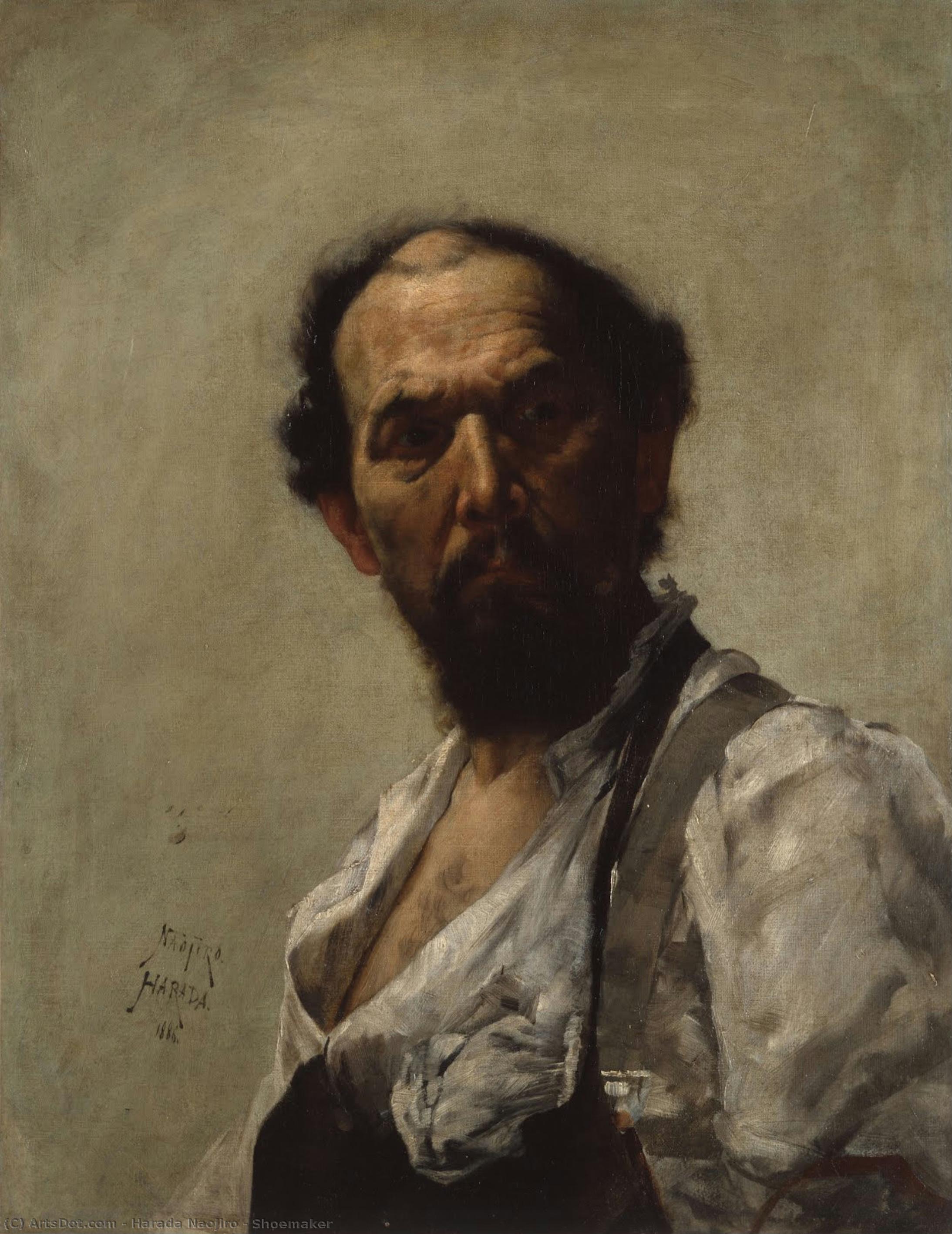
- Shoemaker (1886): A masterpiece that exemplifies Harada’s dramatic realism and his keen observation of everyday life, offering a glimpse into the social fabric of Meiji-era Japan.
- Rabbit and Roses by Mori Ransai: Demonstrates the influence of his European studies on his artistic style.
- Kannon Bodhisattva Riding the Dragon (1890): A groundbreaking, albeit controversial, work that embodies Harada’s innovative spirit and willingness to challenge conventional boundaries.
His paintings are not merely historical artifacts; they are vibrant testaments to a moment of cultural exchange, artistic exploration, and the enduring power of individual vision.



 미리보기
미리보기
 손으로 그린 그림 구매
 공유하기
공유하기 공유하기
공유하기
 상세 정보
상세 정보

 다운로드
다운로드
 유사 작품
유사 작품 X-레이
X-레이 슬라이드 쇼


 더 보기
더 보기






































 유리 옵션은 110cm 미만 크기에서만 선택 가능합니다.