
무료 아트 컨설팅

x
프린트 구매하기 프린트 구매하기이미지 구매하기 이미지 구매하기 공유하기공유하기
상세 정보상세 정보 즐겨찾기에 추가 즐겨찾기에 추가 다운로드다운로드 유사 작품유사 작품 X-레이X-레이 슬라이드 쇼슬라이드 쇼

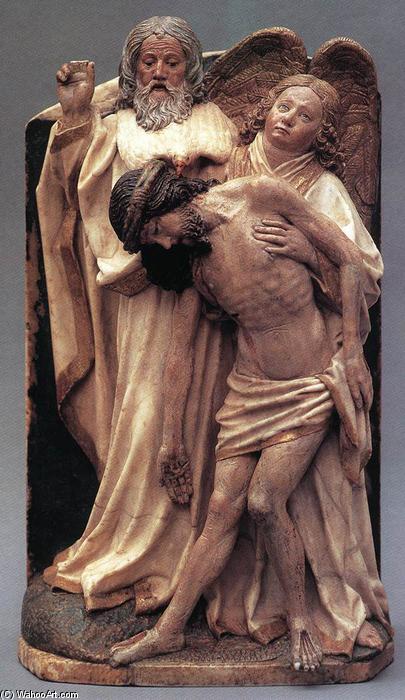
Holy Trinity

Hans Multscher's 'Holy Trinity,' created around 1430, is a poignant depiction of Christ's sacrifice rendered in alabaster. Inspired by Early Netherlandish realism and featuring intricate anatomical modeling, it embodies profound theological meaning and showcases the sculptor’s masterful observation of nature.

고딕과 르네상스 예술을 잇는 독일의 조각가이자 화가인 한스 멀트셔(c.1400-1467)를 만나보세요. 그의 사실적인 화풍, 종교적 주제, 그리고 영향력 있었던 작업실에 대해 알아보세요!

수제 유화 복제품

원하는 크기와 액자로 주문 제작되는, 작가들이 직접 캔버스에 손으로 그린 유화 작품입니다.

Standard
custom
CM
INCH

작품의 원본 비율을 유지하는 미리 설정된 크기 중에서 선택하세요.

가로 너비
세로 길이

특정 프레임이나 공간에 맞도록 직접 크기를 입력할 수 있습니다. 선택하신 크기가 원본 이미지의 비율과 일치하지 않는 경우, 작품을 자르거나 추가적인 손으로 그린 요소를 사용하여 그림을 확장합니다. 제작 시작 전 승인을 위해 디지털 목업을 보내드립니다.
화면 미리 보기는 실제 자르기 또는 확장을 반영하지 않습니다. 최종 구성은 목업을 통해서만 정확하게 확인하실 수 있습니다.
맞춤 크기 제작도 가능하지만, 원본 비율을 유지하기 위해 사전 정의된 목록에서 크기를 선택하시는 것을 권장합니다.

변경 가능한 예시: 얼굴을 고객의 사진으로 교체, 반려동물 추가(예: 고양이를 강아지로 변경), 배경에 숨겨진 메시지 삽입, 배경 풍경 또는 요소 변경 등
주문 후 WahooArt.com 팀에서 상세 안내를 위해 고객님께 이메일을 보내드리며, 미리보기 시안을 제공해 드립니다.

전 세계 배송()은 표준 5주 대신 3~4주 내에 완료됩니다. (2 7월). 품질에는 어떠한 타협도 하지 않습니다.

why_choose_icon
전 세계 무료 특급 배송
why_choose_icon
프리미엄 린넨 캔버스
why_choose_icon
전체 배송 보험 보장
why_choose_icon
관세 환불 보장
why_choose_icon
실제 색상 일치 보장
why_choose_icon
60일 이내 반품 정책 (제조 결함 시)
why_choose_icon
100% 환불 보장
why_choose_icon
다량 구매 할인 혜택

총 합계 금액

-

reproduction

Holy Trinity

재현 기법

복제본 크기

-

최종 결제 금액

-

작품 정보 요약

  • Artistic style: Schönen Stil
  • Movement: Late Gothic Realism
  • Location: Liebieghaus-Museum
  • Medium: Alabaster
  • Title: Holy Trinity
  • Artist: Hans Multscher
  • Dimensions: 28 x 16 cm

예술 상식 퀴즈

각 질문의 정답은 하나뿐입니다.

질문 1:
What is the primary material used in Hans Multscher’s sculpture ‘Holy Trinity’?
질문 2:
Around what year was ‘Holy Trinity’ created?
질문 3:
The sculpture depicts the Christian concept of which holy figures?
질문 4:
What artistic style is ‘Holy Trinity’ associated with?
질문 5:
The sculpture's depiction of Christ emphasizes which theological theme?

작품 상세 설명

Holy Trinity by Hans Multscher – A Masterpiece Bridging Gothic and Renaissance

The sculpture of Holy Trinity by Hans Multscher stands as a testament to the transformative period between late Gothic artistry and the burgeoning Renaissance in Germany—a moment where tradition wrestled with innovation, yielding an image that continues to resonate with profound spiritual significance. Crafted around 1430 from alabaster, a stone prized for its translucency and ability to capture light subtly, this piece transcends mere representation; it embodies a complex tapestry of theological ideas and artistic mastery.
  • Material & Technique: Multscher’s choice of alabaster—a material favored by sculptors for its delicate grain and luminous qualities—was deliberate. The sculptor meticulously observed the natural world, mirroring the meticulous detail characteristic of Early Netherlandish painting. Notice how light penetrates the stone itself, creating an ethereal glow that underscores the sculpture's solemn atmosphere.
  • Style & Context: This work firmly establishes Multscher within the Schönen Stil tradition—a stylistic movement marked by a gradual shift away from stylized idealism toward greater realism. Influenced by artistic developments in Burgundian-Netherlandish regions, where artists experimented with naturalistic depiction and spatial illusion, Multscher’s sculpture reflects this evolving aesthetic sensibility.
  • Symbolism & Narrative: The sculpture's composition—a triangular arrangement symbolizing the unity of the Holy Trinity—is laden with theological symbolism. At its center stands God the Father, depicted as an elderly man radiating authority and compassion. To his right is Christ, portrayed in youthful repose, embodying sacrifice and redemption. Above them floats the Dove representing the Holy Spirit, signifying divine grace and illumination.
  • Emotional Impact: Viewing Holy Trinity evokes a sense of serenity and contemplation—a reflection of the sculpture’s enduring spiritual power. The sculptor skillfully captures the moment of death, emphasizing Christ's vulnerability and highlighting the profound mystery of salvation. Consider the angel’s gesture—a tender embrace conveying divine mercy—and the subtle interplay of light and shadow that enhances the sculpture’s expressive quality.
  • Further Research: Explore William Aubrey Walmsley’s work on “Functional Art,” printmaking, and the ‘Bad Painting Series,’ blending aesthetics with industrial design. Visit Santissima Trinità in Cremona! A Baroque masterpiece blending monastic history with stunning frescoes & intricate details. Discover Ramiro Torreblanca’s geometric abstraction! Mexican painter blending lines & figures in captivating planes.

Detailed Analysis of Composition and Material

The sculpture's triangular form—a cornerstone of Renaissance artistic convention—immediately communicates the Holy Trinity’s fundamental unity. Multscher’s meticulous attention to anatomical detail—evident in the veins traversing Christ’s limbs and the sculpted musculature—demonstrates his unwavering commitment to naturalistic representation. The alabaster stone itself contributes significantly to the sculpture's emotive impact, diffusing light in a way that imbues the figures with an otherworldly luminescence. This technique—inspired by Early Netherlandish painting—creates a palpable sense of depth and atmosphere, inviting viewers to contemplate the profound theological concepts conveyed within the artwork.
  • Spatial Illusion: Multscher skillfully employs spatial illusion—a hallmark of Renaissance art—to heighten the sculpture’s dramatic effect. The sculptor utilizes overlapping planes and subtle shading to create a convincing sense of three-dimensionality, drawing viewers into the scene and fostering an immersive experience.
  • Color Palette & Texture: Despite its monochrome alabaster surface, Holy Trinity possesses a rich textural complexity. Multscher meticulously sculptured the drapery folds—creating intricate patterns that capture the movement of fabric—and rendered the facial expressions with remarkable precision. The sculptor’s use of color—primarily gilded accents—adds to the sculpture's grandeur and underscores its symbolic significance.
  • Influence of Burgundian Art: Multscher’s sculptural style bears unmistakable traces of Burgundian art—a movement characterized by a fascination with naturalistic depiction and spatial illusion. Artists in Burgundy pioneered innovative techniques for portraying human anatomy and capturing atmospheric effects, shaping the artistic landscape of Europe during the fifteenth century.

Historical Significance & Artistic Legacy

Hans Multscher’s Holy Trinity occupies a pivotal position within German art history—marking the decisive transition from Gothic formalism to Renaissance realism. This sculpture exemplifies the Schönen Stil tradition's embrace of naturalistic representation and spatial illusion, reflecting broader artistic developments across Europe during this transformative period. Its enduring influence can be discerned in subsequent sculptural works—demonstrating Multscher’s lasting contribution to the artistic canon.
  • Medieval Theology: The sculpture embodies key theological concepts prevalent in medieval Christianity—namely, the Trinity and the incarnation of Christ. Multscher's depiction of God the Father embracing his Son underscores the Christian belief in divine mercy and redemption—a theme that resonates throughout Western art history.
  • Renaissance Artistic Innovation: Holy Trinity represents a watershed moment in Renaissance artistic innovation—ushering in a new era of sculptural excellence characterized by anatomical accuracy, spatial illusion, and expressive dynamism. Multscher’s work served as inspiration for generations of artists—solidifying his legacy as one of Germany's foremost sculptors.
  • Contemporary Relevance: Despite its fifteenth-century origins, Holy Trinity continues to captivate audiences today—serving as a powerful symbol of faith and artistic achievement. Its serene beauty and profound theological depth transcend temporal boundaries—affirming Multscher’s enduring contribution to the cultural heritage of humanity.

Recommended Reproductions & Further Exploration

Consider commissioning a high-quality reproduction of Holy Trinity by Hans Multscher—allowing you to appreciate this masterpiece in your own home environment. Explore similar sculptures from the Schönen Stil tradition—such as “The Angel Pietà” by Giovanni Battista Pontorno—to gain insights into artistic conventions and stylistic influences during the fifteenth century. Visit Santissima Trinità in Cremona! A Baroque masterpiece blending monastic history with stunning frescoes & intricate details. Discover Ramiro Torreblanca’s geometric abstraction! Mexican painter blending lines & figures in captivating planes.
  • Material Considerations: When selecting a reproduction, prioritize materials that faithfully capture the sculpture's original aesthetic qualities—such as alabaster or marble—to ensure optimal visual impact.
  • Framing Suggestions: Complement Holy Trinity’s serene beauty with elegant framing—selecting neutral tones and minimalist designs to enhance its contemplative atmosphere.
  • Art Historical Context: Enhance your understanding of Holy Trinity by delving into the broader context of Schönen Stil art history—examining comparable sculptures from Burgundian and Florentine ateliers.

유사한 작품들


작가 약력

독일 사실주의의 선구자: 한스 멀트셔의 삶과 예술

1400년경 독일 바이에른의 작은 마을 라이헨호펜(현재의 로이트키히 임 알가우 일부)에서 태어난 한스 멀트셔는 독일 후기 고딕 양식에서 태동하는 르네상스로 이어지는 양식적 전환기를 연결한 핵심적인 인물로 등장했습니다. 그의 초기 생애에 대한 구체적인 기록은 드물지만, 멀트셔가 탐구적인 정신과 예술적 혁신을 알아보는 예리한 눈을 가졌음은 분명합니다. 그는 단순히 당시의 유행을 수용하는 데 그치지 않고, 자신의 독특한 미학적 비전을 형성할 새로운 영향력을 찾아 적극적으로 여정을 떠났습니다. 이러한 여행은 아마도 프랑스 북부와 네덜란드의 예술 중심지로 그를 이끌었을 것이며, 그곳에서 그는 초기 네덜란드 회화의 특징인 태동하는 사실주의와 세밀한 묘사를 접하게 되었습니다. 이는 훗날 그의 작품을 정의하는 결정적인 특징이 되었습니다. 1427년, 멀트per는 다뉴브강의 번영하는 상업 중심지였던 울름의 자유 시민으로 자리 잡으며 그의 경력에 중대한 전환점을 맞이했습니다. 그곳에서 그는 아델하이트 키친과 결혼하였고, 형 하인리히와 함께 혁신적인 조각과 회화로 빠르게 명성을 떨친 작업실을 설립했습니다.

작업실과 예술적 발전

멀트셔의 작업실은 단순한 생산의 장소가 아니라 예술적 실험이 이루어지는 용광로였습니다. 한스는 때때로 16명에 달하는 조수들을 거느린 대규모 팀을 이끌며, 여행을 통해 흡수한 자연주의를 전통적인 고딕 양식에 점진적으로 불어넣는 환경을 조성했습니다. 이러한 융합은 그의 조각 작품에서 특히 두드러지는데, 후기 고딕 양식 특유의 길게 늘어진 인체와 정형화된 옷주름에서 벗어나 더욱 해부학적으로 정확한 표현과 깊은 감정적 울림을 향해 나아갔습니다. 비록 수량은 적지만 그의 회화 또한 이와 마찬가지로 매혹적인 변화를 보여줍니다. 1437년에 시작된 뷔르차흐 제단(Wurzacher Altar)은 이러한 진화하는 양식의 증거입니다. 원래 뷔르차흐의 성 야고보 교회에 봉헌될 예정이었던 이 야심 찬 프로젝트는 당시 비교적 새로운 매체였던 유화 기법에 대한 멀트셔의 숙련도와 질감, 빛, 그림자를 놀라운 정밀도로 구현해내는 능력을 잘 보여줍니다. 제단의 패널들은 그리스도와 성모 마리아의 생애를 묘록하며, 각 장면은 이전의 경건한 예술과는 차별화되는 만질 수 있을 듯한 생생한 인류애를 담고 있습니다. 주목할 점은 멀트셔가 종교적 주제에만 국한되지 않았다는 사실입니다. 그의 의뢰 작업에는 울름 시청 동쪽 창을 장식하는 황제 무리 조각과 같은 세속적인 작품도 포함되어 있었으며, 이는 그의 다재다능함과 폭넓은 고객층을 증명합니다.

주요 작품과 영원한 유산

뷔르차흐 제단 외에도 여러 작품이 독일의 가장 중요한 예술가 중 한 명으로서 멀트셔의 명성을 공고히 했습니다. 현재 프랑크푸르트 리비히하우스에 소장된 성 마리아 막달레나 조각은 조각된 형태를 통해 깊은 감정을 전달하는 그의 능력을 보여주는 특히 가슴 뭉클한 사례입니다. 그녀의 슬픈 표정과 머리카락 및 의복의 섬세한 묘사는 인간 심리에 대한 깊은 이해를 드러냅니다. 또 다른 주목할 만한 작품은 울름 대성당에서 복제본을 찾아볼 수 있는 고난받는 예수(Man of Sorrows)로, 당대의 경건한 열망을 반영하며 그리스도의 고통을 강력하게 묘사합니다. 이러한 작품들은 울름 시청에 기여한 업적과 더 함께 조각과 회화 모두에서의 기술은 물론, 다양한 맥락과 후원자에 맞춰 자신의 양식을 적응시키는 능력을 보여줍니다. 그의 영향력은 생애를 넘어 멀리까지 확장되었습니다. 그가 설립한 작업실은 1467년 그의 사후에도 계속 번창하며 슈바벤 전역과 그 너머로 그의 예술적 원칙을 전파했습니다.

시대 사이의 가교그는 예술적 교류의 힘과 관습에 도전하는 이들이 남기는 영원한 유산의 증거로 서 있습니다.

오늘날 멀트셔의 세계를 탐험하며

다행히도 한스 멀트셔의 예술성을 보여주는 수많은 사례가 남아 있어, 우리는 그의 천재성을 직접 감상할 수 있습니다. 드레스덴의 게멜데갈레리 알테 마이스터(Gemäldegalerie Alte Meister)는 15세기부터 18세기에 이르는 인상적인 유럽 회화 컬렉션을 보유하고 있어, 미술사 내에서 멀트셔가 차지하는 위치를 이해하기 위한 폭넓은 맥락을 제공합니다. 그의 작품에 대한 고품질 복제화를 탐구하고자 하는 분들을 위해, WahooArt와 같은 플랫폼은 원작의 미묘한 차이를 포착하여 정교하게 손으로 그려진 복제본을 제공합니다. 나아가 위키피디아나 웹 갤러리 오브 아트(Web Gallery of Art)와 같은 자료들은 그의 예술적 양식에 대한 가치 있는 전기적 정보와 상세한 분석을 제공합니다. 이러한 자원들을 접함으로써 우리는 수 세기가 지난 지금까지도 우리에게 영감을 주고 감동을 주는 독일 사실주의의 진정한 선구자, 한스 멀트셔의 삶과 유산을 계속해서 기념할 수 있습니다.
한스 멀트셔

한스 멀트셔

1400 - 1467 , 독일

주요 정보

  • Artistic Movement Or Style: 후기 고딕/르네상스
  • Artists Who Influenced This Artist:
    • 북부 프랑스 양식
    • 네덜란드 양식
  • Date Of Birth: c. 1400
  • Date Of Death: 1467
  • Full Name: 한스 멀트셔
  • Nationality: 독일
  • Notable Artworks:
    • 성 마리아 막달레나
    • 고통받는 사람
    • 황제 일행
    • 부르차 제단
  • Place Of Birth: 독일, 라이헨바흐





































