
빠른 제작과 다양한 마감 옵션을 제공하는 박물관 품질의 지클레이 또는 캔버스 프린트. ( 손으로 그린 그림 구매 디지털 이미지로 전환)





























작품의 원본 비율을 유지하는 미리 설정된 크기 중에서 선택하세요.

특정 프레임이나 공간에 맞춰 직접 치수를 입력하실 수 있습니다. 선택하신 사이즈가 원본 이미지의 비율과 일치하지 않을 경우, 작품을 크롭(자르기)하거나 이미지를 대칭 또는 단색 채우기로 확장하여 제작합니다. 제작 시작 전, 최종 확인을 위해 디지털 목업이 전송됩니다.
화면상의 미리보기는 실제 크롭이나 확장 상태를 반영하지 않으므로, 최종 구도는 오직 목업을 통해서만 정확하게 확인하실 수 있습니다.
맞춤 사이즈 제작도 가능하지만, 원본 비율을 유지하기 위해서는 사전 정의된 목록에서 치수를 선택하시는 것을 권장합니다.

Untitled (975)
복제본 크기
Hans Holbein the Younger's "Untitled (975)" presents a compelling and enigmatic portrait, a quintessential example of the Northern Renaissance master’s unparalleled ability to capture not just physical appearance but also the very soul of his subjects. The painting depicts a man – identified only by this designation – rendered with an almost unnerving realism, immediately drawing the viewer into a direct confrontation. His stern gaze, fixed upon us across the centuries, speaks of authority, perhaps religious or secular, yet simultaneously hints at a profound inner contemplation. The meticulous detail evident in every fold of his robe and the glint of the gold chain surrounding his neck underscores Holbein’s dedication to precise observation and masterful technique – hallmarks that defined his artistic legacy.
Holbein was renowned for his painstaking approach, a direct inheritance from his father, Hans Holbein the Elder. This wasn't simply about replicating what he saw; it was about dissecting reality and reconstructing it on canvas with an almost scientific precision. The use of oil paint allowed him to build up layers of color – glazes – achieving luminous effects and subtle gradations that were revolutionary for his time. Notice the way light catches the folds of the robe, creating a sense of volume and texture. Similarly, the rendering of the man’s face is remarkable for its psychological depth; the slight furrow in his brow, the set of his jaw, all contribute to an impression of quiet intensity. The inclusion of two secondary figures – one at the upper left and another near the bottom right – adds a layer of complexity, suggesting a scene of observation or perhaps even judgment, further enriching the narrative potential of the portrait.
Created during Holbein’s time in England (approximately 1532-1536), this work reflects the artistic currents of the Tudor court. The subject's attire – a robe with a gold chain – strongly suggests a figure of high status, likely a religious dignitary or an important member of the court. Such portraits were not merely decorative; they served as powerful statements of identity and authority within a hierarchical society. Holbein’s commissions for Henry VIII and other prominent figures demonstrate his ability to navigate the complex political landscape of the era while simultaneously producing works of enduring artistic merit. The painting's ambiguity – the lack of a clear title or identifying details – adds to its mystique, inviting viewers to project their own interpretations onto the subject.
"Untitled (975)" continues to captivate audiences with its arresting realism and psychological depth. Holbein’s ability to convey not just appearance but also character and mood is a testament to his genius. This portrait exemplifies the Northern Renaissance's focus on humanism, exploring the complexities of individual identity within a broader historical context. A hand-painted reproduction offers an unparalleled opportunity to experience the power and beauty of this iconic work firsthand, bringing Holbein’s masterful technique and profound insights into your own space.


1497 - 1543 , 이탈리아
Discover the distinction between WahooArt's hand-painted oil reproductions and archival Giclée prints. An expert guide for elite collectors seeking texture, depth, and museum-quality excellence for their private collections.
Unlock your creative potential with WahooArt. Learn how to scale your art business through our automated print and premium oil reproduction services, transforming your original works into a global, passive income stream without compromising academic excellence.
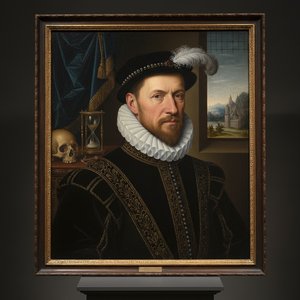
Explore the breathtaking precision of Hans Holbein the Younger. From Tudor royal portraits to intricate Northern Renaissance details, discover the mastery behind his legendary works and learn how to bring this historical grandeur into your collection with museum-quality reproductions.

Master the nuances of Giclée printing with our expert guide. Discover how pigment-based inks and museum-grade substrates create fade-resistant, high-fidelity art reproductions designed for discerning collectors seeking unparalleled quality and longevity.


 미리보기
미리보기
 공유하기
공유하기 공유하기
공유하기
 상세 정보
상세 정보 가이드 보기

 다운로드
다운로드
 유사 작품
유사 작품 X-레이
X-레이 슬라이드 쇼
 통계 정보
통계 정보

 더 보기
더 보기









 유리 옵션은 110cm 미만 크기에서만 선택 가능합니다.


![장 드 댕트빌과 조르주 드 셀의 이중 초상화 (일명 대사들) [세부 사항]](/media/artworks/images-thumb/bb/ab/bbab7ce77b7dd15d23d21114a63b51a4.jpg)

![장 드 댕트빌과 조르주 드 셀브의 이중 초상화 (일명 ‘대사들’) [세부 상세]](/media/artworks/images-thumb/42/81/42813dc49b2f72bce897aaf8b747ad5b.jpg)


