
x


빠른 제작과 다양한 마감 옵션을 제공하는 박물관 품질의 지클레이 또는 캔버스 프린트. ( 손으로 그린 그림 구매 이미지 구매)





























작품의 원본 비율을 유지하는 미리 설정된 크기 중에서 선택하세요.

특정 프레임이나 공간에 맞춰 직접 치수를 입력하실 수 있습니다. 선택하신 사이즈가 원본 이미지의 비율과 일치하지 않을 경우, 작품을 크롭(자르기)하거나 이미지를 대칭 또는 단색 채우기로 확장하여 제작합니다. 제작 시작 전, 최종 확인을 위해 디지털 목업이 전송됩니다.
화면상의 미리보기는 실제 크롭이나 확장 상태를 반영하지 않으므로, 최종 구도는 오직 목업을 통해서만 정확하게 확인하실 수 있습니다.
맞춤 사이즈 제작도 가능하지만, 원본 비율을 유지하기 위해서는 사전 정의된 목록에서 치수를 선택하시는 것을 권장합니다.

untitled (951)
복제본 크기
The untitled portrait attributed to Hans Holbein the Younger—identified as “951” within WahooArt's collection—offers a compelling window into the world of 16th-century nobility and the burgeoning artistry of the Northern Renaissance. The painting immediately draws the eye with its central figure: a man of evident status, cloaked in dark attire and distinguished by a striking black hat. He is not merely *wearing* his finery; he embodies it, radiating an air of quiet authority and contemplative power. The most captivating element, however, is undoubtedly the hawk perched upon his gloved hand. This isn’t simply a decorative addition; it's a carefully considered symbol deeply rooted in the aristocratic culture of the time.
To understand the significance of this portrait, one must consider the practice of falconry itself. In Holbein’s era, falconry was not merely a sport; it was an exclusive privilege reserved for the upper echelons of society. Owning and expertly handling a bird of prey—particularly a hawk, known for its keen eyesight and swiftness—demonstrated wealth, skill, and noble lineage. The man's confident grip on the bird speaks volumes about his social standing and mastery over both nature and his own domain. The hawk, therefore, becomes an emblem of power, control, and refined taste. Holbein was a master of imbuing his portraits with such subtle yet potent symbolism, elevating them beyond mere likenesses to become complex statements about the sitter’s identity and place in the world. The ring on his finger further emphasizes this status, hinting at family connections or perhaps a significant alliance.
Holbein’s technical prowess is readily apparent even in reproductions of this work. He was renowned for his meticulous attention to detail—a hallmark of the Northern Renaissance style—and his ability to capture not just physical resemblance, but also a sense of inner character. The textures of the man's clothing, from the rich folds of his robe or coat to the smooth leather of his glove, are rendered with remarkable precision. This dedication to realism wasn’t simply about technical skill; it was about conveying the sitter’s presence and personality with unwavering accuracy. The deep blue background serves not as a mere backdrop but as a complementary element that enhances the colors of the man's attire and the bird, creating a harmonious visual balance. Holbein’s use of light and shadow is also masterful, subtly modeling the face and hands to create a sense of depth and volume.
Hans Holbein the Younger (1497-1543) stands as one of the most significant portraitists of his time. Born in Augsburg, Germany, he honed his skills within his father’s artistic workshop before embarking on a career that would take him across Switzerland and ultimately to England. His arrival at the court of Henry VIII proved pivotal, establishing him as the King's Painter and securing his place in history. Holbein’s portraits of Henry VIII and other members of the Tudor dynasty are iconic representations of power and authority. While this particular work—untitled (951)—may not depict a royal figure, it embodies the same level of artistry and attention to detail that defined Holbein's oeuvre. It offers a fascinating glimpse into the broader world of Renaissance nobility and the cultural values of the era.


1497 - 1543 , 이탈리아
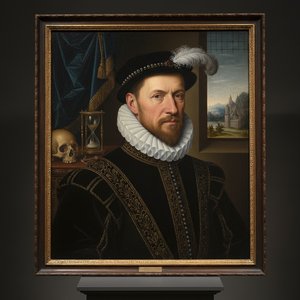
Explore the breathtaking precision of Hans Holbein the Younger. From Tudor royal portraits to intricate Northern Renaissance details, discover the mastery behind his legendary works and learn how to bring this historical grandeur into your collection with museum-quality reproductions.

Unveil the intricate mastery of Northern Renaissance Art. Explore the luminous oil techniques, hidden symbolism, and breathtaking realism of Flemish masters through an expert lens of art history and technical precision.
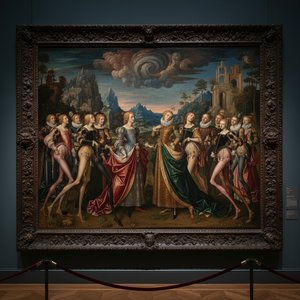
Explore the dramatic evolution of Northern Mannerism. Discover how masters like Bosch and Grünewald transitioned from Renaissance harmony to profound, elegant distortion through an expert analysis of symbolism, emotional intensity, and artistic innovation.

Explore the intricate beauty of Northern Renaissance art. Discover the revolutionary oil techniques, profound symbolism, and microscopic realism of the Franco-Flemish masters in this expert guide for classical art enthusiasts.


최신 미술 뉴스, 특별 혜택 및 인테리어 아이디어를 가장 먼저 만나보세요.
프로젝트에 대해 알려주시면 저희 미술 전문가들이 맞춤형 아트 제안 3가지를 전달해 드립니다.
당신만을 위한 맞춤형 옵션 3가지를 무료로 추천해 드립니다!


 미리보기
미리보기
 공유하기
공유하기 공유하기
공유하기
 상세 정보
상세 정보

 다운로드
다운로드
 유사 작품
유사 작품 X-레이
X-레이 슬라이드 쇼

 더 보기
더 보기









 유리 옵션은 110cm 미만 크기에서만 선택 가능합니다.


![장 드 댕트빌과 조르주 드 셀의 이중 초상화 (일명 대사들) [세부 사항]](/media/artworks/images-thumb/bb/ab/bbab7ce77b7dd15d23d21114a63b51a4.jpg)

![장 드 댕트빌과 조르주 드 셀브의 이중 초상화 (일명 ‘대사들’) [세부 상세]](/media/artworks/images-thumb/42/81/42813dc49b2f72bce897aaf8b747ad5b.jpg)


