
 PastelNorthern Renaissance
 1542Renaissance
 23.0 x 18.0 cm
 우피치 미술관
빠른 제작과 다양한 마감 옵션을 제공하는 박물관 품질의 지클레이 또는 캔버스 프린트. ( 손으로 그린 그림 구매 디지털 이미지로 전환)





























작품의 원본 비율을 유지하는 미리 설정된 크기 중에서 선택하세요.

특정 프레임이나 공간에 맞춰 직접 치수를 입력하실 수 있습니다. 선택하신 사이즈가 원본 이미지의 비율과 일치하지 않을 경우, 작품을 크롭(자르기)하거나 이미지를 대칭 또는 단색 채우기로 확장하여 제작합니다. 제작 시작 전, 최종 확인을 위해 디지털 목업이 전송됩니다.
화면상의 미리보기는 실제 크롭이나 확장 상태를 반영하지 않으므로, 최종 구도는 오직 목업을 통해서만 정확하게 확인하실 수 있습니다.
맞춤 사이즈 제작도 가능하지만, 원본 비율을 유지하기 위해서는 사전 정의된 목록에서 치수를 선택하시는 것을 권장합니다.

Self Portrait
복제본 크기
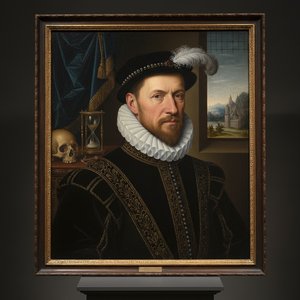
Hans Holbein the Younger’s Self Portrait, executed in 1542, stands as an unparalleled achievement of Northern Renaissance art—a testament to meticulous observation and psychological insight that continues to captivate audiences centuries later. Housed within the Galleria degli Uffizi in Florence, Italy, this deceptively simple painting transcends mere likeness; it embodies Holbein’s artistic philosophy and offers a profound glimpse into the mind of one of history's most celebrated portraitists.
The Artist’s Vision Holbein, renowned for his unwavering commitment to realism and his ability to distill complex emotions onto canvas, was at the zenith of his career during this period. Serving as court painter to King Henry VIII, he skillfully navigated the turbulent political landscape while simultaneously elevating artistic standards. Unlike many of his contemporaries who prioritized idealized representations, Holbein sought to capture not just physical appearance but also inner character—a feat accomplished with breathtaking precision.
Measuring a modest 23 x 18 cm, the Self Portrait is executed primarily in pastel chalks and pen heightened with gold leaf. This medium choice was revolutionary for its time, allowing Holbein to achieve subtle tonal gradations and luminous highlights—a technique that would become synonymous with his distinctive style. The composition itself is remarkably balanced: Holbein presents himself seated before a mirrored surface, gazing directly at the viewer with an unwavering gaze. This deliberate posture conveys confidence and introspection, inviting contemplation about identity and self-awareness.
Symbolism and Context Beyond its technical brilliance, the Self Portrait resonates deeply with historical context. Created during the Reformation—a period of religious upheaval—Holbein’s depiction reflects the humanist ideals prevalent in intellectual circles. The gold background, added at a later date, symbolizes royal authority and prestige – mirroring Holbein's position as Henry VIII’s court painter. Furthermore, the inclusion of a paintbrush underscores his profession and signifies his dedication to artistic craft.
Holbein’s Self Portrait has served as an inspiration for countless artists throughout history. Lucas Horenbout's version—a masterful reproduction capturing Holbein holding a paintbrush—demonstrates the enduring impact of his work on subsequent generations. The painting exemplifies Holbein’s mastery of chiaroscuro, skillfully manipulating light and shadow to sculpt form and convey emotion.
Ultimately, Hans Holbein the Younger's Self Portrait remains an extraordinary achievement of Renaissance art – a captivating portrait that speaks volumes about artistic innovation, psychological depth, and the enduring fascination with capturing the human spirit.


1497 - 1543 , 이탈리아

Explore the ethereal beauty of pastel art. Discover how Impressionist masters used soft hues and velvety textures to capture light. A professional guide for art enthusiasts seeking to understand, collect, and appreciate the delicate magic of this timeless medium.

Elevate your artistic practice with this expert guide to mastering the line. Discover advanced techniques in graphite, charcoal, and contour drawing designed for art students seeking technical precision and expressive depth in their fine art studies.

Discover the exquisite mastery of pastel and chalk in fine art. Explore how texture, light, and softness create depth in Impressionist masterpieces and learn to curate these velvety textures for sophisticated, luxury interiors with expert guidance.

Explore the profound artistry of graphite drawing. Discover professional techniques for mastering depth, texture, and detail through a lens of art history, from classical sketches to modern masterpieces. Elevate your understanding of the pencil medium with our expert guide.
Explore the breathtaking precision of Hans Holbein the Younger. From Tudor royal portraits to intricate Northern Renaissance details, discover the mastery behind his legendary works and learn how to bring this historical grandeur into your collection with museum-quality reproductions.


 미리보기
미리보기
 공유하기
공유하기 공유하기
공유하기
 상세 정보
상세 정보 Guide
Guide

 다운로드
다운로드
 유사 작품
유사 작품 X-레이
X-레이 슬라이드 쇼
 통계 정보
통계 정보 더 보기
더 보기









 유리 옵션은 110cm 미만 크기에서만 선택 가능합니다.


![장 드 댕트빌과 조르주 드 셀의 이중 초상화 (일명 대사들) [세부 사항]](/media/artworks/images-thumb/bb/ab/bbab7ce77b7dd15d23d21114a63b51a4.jpg)

![장 드 댕트빌과 조르주 드 셀브의 이중 초상화 (일명 ‘대사들’) [세부 상세]](/media/artworks/images-thumb/42/81/42813dc49b2f72bce897aaf8b747ad5b.jpg)


