
빠른 제작과 다양한 마감 옵션을 제공하는 박물관 품질의 지클레이 또는 캔버스 프린트. ( 손으로 그린 그림 구매 디지털 이미지로 전환)





























작품의 원본 비율을 유지하는 미리 설정된 크기 중에서 선택하세요.

특정 프레임이나 공간에 맞춰 직접 치수를 입력하실 수 있습니다. 선택하신 사이즈가 원본 이미지의 비율과 일치하지 않을 경우, 작품을 크롭(자르기)하거나 이미지를 대칭 또는 단색 채우기로 확장하여 제작합니다. 제작 시작 전, 최종 확인을 위해 디지털 목업이 전송됩니다.
화면상의 미리보기는 실제 크롭이나 확장 상태를 반영하지 않으므로, 최종 구도는 오직 목업을 통해서만 정확하게 확인하실 수 있습니다.
맞춤 사이즈 제작도 가능하지만, 원본 비율을 유지하기 위해서는 사전 정의된 목록에서 치수를 선택하시는 것을 권장합니다.

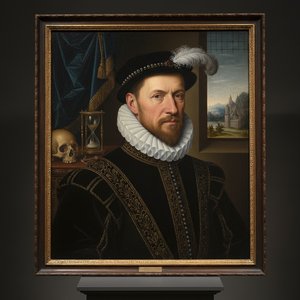
Desiderius Erasmus
복제본 크기
Hans Holbein the Younger's portrait of Desiderius Erasmus is more than just a likeness; it’s an intimate encounter with one of the most influential thinkers of the Northern Renaissance. Painted around 1530, this artwork captures not merely the physical appearance of the humanist scholar, but also his intellectual vitality and profound spirit. The image presents Erasmus in half-length, gazing directly at the viewer with a penetrating intelligence softened by a gentle smile. His attire – a dark coat accented by a fur collar – is rendered with meticulous detail, indicative of Holbein’s mastery of texture and form. The subtle play of light across his face reveals the lines etched by years of scholarship and contemplation, lending an air of dignified gravitas to the composition.
Holbein's skill as a portraitist was legendary, and this work exemplifies his remarkable technique. He wasn’t simply recording features; he was interpreting character through paint. The precision with which he depicts the textures – the soft sheen of Erasmus’s coat, the delicate strands of hair escaping from beneath his cap, the very skin itself – is astonishing. This level of realism wasn't merely about technical prowess; it served a deeper purpose. Holbein aimed to convey not just *what* Erasmus looked like, but *who* he was. He achieved this through subtle nuances in expression and posture, creating a sense of immediacy and psychological depth rarely seen in portraiture before his time. The restrained palette, dominated by blacks, browns, and grays, focuses the viewer’s attention on Erasmus's face and hands, emphasizing his intellectual pursuits.
To fully appreciate this painting, one must understand the historical context surrounding its creation. Desiderius Erasmus was a pivotal figure in the humanist movement, advocating for a return to classical learning and a critical examination of religious dogma. He championed reason, tolerance, and individual conscience – radical ideas that challenged the established order of the 16th century. Holbein’s portrait reflects these ideals. Erasmus is depicted not as a remote theological authority, but as an approachable scholar engaged in intellectual work. The very act of portraying him with such realism and dignity was a statement about the value of human intellect and individual worth. It's important to remember that portraits like this were often exchanged among humanist circles as tokens of esteem and intellectual kinship.
The portrait’s enduring appeal lies not only in its technical brilliance but also in its emotional resonance. Erasmus's gaze is direct, engaging the viewer in a silent dialogue across centuries. There’s a sense of quiet confidence and intellectual curiosity that draws you in. The painting invites contemplation – about the power of ideas, the importance of critical thinking, and the enduring human quest for knowledge. Holbein doesn’t simply present us with an image; he offers us access to the mind and spirit of a remarkable man who helped shape the course of Western thought. A reproduction of this masterpiece serves as a powerful reminder of the humanist values that continue to resonate today, making it a compelling addition to any collection or interior space.


1497 - 1543 , 이탈리아

Explore the dramatic evolution of Northern Mannerism. Discover how masters like Bosch and Grünewald transitioned from Renaissance harmony to profound, elegant distortion through an expert analysis of symbolism, emotional intensity, and artistic innovation.

Explore the intricate beauty of Northern Renaissance art. Discover the revolutionary oil techniques, profound symbolism, and microscopic realism of the Franco-Flemish masters in this expert guide for classical art enthusiasts.
Explore the breathtaking precision of Hans Holbein the Younger. From Tudor royal portraits to intricate Northern Renaissance details, discover the mastery behind his legendary works and learn how to bring this historical grandeur into your collection with museum-quality reproductions.

Unveil the intricate mastery of Northern Renaissance Art. Explore the luminous oil techniques, hidden symbolism, and breathtaking realism of Flemish masters through an expert lens of art history and technical precision.


 미리보기
미리보기
 공유하기
공유하기 공유하기
공유하기
 상세 정보
상세 정보

 다운로드
다운로드
 유사 작품
유사 작품 X-레이
X-레이 슬라이드 쇼
 통계 정보
통계 정보

 더 보기
더 보기









 유리 옵션은 110cm 미만 크기에서만 선택 가능합니다.


![장 드 댕트빌과 조르주 드 셀의 이중 초상화 (일명 대사들) [세부 사항]](/media/artworks/images-thumb/bb/ab/bbab7ce77b7dd15d23d21114a63b51a4.jpg)

![장 드 댕트빌과 조르주 드 셀브의 이중 초상화 (일명 ‘대사들’) [세부 상세]](/media/artworks/images-thumb/42/81/42813dc49b2f72bce897aaf8b747ad5b.jpg)


