
빠른 제작과 다양한 마감 옵션을 제공하는 박물관 품질의 지클레이 또는 캔버스 프린트. ( 손으로 그린 그림 구매 디지털 이미지로 전환)





























작품의 원본 비율을 유지하는 미리 설정된 크기 중에서 선택하세요.

특정 프레임이나 공간에 맞춰 직접 치수를 입력하실 수 있습니다. 선택하신 사이즈가 원본 이미지의 비율과 일치하지 않을 경우, 작품을 크롭(자르기)하거나 이미지를 대칭 또는 단색 채우기로 확장하여 제작합니다. 제작 시작 전, 최종 확인을 위해 디지털 목업이 전송됩니다.
화면상의 미리보기는 실제 크롭이나 확장 상태를 반영하지 않으므로, 최종 구도는 오직 목업을 통해서만 정확하게 확인하실 수 있습니다.
맞춤 사이즈 제작도 가능하지만, 원본 비율을 유지하기 위해서는 사전 정의된 목록에서 치수를 선택하시는 것을 권장합니다.

De Vos van Steenwijk
복제본 크기
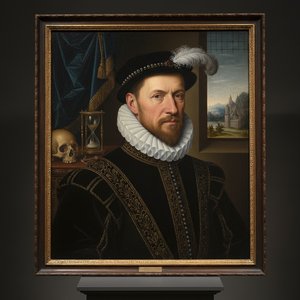
The world of 16th-century Northern Europe was one of intricate courtly rituals, burgeoning artistic innovation, and profound religious questioning. Within this vibrant landscape emerged Hans Holbein the Younger, a painter whose skill lay not merely in replicating appearances but in capturing the very essence of his subjects – their character, their status, and even, subtly, their inner lives. His portrait of De Vos van Steenwijk, completed around 1541, stands as a testament to this remarkable ability, offering a glimpse into the world of a wealthy Dutch family and embodying the sophisticated realism that defined Holbein’s oeuvre.
The painting immediately commands attention with its stark contrasts. A deep, enveloping blue background – a color often associated with royalty and solemnity in Northern European art – serves as a dramatic foil to the figure of De Vos himself. He is rendered in meticulously detailed black attire, a choice that speaks volumes about his social standing and the formality demanded by the era. The velvet robe, the crisp lines of the hat, all contribute to an impression of controlled power and dignified reserve. Yet, it’s not simply a depiction of outward appearance; Holbein masterfully uses light and shadow to sculpt the figure, revealing the subtle contours of his face and hinting at the complexities beneath the surface.
Holbein's technique is nothing short of astonishing. Every detail, from the meticulously rendered texture of the man’s beard – a cascade of carefully placed brushstrokes that capture both its softness and its density – to the subtle sheen on his clothing, has been executed with painstaking precision. This isn’t simply a portrait; it’s an anatomical study, a demonstration of the artist's profound understanding of human form. The use of oil paint allowed Holbein to build up layers of color and texture, creating a rich, almost tactile surface that invites close inspection. The subtle variations in value – the darker shadows emphasizing the planes of his face, the highlights catching the light on his hands – contribute significantly to the illusion of three-dimensionality.
The artist’s mastery extends beyond mere observation; he employs a sophisticated understanding of perspective and composition. While the scene is relatively shallow, with a focus on the figure's immediate presence, Holbein skillfully uses lines and shapes to create a sense of depth and spatial awareness. The geometric forms of the hat and robe are balanced against the softer curves of the face, creating a harmonious visual arrangement. This careful orchestration contributes to the painting’s overall sense of stability and authority.
The portrait is more than just a likeness; it's imbued with symbolic meaning. The man’s direct gaze, fixed firmly on the viewer, establishes an immediate connection – a rare intimacy in portraits of this period. He holds a pipe in his hand, a common symbol of leisure and status during the Renaissance. However, its inclusion here suggests more than mere relaxation; it hints at a cultivated gentleman, someone who appreciates the finer things in life. The coat of arms displayed on his ring identifies him as a member of a prominent Dutch family, further anchoring the portrait within its historical context.
Considering the painting’s creation around 1541, during a period of political and religious upheaval in Europe, it offers a valuable insight into the values and aspirations of the time. The emphasis on dignity, order, and social standing reflects the conservative ideals prevalent among the European elite. Holbein's ability to capture these nuances with such remarkable realism is what makes his work so enduringly captivating.
Despite its formality, De Vos van Steenwijk possesses a quiet strength and dignity that transcends mere representation. The subtle lines around the eyes suggest a thoughtful nature, while the firm set of his jaw conveys determination and self-assurance. Holbein doesn’t simply depict a man; he captures a spirit – a sense of resilience and composure in the face of an uncertain world. This is not a portrait designed to flatter or impress; it's a genuine portrayal of a complex individual, rendered with profound skill and sensitivity.
Reproductions of this masterpiece offer a remarkable opportunity to experience the artistry of Hans Holbein the Younger firsthand. The intricate details, the masterful use of light and shadow, and the subtle nuances of expression are all faithfully reproduced in high-quality prints, allowing viewers to appreciate the depth and complexity of this iconic portrait for generations to come.


1497 - 1543 , 이탈리아
Explore the breathtaking precision of Hans Holbein the Younger. From Tudor royal portraits to intricate Northern Renaissance details, discover the mastery behind his legendary works and learn how to bring this historical grandeur into your collection with museum-quality reproductions.


 미리보기
미리보기
 공유하기
공유하기 공유하기
공유하기
 상세 정보
상세 정보 가이드 보기

 다운로드
다운로드
 유사 작품
유사 작품 X-레이
X-레이 슬라이드 쇼
 통계 정보
통계 정보

 더 보기
더 보기









 유리 옵션은 110cm 미만 크기에서만 선택 가능합니다.


![장 드 댕트빌과 조르주 드 셀의 이중 초상화 (일명 대사들) [세부 사항] — 한스 홀바인, 북부 르네상스](/media/artworks/images-thumb/bb/ab/bbab7ce77b7dd15d23d21114a63b51a4.jpg)


![장 드 댕트빌과 조르주 드 셀브의 이중 초상화 (일명 ‘대사들’) [세부 상세]](/media/artworks/images-thumb/42/81/42813dc49b2f72bce897aaf8b747ad5b.jpg)


