

원하는 크기와 액자로 주문 제작되는, 작가들이 직접 캔버스에 손으로 그린 유화 작품입니다. ( Switch to Print Switch to Digital Image)





























작품의 원본 비율을 유지하는 미리 설정된 크기 중에서 선택하세요.

특정 프레임이나 공간에 맞도록 직접 크기를 입력할 수 있습니다. 선택하신 크기가 원본 이미지의 비율과 일치하지 않는 경우, 작품을 자르거나 추가적인 손으로 그린 요소를 사용하여 그림을 확장합니다. 제작 시작 전 승인을 위해 디지털 목업을 보내드립니다.
화면 미리 보기는 실제 자르기 또는 확장을 반영하지 않습니다. 최종 구성은 목업을 통해서만 정확하게 확인하실 수 있습니다.
맞춤 크기 제작도 가능하지만, 원본 비율을 유지하기 위해 사전 정의된 목록에서 크기를 선택하시는 것을 권장합니다.

The Painter's Studio
복제본 크기
Beyond its realistic portrayal, “The Painter’s Studio” operates as a complex allegory exploring themes of artistic freedom and social responsibility. The central figure—Courbet himself—is surrounded by symbols representing truth (the nude woman), innocence (the child), and contemplation. Notably, the inclusion of instruments like a guitar and dagger serves to denounce academic art's perceived rigidity and moral conservatism. The figures positioned around Courbet represent various facets of intellectual life and societal values.
Painted in 1855, “The Painter’s Studio” arrived at a pivotal moment in art history—immediately following the rejection of Courbet's submission for the Universal Exhibition. This snub fueled his determination to showcase his work independently, establishing the Pavilion of Realism and demonstrating that artistic excellence could exist outside the confines of official patronage. The painting solidified Courbet’s position as a champion of realism and profoundly impacted subsequent generations of artists.
Courbet's masterful depiction captures not only the visual details of the studio but also its atmosphere—a space brimming with intellectual curiosity and creative energy. The painting’s raw materiality and unflinching gaze invite viewers to confront uncomfortable truths about societal norms and artistic ambition. “The Painter’s Studio” remains a testament to Courbet’s unwavering conviction in portraying the world as he experienced it, securing his place as one of the most influential figures in modern art.


1819 - 1877 , 프랑스
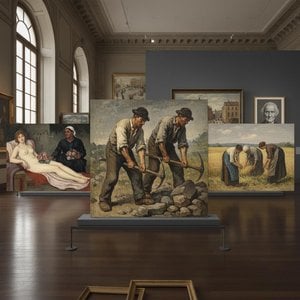
Explore the profound impact of Realism in art history. From Gustave Courbet's revolutionary techniques to the celebration of everyday life, discover how this movement captured the unfiltered truth of existence through masterful observation and raw, unyielding detail.

 미리보기
미리보기
 공유하기
공유하기 공유하기
공유하기
 상세 정보
상세 정보

 다운로드
다운로드
 유사 작품
유사 작품 X-레이
X-레이 슬라이드 쇼
 Stats
Stats


 더 보기
더 보기









 유리 옵션은 110cm 미만 크기에서만 선택 가능합니다.


