

빠른 제작과 다양한 마감 옵션을 제공하는 박물관 품질의 지클레이 또는 캔버스 프린트. ( 손으로 그린 그림 구매 Switch to Digital Image)





























작품의 원본 비율을 유지하는 미리 설정된 크기 중에서 선택하세요.

특정 프레임이나 공간에 맞춰 직접 치수를 입력하실 수 있습니다. 선택하신 사이즈가 원본 이미지의 비율과 일치하지 않을 경우, 작품을 크롭(자르기)하거나 이미지를 대칭 또는 단색 채우기로 확장하여 제작합니다. 제작 시작 전, 최종 확인을 위해 디지털 목업이 전송됩니다.
화면상의 미리보기는 실제 크롭이나 확장 상태를 반영하지 않으므로, 최종 구도는 오직 목업을 통해서만 정확하게 확인하실 수 있습니다.
맞춤 사이즈 제작도 가능하지만, 원본 비율을 유지하기 위해서는 사전 정의된 목록에서 치수를 선택하시는 것을 권장합니다.

Man with Pipe
복제본 크기
Gustave Courbet’s “Man with Pipe,” now residing within the esteemed Museu Nacional de Arte Antiga in Lisbon, Portugal, isn't merely a portrait; it’s a carefully constructed tableau of observation and introspection. Painted around 1848-49 during a pivotal period in Courbet’s artistic development, this oil on canvas transcends simple representation to become a profound meditation on the human condition – a quiet intensity captured within a confined space. The painting immediately draws the viewer in with its stark simplicity: a solitary man, seated indoors, lost in thought as he holds a pipe between his lips. Yet, beneath this apparent stillness lies a complex web of symbolism and artistic intent that continues to fascinate art historians and collectors alike.
Courbet’s decision to depict himself – or at least a figure strongly resembling him – was revolutionary for its time. Self-portraits were uncommon among established artists, often viewed with suspicion as narcissistic indulgences. Courbet, however, used this genre to explore his own evolving identity and artistic philosophy. The painting's composition is deliberately restrained, emphasizing the man’s face and posture. The dark background, a hallmark of Courbet’s style, serves not merely as a backdrop but actively contributes to the scene’s mood – creating depth and drawing attention to the subject’s features. Notice how the muted tones heighten the sense of introspection, suggesting a world beyond the frame.
“Man with Pipe” is a cornerstone of Courbet’s Realist movement, a direct challenge to the idealized aesthetics of Romanticism and Neoclassicism. Courbet rejected the notion that art should strive for beauty or grandeur, instead advocating for an honest depiction of everyday life – as he saw it. This commitment to portraying reality without embellishment was fiercely debated during his lifetime, with critics accusing him of vulgarity and a lack of artistic merit. However, Courbet’s insistence on observing and recording the world around him paved the way for future generations of artists, including Impressionists and Post-Impressionists.
The inclusion of the clock in the background is particularly significant. It anchors the scene firmly within a specific time and place – an interior setting that suggests contemplation and solitude. The red scarf adds a subtle splash of color, preventing the painting from becoming overly somber and hinting at a touch of warmth or perhaps even melancholy. Courbet’s meticulous attention to detail—the texture of the man's beard, the folds in his clothing, the subtle shadows on his face—demonstrates his commitment to capturing the essence of his subject with unparalleled accuracy.
Beyond its technical merits, “Man with Pipe” is rich in symbolic meaning. The pipe itself has become an iconic image associated with Courbet’s work, representing not just smoking but also contemplation, introspection, and perhaps even rebellion against societal norms. The man's gaze – direct, unwavering, and slightly melancholic – invites the viewer to share his thoughts and feelings. Some scholars interpret this intense stare as a reflection of Courbet’s own intellectual and artistic struggles. The painting can be seen as a portrait not just of a man, but of a soul grappling with questions of identity, purpose, and the complexities of human existence.
Reproductions by WahooArt offer an exceptional opportunity to experience the power and beauty of this seminal work firsthand. The meticulous detail and vibrant colors faithfully capture Courbet’s artistic vision, allowing you to bring this captivating portrait into your own home or studio. Explore their collection today and discover a timeless masterpiece.


1819 - 1877 , 프랑스
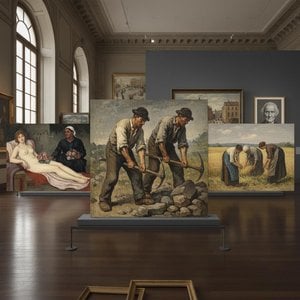
Explore the profound impact of Realism in art history. From Gustave Courbet's revolutionary techniques to the celebration of everyday life, discover how this movement captured the unfiltered truth of existence through masterful observation and raw, unyielding detail.

 미리보기
미리보기
 공유하기
공유하기 공유하기
공유하기
 상세 정보
상세 정보

 다운로드
다운로드
 유사 작품
유사 작품 X-레이
X-레이 슬라이드 쇼
 Stats
Stats


 더 보기
더 보기









 유리 옵션은 110cm 미만 크기에서만 선택 가능합니다.


