작가 약력
Grazia Varisco: Architect of Illusion and Light
Italian visual artist Grazia Varisco (born 1937 in Milan) stands as a pivotal, yet often underappreciated, figure within the vibrant landscape of Op Art and kinetic art. Her career, spanning over seven decades, is characterized by an innovative exploration of perception, time, and space – a relentless pursuit to disrupt conventional visual experience through meticulously crafted lighting patterns and dynamic forms. Varisco’s work isn't merely about creating images; it’s about generating immersive environments where the viewer becomes an active participant in the artwork’s unfolding narrative. Her journey began at the prestigious Brera Academy of Fine Arts in Milan, under the tutelage of Achille Funi, a formative experience that instilled within her a deep appreciation for both classical technique and experimental approaches to artistic expression.
Early Years and Gruppo T: A Kinetic Genesis
Varisco’s early career was inextricably linked with Gruppo T – a groundbreaking collective of artists, designers, and architects who redefined the possibilities of Italian art in the 1960s. Joining this influential group in 1960, alongside luminaries like Gianni Colombo, Davide Boriani, and Gabriele De Vecchi, she embraced their philosophy of “programmed art,” an approach that moved beyond static representation to create works designed to elicit specific emotional or perceptual responses from the audience. Gruppo T’s experiments with light, movement, and chance were revolutionary, pushing the boundaries of artistic convention and anticipating many of the developments in interactive art that would emerge decades later. Exhibitions such as ‘Arte Programmata’ (1962) and ‘Nouvelle Tendance’ (1963) showcased their innovative spirit, establishing Varisco's reputation as a key player in this dynamic artistic movement. This period was crucial for her development, exposing her to new materials – particularly glass and steel – and fostering an interest in the interplay between light, reflection, and perception.
The Variable Light Patterns: A Revolution in Perception
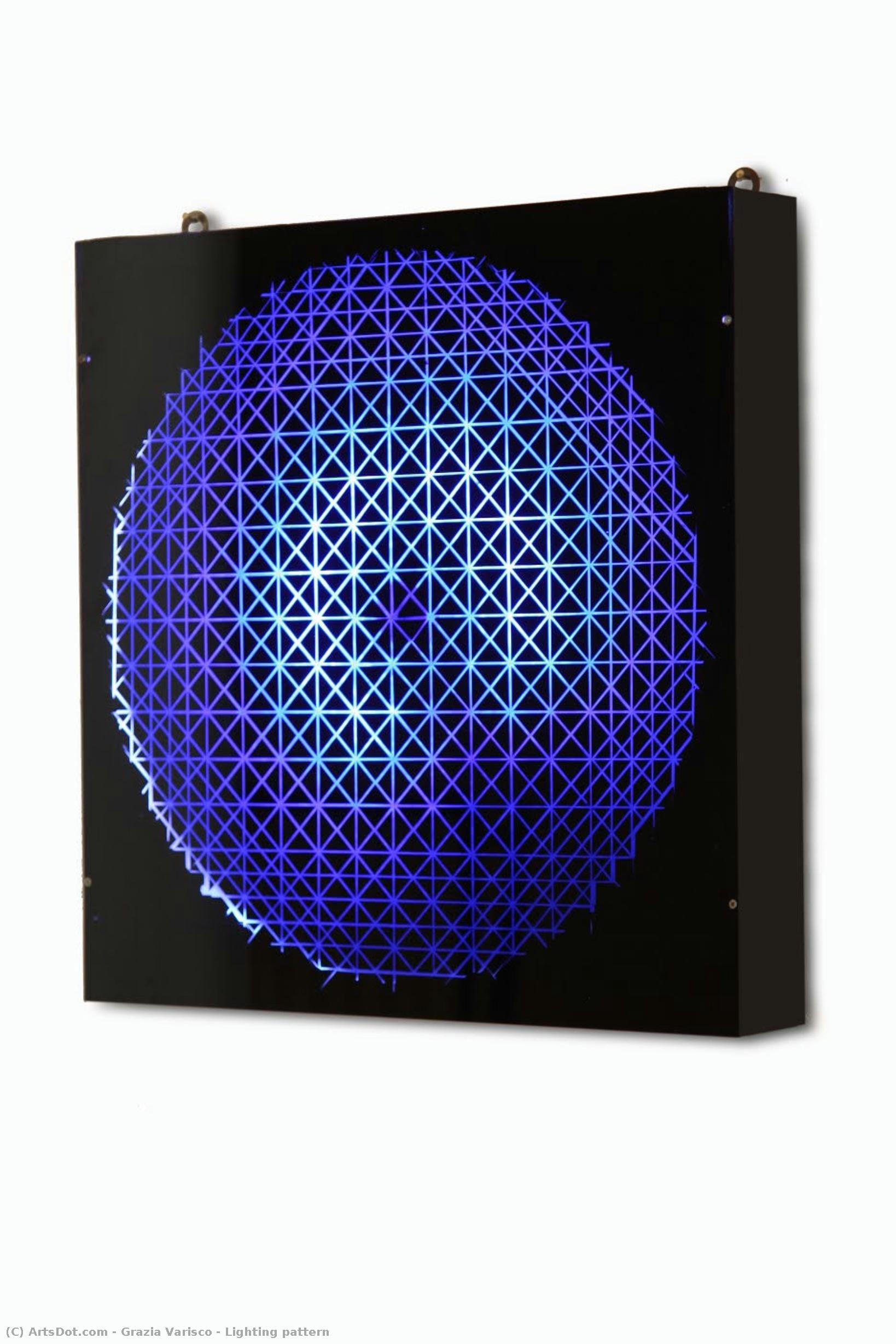
From 1961 to 1967, Varisco’s career took a significant turn as she worked for major Italian design houses – La Rinascente, Abitare, Kartell, and the Milan City Council. However, it was during this time that she began developing her most celebrated series: the “Variable Light Patterns.” These weren't static installations; they were dynamic events, constantly shifting and evolving through the manipulation of light and shadow. Utilizing specially treated glass panels with precisely etched patterns, Varisco created mesmerizing effects – shimmering, undulating surfaces that seemed to defy perspective and logic. The core concept was elegantly simple: a fixed blue light illuminated these textured surfaces, producing an illusion of continuous movement and transformation. The fluted glass itself contributed to the effect, refracting the light and creating subtle distortions that further enhanced the sense of dynamism. These patterns weren’t merely decorative; they were designed to challenge the viewer's perception of reality, prompting a deeper engagement with the artwork and its inherent ambiguity.
International Recognition and Continued Innovation
Varisco’s work quickly garnered international acclaim, culminating in prestigious invitations to exhibit at major venues worldwide. Her inclusion in the Venice Biennale (1964, 1986, and 2022) cemented her place as a leading figure in contemporary art. Other significant exhibitions included the Rome Quadriennale (1973), the Toyama Triennale (1990), ‘Force Fields: Phases of the Kinetic’ at the Barcelona Museum of Contemporary Art and the Hayward Gallery, London (2000), and ‘Beyond Geometry’ at the Los Angeles County Museum of Art and the Pérez Art Museum Miami (2004). Her 2007 retrospective at the Schirn Kunsthalle Frankfurt provided a comprehensive overview of her career, highlighting the breadth and depth of her artistic vision. Throughout these years, Varisco remained committed to teaching, serving as Professor of Theory of Perception at the Brera Academy of Fine Arts from 1981 to 2007, passing on her knowledge and inspiring generations of artists. In 2007, she received the ‘Presidente della Repubblica Prize for Sculpture,’ a testament to her enduring contribution to Italian art and culture.
Legacy and Influence
Grazia Varisco’s legacy extends far beyond her individual artworks. She was one of the few women actively involved in Op Art, alongside influential figures like Edna Andrade, Bridget Riley, and Vera Molnár – a testament to her pioneering spirit and artistic vision. Her work continues to resonate with contemporary artists exploring themes of perception, illusion, and interactivity. Her exploration of light as a dynamic element, combined with her innovative use of materials and her commitment to challenging conventional visual experience, has left an indelible mark on the history of art. Varisco’s influence can be seen in the work of numerous artists who have followed in her footsteps, demonstrating the enduring power of her ideas and their continued relevance in the 21st century. Her pieces are now held in prestigious collections across Europe and America, ensuring that her unique vision will continue to inspire and captivate audiences for years to come.



 미리보기
미리보기
 프린트 구매
 공유하기
공유하기 공유하기
공유하기
 상세 정보
상세 정보

 다운로드
다운로드
 유사 작품
유사 작품 X-레이
X-레이 슬라이드 쇼

 더 보기
더 보기






































 유리 옵션은 110cm 미만 크기에서만 선택 가능합니다.





