
원하는 크기와 액자로 주문 제작되는, 작가들이 직접 캔버스에 손으로 그린 유화 작품입니다. ( 프린트 판매로 전환 디지털 이미지로 전환)
작품의 원본 비율을 유지하는 미리 설정된 크기 중에서 선택하세요.

특정 프레임이나 공간에 맞도록 직접 크기를 입력할 수 있습니다. 선택하신 크기가 원본 이미지의 비율과 일치하지 않는 경우, 작품을 자르거나 추가적인 손으로 그린 요소를 사용하여 그림을 확장합니다. 제작 시작 전 승인을 위해 디지털 목업을 보내드립니다.
화면 미리 보기는 실제 자르기 또는 확장을 반영하지 않습니다. 최종 구성은 목업을 통해서만 정확하게 확인하실 수 있습니다.
맞춤 크기 제작도 가능하지만, 원본 비율을 유지하기 위해 사전 정의된 목록에서 크기를 선택하시는 것을 권장합니다.

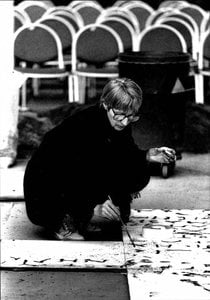
Jocelyn Herbert Painting a Set
복제본 크기

Born in the historic heart of Edinburgh in 1950, Gordon Fraser Clark—known to many by his professional moniker, Nobby Clark—possesses a life story that is as much a performance as the subjects he captures. Before he ever mastered the nuances of light and shadow through a camera lens, Clark lived at the epicenter of musical stardom. As the original lead singer and a founding member of the legendary Bay City Rollers, his early years were defined by the electric energy of the stage, performing iconic hits like Saturday Night to global audiences. This intimate connection to the rhythm of live performance provided him with an unparalleled perspective; he does not merely observe a stage from the wings, but understands the visceral pulse of the performer from within.
This unique duality of experience—as both a musical protagonist and a visual chronicler—has shaped a photographic style that is profoundly empathetic. When Clark transitioned into the realm of photography, he did so with a mission to strip away the superficial. His unwavering commitment to black and white imagery serves as his most powerful artistic signature. By eschewing the distractions of color, he directs the viewer's gaze toward the raw essence of the moment: the tension in a dancer’s muscle, the dramatic contour of an opera singer’s expression, and the stark, sculptural beauty of theatrical lighting. His work possesses a rare, inherent stillness that freezes the fleeting breath of a live production, turning ephemeral movements into enduring monuments of art.
Clark’s career is a tapestry woven from collaborations with the most prestigious institutions of British culture. His lens has been entrusted to the Royal Opera London, the Royal Ballet, and the National Theatre, where he has documented the creative visions of legendary directors such as Sir Peter Hall, Bill Bryden, and John Dexter. In these spaces, Clark acts as a silent historian, capturing the transformative process of theatre—from the meticulous work of designers like Jocelyn Herbert painting a set to the intense, unscripted energy of rehearsals for monumental works like The Oresteia. His ability to navigate the high-stakes environment of professional production allows him to capture images that are both candid and iconic.
Beyond the grand stages of opera and ballet, Clark’s versatility extends into the realms of comedy and cult television. He has documented the sharp wit of comedians such as Dave Allen, Rik Mayall, and Billy Connolly, finding the profound human truth behind the laughter. His photographic reach even touched the burgeoning world of science fiction through his role as production photographer for the seventh series of the cult classic Red Dwarf. This breadth of work demonstrates a remarkable ability to adapt his monochromatic technique to various genres, whether it be the classical elegance of a ballet or the gritty, imaginative landscapes of television.
The historical significance of Clark’s body of work lies in its role as a visual archive of British performing arts. His photographs are more than mere documentation; they are emotional echoes of a bygone and contemporary era of stagecraft. Influenced by the documentary precision of Henri Cartier-Bresson, Clark utilizes the "decisive moment" to bridge the gap between the performer and the spectator. Through his work, the ephemeral magic of the theatre is granted a permanent, silver-toned immortality, ensuring that the fleeting gestures of the world's greatest artists continue to resonate long after the final curtain has fallen.
1950 - , United Kingdom


 미리보기
미리보기
 공유하기
공유하기 공유하기
공유하기
 상세 정보
상세 정보

 다운로드
다운로드
 유사 작품
유사 작품 X-레이
X-레이 슬라이드 쇼
 통계 정보
통계 정보

 더 보기
더 보기






































 유리 옵션은 110cm 미만 크기에서만 선택 가능합니다.


