

 Acrylic On CanvasWallArtLate Baroque
 1740
1740 80.0 x 58.0 cm
 Palazzo d'Accursio
원하는 크기와 액자로 주문 제작되는, 작가들이 직접 캔버스에 손으로 그린 유화 작품입니다. ( Switch to Print Switch to Digital Image)





























작품의 원본 비율을 유지하는 미리 설정된 크기 중에서 선택하세요.

특정 프레임이나 공간에 맞도록 직접 크기를 입력할 수 있습니다. 선택하신 크기가 원본 이미지의 비율과 일치하지 않는 경우, 작품을 자르거나 추가적인 손으로 그린 요소를 사용하여 그림을 확장합니다. 제작 시작 전 승인을 위해 디지털 목업을 보내드립니다.
화면 미리 보기는 실제 자르기 또는 확장을 반영하지 않습니다. 최종 구성은 목업을 통해서만 정확하게 확인하실 수 있습니다.
맞춤 크기 제작도 가능하지만, 원본 비율을 유지하기 위해 사전 정의된 목록에서 크기를 선택하시는 것을 권장합니다.

Cardinal Prospero Lambertini
복제본 크기
Giuseppe Maria Crespi (1665 – 1747), affectionately dubbed “Lo Spagnuolo” for his flamboyant attire—a stylistic choice mirroring Spanish fashion trends of the era—stands as a singular figure within the Baroque tapestry of Bologna. Unlike many artists of his time who flocked to Rome’s papal court, Crespi stubbornly maintained his independence, establishing himself as a master of genre painting and delivering portraits that transcend mere likenesses, offering instead profound explorations into human experience.
His apprenticeship under Angelo Michele Toni and Domenico Maria Canuti instilled him with foundational skills, yet it was his rejection of Rome’s artistic dominance that truly cemented Crespi's legacy. He prioritized capturing the everyday realities of life—scenes of domestic interiors, bustling marketplaces, and convivial gatherings—a daring departure from the grand narratives favored by contemporaries like Maratti.
Crespi’s portraits weren’t simply representations of individuals; they were investigations into character. He eschewed idealized poses and formal attire, opting instead for candid expressions and clothing reflecting the sitter's social standing. This technique—characterized by a remarkable sensitivity to nuance—allowed him to convey not just physical appearance but also psychological depth. Consider his depiction of Benedict XIV, housed in the Vatican Museums; it’s less about regal grandeur and more about conveying the Pope’s contemplative gaze and inner life.
The photograph accompanying this description captures the essence of Crespi's approach: a man seated at a desk amidst books—a visual shorthand for scholarship and intellectual curiosity. The subtle lighting emphasizes his face, drawing attention to his expression and inviting contemplation. This masterful use of chiaroscuro—the dramatic interplay between light and shadow—was a hallmark of Crespi’s style.
Crespi's influence extended far beyond individual portraits. He reinvigorated the Bolognese genre painting tradition, elevating it to new heights of realism and psychological insight. Unlike earlier practitioners who often relied on theatrical staging and stylized costumes, Crespi sought to depict ordinary life with unflinching honesty. His canvases resonate with a palpable sense of atmosphere—the warmth of a hearth fire, the murmur of conversation, the scent of spices in a marketplace.
The inclusion of books on the desk isn’t merely decorative; it symbolizes Crespi's artistic vision – an embrace of intellectuality and observation. The muted palette—dominated by earthy tones—contributes to the painting's emotional resonance, conveying a sense of quiet contemplation and understated dignity. Crespi’s work invites viewers to engage with complex emotions—melancholy, compassion, and wonder—reflecting the humanist spirit that characterized his era.
A high-quality reproduction of “Cardinal Prospero Lambertini” can serve as a beautiful reminder of Crespi's artistic genius. WahooArt.com offers exceptional reproductions, meticulously crafted to preserve the original artwork's vibrancy and detail. Explore our collection today and immerse yourself in the captivating world of Bolognese Baroque.


1665 - 1747 , 이탈리아

Explore the life & art of Giuseppe Maria Crespi, a pivotal Bolognese Baroque painter. Discover his groundbreaking genre scenes, religious works, and lasting influence on Italian art history. Learn more at WahooArt.

바로크 예술의 풍요로운 세계를 탐험하고, 현대 인테리어에 감동을 불어넣는 방법을 WahooArt에서 만나보세요. 카라바조, 렘브란트 등 거장들의 작품과 키아로스쿠로 기법 활용 노하우를 공개합니다.
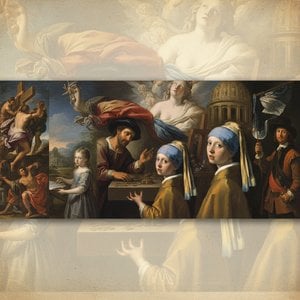
화려함과 극적인 표현이 압권! 바로크 미술을 대표하는 10대 걸작의 숨겨진 이야기를 만나보세요. 베르니니, 루벤스 등 거장의 작품부터 바로크 색감, 예술적 기법까지 – WahooArt.com에서 명품 복제 & 인테리어 영감을 얻으세요! 지금 바로 컬렉션을 탐험해보세요.

Discover Jacob Jordaens, a leading Flemish Baroque painter renowned for his dynamic compositions & realistic genre scenes. Explore his life, art, and lasting influence with WahooArt.

Explore the dramatic world of Baroque art! Discover iconic artists like Caravaggio & Rubens, defining techniques, and its lasting impact on art history. Expert insights for collectors & enthusiasts at WahooArt.

 미리보기
미리보기
 공유하기
공유하기 공유하기
공유하기
 상세 정보
상세 정보

 다운로드
다운로드
 유사 작품
유사 작품 X-레이
X-레이 슬라이드 쇼
 Stats
Stats 더 보기
더 보기









 유리 옵션은 110cm 미만 크기에서만 선택 가능합니다.


