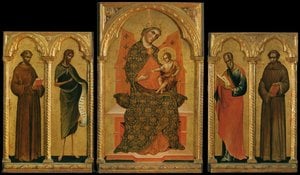
Oil On PanelWallArtProto-Renaissance
 Late Medieval
 133.0 x 41.0 cm
 우피치 미술관
원하는 크기와 액자로 주문 제작되는, 작가들이 직접 캔버스에 손으로 그린 유화 작품입니다. ( 프린트 판매로 전환 디지털 이미지로 전환)





























작품의 원본 비율을 유지하는 미리 설정된 크기 중에서 선택하세요.

특정 프레임이나 공간에 맞도록 직접 크기를 입력할 수 있습니다. 선택하신 크기가 원본 이미지의 비율과 일치하지 않는 경우, 작품을 자르거나 추가적인 손으로 그린 요소를 사용하여 그림을 확장합니다. 제작 시작 전 승인을 위해 디지털 목업을 보내드립니다.
화면 미리 보기는 실제 자르기 또는 확장을 반영하지 않습니다. 최종 구성은 목업을 통해서만 정확하게 확인하실 수 있습니다.
맞춤 크기 제작도 가능하지만, 원본 비율을 유지하기 위해 사전 정의된 목록에서 크기를 선택하시는 것을 권장합니다.

Ognissanti Polyptych: lateral panel
복제본 크기
To stand before Giovanni da Milano’s Ognissanti Polyptych: lateral panel is to encounter a moment suspended in time, a profound meditation rendered in pigment and gold. Created around 1360, this remarkable piece serves as a poignant emblem of the Proto-Renaissance fervor that gripped Florence during its formative years. More than mere pigment on wood, it acts as an intimate invitation to contemplate themes of devotion and familial love. The panel, now housed within the hallowed halls of the Galleria degli Uffizi, captures a sense of spiritual solemnity that transcends the centuries, offering a glimpse into the very soul of 14th-century Italian piety.
The composition is a masterclass in emotional resonance and structural harmony. The lateral panel depicts two women standing side by side, their postures conveying an unmistakable gesture of tenderness and mutual support. One figure appears to hold the other, creating a palpable sense of unity and compassion that anchors the viewer's gaze. This intimate connection is framed by a stylized castle façade, adorned with a vibrant stained glass window—a motif frequently employed in Florentine churches to evoke the celestial light of heaven. An arrow pointing towards the center serves as a subtle yet powerful symbolic guide, directing our eyes toward the heart of the scene and emphasizing the profound bond shared between the figures.
Giovanni da Milano’s artistic lineage traces back to the legendary Giotto di Bondone, whose groundbreaking naturalistic style revolutionized Tuscan painting. However, Giovanni was no mere imitator; he possessed a unique ability to skillfully blend Giocchetto’s expressive gestures with the enduring, elegant conventions of Gothic art. This harmonious fusion is most evident in the meticulous detail of the drapery folds and the nuanced facial expressions that distinguish his work. While retaining a sense of medieval spiritual weight, there is an emerging naturalism in the way the figures occupy space, hinting at the transformative era that would eventually lead to the masterpieces of Michelangelo and Raphael.
The technique employed in this tempera on wood panel reflects the painstaking craftsmanship of the period. The artist’s ability to manipulate light and shadow—even within the rigid framework of Gothic tradition—creates a sense of depth and presence that is truly captivating. For the discerning collector or interior designer, this piece offers more than just aesthetic beauty; it provides a historical anchor. A high-quality reproduction of this panel brings with it the weight of history, making it an ideal centerpiece for spaces that value intellectual depth, classical elegance, and a connection to the profound spiritual narratives of the Italian Renaissance.


1346 - 1369 , 이탈리아

레오나르도 다 빈치의 시대를 초월하는 25개의 명작을 만나보세요. 모나리자, 최후의 만찬 등 예술과 과학이 융합된 걸작들의 숨겨진 이야기와 기법을 탐험합니다. WahooArt.com에서 고품질 미술 작품을 감상하고 특별한 인테리어 영감을 얻으세요.

Explore the life & art of Giovanni Fattori, a leading figure of the Macchiaioli movement. Discover his revolutionary realism, captivating Tuscan landscapes, and lasting impact on Italian painting. Learn more at WahooArt.

Explore the profound artistic journey of Giovanni Giacometti, father to Alberto. Discover his unique transition from Surrealism to Existentialist sculpture and painting – a compelling study for elite collectors and art enthusiasts.

Explore Leonardo da Vinci’s timeless masterpieces with WahooArt. Discover insights into his art, science, and legacy – trusted expertise for discerning collectors seeking authentic reproductions & investment opportunities.

Journey back to the dawn of Renaissance art! Explore 10 iconic Proto-Renaissance masterpieces by Giotto, Cimabue & Duccio. Discover their stories, techniques & lasting impact. Find museum-quality reproductions for your home at WahooArt.com


 미리보기
미리보기
 공유하기
공유하기 공유하기
공유하기
 상세 정보
상세 정보 가이드 보기

 다운로드
다운로드
 유사 작품
유사 작품 X-레이
X-레이 슬라이드 쇼
 통계 정보
통계 정보 더 보기
더 보기









 유리 옵션은 110cm 미만 크기에서만 선택 가능합니다.