The Genesis of Faith: Exploring the Annunciation Fresco
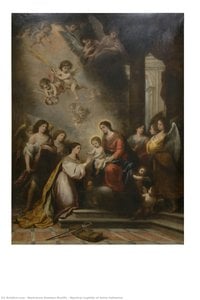
Giorgio Vasari’s 1570 Annunciation, housed within the serene confines of the Morgan Library and Museum in New York City, isn't merely a depiction of a biblical narrative; it’s a profound meditation on divine grace, humility, and the transformative power of faith. Painted during the height of the Italian Renaissance, this fresco embodies the era’s fascination with classical ideals blended seamlessly with deeply rooted Christian symbolism. Vasari, a pivotal figure in both art history and architectural documentation, masterfully captures a moment of extraordinary significance – the revelation to Mary that she would bear the Son of God. The scene unfolds within a modestly appointed room, bathed in a carefully orchestrated chiaroscuro, drawing the viewer’s eye directly to the central figures: the radiant Archangel Gabriel and the profoundly receptive Virgin Mary.
Mannerist Elegance: Composition and Technique
Vasari’s artistic approach firmly situates this Annunciation within the Mannerist style, a transitional phase between the High Renaissance and Baroque art. Unlike the balanced compositions of his predecessors, Vasari employs a dynamic, almost theatrical arrangement, utilizing elongated figures and dramatic gestures to heighten emotional impact. The fresco's meticulous detail—from the folds of Mary’s garments to the delicate feathers on Gabriel’s wings—demonstrates Vasari’s exceptional technical skill. He expertly manipulates light and shadow, creating a sense of depth and volume that brings the scene to life. Notably, Vasari utilized *carta azzurra*, a distinctive blue pigment favored by Florentine artists, lending the work an ethereal quality and contributing to its overall luminosity. The use of perspective is subtly employed, guiding the viewer’s eye through the composition with graceful precision.
Symbolism Woven into the Scene
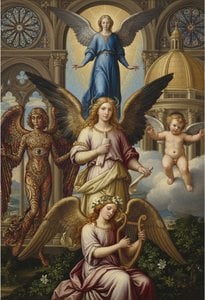
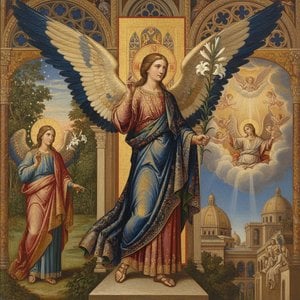
Beyond the straightforward narrative, the Annunciation is rich in symbolic meaning. Gabriel's trumpet, a traditional emblem of divine proclamation, signifies God’s urgent message. The dove, hovering above the figures, represents the Holy Spirit – the vital force that enables the miraculous conception. Mary’s posture—kneeling, hands clasped in prayer—expresses her humility and acceptance of God’s will. The carefully chosen setting, a simple room devoid of opulent decoration, underscores the sanctity of the event and emphasizes Mary's role as a vessel for divine grace. The books scattered throughout the scene are not merely decorative; they represent the wisdom and knowledge that Mary brings forth through her son.
A Legacy of Faith and Art
The Annunciation by Giorgio Vasari stands as a testament to the enduring power of faith and artistic expression. Its influence can be traced through countless subsequent depictions of this pivotal biblical event, shaping the visual language of Christian art for centuries. The work’s emotional resonance—a palpable sense of awe, reverence, and hope—continues to captivate viewers today. Reproductions of this masterpiece offer a remarkable opportunity to bring this iconic image into any space, fostering contemplation and reminding us of the profound mysteries at the heart of our beliefs. Consider commissioning a hand-painted reproduction – a faithful recreation that captures the fresco’s luminous beauty and timeless significance.
질의응답
"Annunciation"의 재료와 화풍은 무엇인가요?
조르조 바사리의 "Annunciation"은 Acrylic On Canvas 기법과 Mannerism 양식이 결합된 작품입니다. 기법과 양식은 작품의 제작 방식과 예술적 스타일을 나타냅니다.
"Annunciation" 작품을 파인 아트 프린트로 구매할 수 있나요?
조르조 바사리의 "Annunciation"의 프린트는 해당 작품의 파인 아트 프린트 페이지에서 간편하게 주문하실 수 있습니다: 코튼 캔버스 또는 아카이브용 캔버스지에 인쇄된 파인 아트 프린트.
"Annunciation"에서 가장 눈에 띄는 색상은 무엇인가요?
조르조 바사리의 "Annunciation"의 주요 색상은 Espresso (#513d33)입니다.