
빠른 제작과 다양한 마감 옵션을 제공하는 박물관 품질의 지클레이 또는 캔버스 프린트. ( 손으로 그린 그림 구매 디지털 이미지로 전환)





























작품의 원본 비율을 유지하는 미리 설정된 크기 중에서 선택하세요.

특정 프레임이나 공간에 맞춰 직접 치수를 입력하실 수 있습니다. 선택하신 사이즈가 원본 이미지의 비율과 일치하지 않을 경우, 작품을 크롭(자르기)하거나 이미지를 대칭 또는 단색 채우기로 확장하여 제작합니다. 제작 시작 전, 최종 확인을 위해 디지털 목업이 전송됩니다.
화면상의 미리보기는 실제 크롭이나 확장 상태를 반영하지 않으므로, 최종 구도는 오직 목업을 통해서만 정확하게 확인하실 수 있습니다.
맞춤 사이즈 제작도 가능하지만, 원본 비율을 유지하기 위해서는 사전 정의된 목록에서 치수를 선택하시는 것을 권장합니다.

The Roman villa
복제본 크기
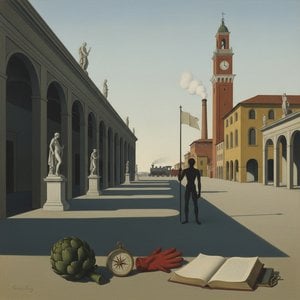
Giorgio de Chirico’s “The Roman Villa” stands as a cornerstone of Metaphysical Art, emerging from the crucible of post-war European thought and capturing a singular vision of architectural space infused with unsettling stillness. Painted in 1928, this enigmatic canvas transcends mere representation; it delves into the subconscious mind, mirroring the anxieties and intellectual explorations prevalent during its time.
Stylistically, “The Roman Villa” firmly establishes itself within Neo-baroque aesthetics—a deliberate harkening back to classical grandeur juxtaposed with a disconcerting modernity. De Chirico meticulously renders a crumbling villa bathed in diffused sunlight, creating an atmosphere of profound melancholy and isolation. The architectural details are rendered with painstaking precision, yet they lack warmth or vibrancy, emphasizing the emptiness at the heart of the scene.
Technique-wise, de Chirico employs a masterful blend of oil paint on canvas, utilizing layering and glazing to achieve remarkable tonal depth and luminosity. His brushstrokes are deliberate and controlled, conveying both solidity and fragility simultaneously. The artist’s meticulous attention to texture contributes significantly to the painting's unsettling realism—a deceptive surface concealing an inner world brimming with psychological complexity.
The historical context surrounding “The Roman Villa” is inextricably linked to the philosophical currents of Nietzsche, Schopenhauer, and Weininger. These thinkers questioned traditional morality and championed pessimism, mirroring de Chirico’s preoccupation with existential dread and the irrational forces shaping human consciousness. The villa itself serves as a symbolic representation of memory—a decaying edifice haunted by echoes of vanished grandeur—reflecting the artist's contemplation on time, loss, and the inescapable grip of fate.
Beyond its formal qualities, “The Roman Villa” possesses an undeniable emotional impact. It evokes feelings of unease, disorientation, and profound solitude. The pervasive stillness is punctuated by two clocks – a deliberate motif echoing Nietzsche’s concept of eternal recurrence—further amplifying the sense of temporal compression and highlighting the futility of striving against the inevitable march of time. This artwork invites viewers to confront uncomfortable truths about human existence and to contemplate the beauty inherent in decay.
As a reproduction, “The Roman Villa” allows art enthusiasts to experience this seminal piece firsthand. WahooArt offers exceptional quality prints that faithfully capture the painting’s luminous palette and textural nuances, bringing De Chirico's dreamlike vision into any interior space.


1888 - 1978 , 그리스
Explore the captivating world of Giorgio de Chirico and his groundbreaking Metaphysical painting movement. Discover the philosophical depths & surreal imagery that influenced generations of artists. Learn more at WahooArt.

Explore the haunting beauty of Metaphysical Art. Delve into Giorgio de Chirico’s dreamlike landscapes, the movement's profound connection to Surrealism, and the philosophical mysteries hidden within its eerie, silent piazzas.

고야의 걸작 25선을 만나보세요. 스페인 화가 Francisco Goya의 낭만주의 회화, 어두운 색조와 강렬한 감성이 담긴 명화를 WahooArt에서 감상하세요. 고품질 유화 복제본으로 예술 작품을 소장하고 홈 데코를 완성해보세요! 지금 바로 컬렉션을 탐험하세요.

Discover our story! We bring world-class art into your life through expert curation, personalized creations, and free previews. Trusted by individuals and businesses since 2000.

Explore the captivating world of Metaphysical art with WahooArt. Discover Giorgio de Chirico's iconic paintings, philosophical influences & lasting impact on Surrealism. Expert insights for collectors.


 미리보기
미리보기
 공유하기
공유하기 공유하기
공유하기
 상세 정보
상세 정보 가이드 보기

 다운로드
다운로드
 유사 작품
유사 작품 X-레이
X-레이 슬라이드 쇼
 통계 정보
통계 정보
 더 보기
더 보기









 유리 옵션은 110cm 미만 크기에서만 선택 가능합니다.


