

 51.0 x 61.0 cm
 MAGA - Museo Arte Gallarate
이 페이지에 표시된 작품은 저작권법의 보호를 받으며, 이에 따라 동일한 복제품을 제작하거나 판매하는 것은 법으로 금지되어 있습니다. 이러한 권리 보호는 다음과 같은 국제 협약에 따라 시행됩니다. 베른 협약 또한 다음에서 명시하는 법률을 포함한 국내법에 의해 보호됩니다. 미국 저작권법 제17조.
저희는 존중을 담은 합법적인 대안으로서, 원작에서 영감을 받은 맞춤형 수제 유화 작품을 제공합니다. 저희의 숙련된 전문 화가들은 원작의 스타일, 분위기, 예술적 정수를 면밀히 연구하여, 그 자체로 독창적인 창작물이면서도 원작과 동일한 감동을 불러일으키는 새로운 작품을 만들어냅니다.
이 방식은 저작권 보호를 받는 예술 작품을 복제하거나 그대로 재현하는 것이 아니기에 저작권 규정을 완벽히 준수합니다. 대신, 이는 창의적인 재해석의 과정을 거칩니다. 즉, 원작에서 영감을 받되 원작과 동일하지 않은 새로운 회화 작품을 의미합니다.
작가가 직접 캔버스에 손으로 그린 유화 작품으로, 원하는 크기와 액자로 맞춤 제작해 드립니다. ( 프린트 판매로 전환 디지털 이미지 판매 채널로 전환)
작품의 원본 비율을 그대로 유지하는 프리셋 사이즈 중에서 선택해 보세요.

액자나 벽면 크기에 맞춰 필요한 가로와 세로 길이를 입력해 주세요. 본 작품은 수작업으로 제작되므로, 요청하신 비율에 따라 작가가 그림의 가장자리를 조금 더 넓게 그리거나 일부를 조정하여 작업할 수 있습니다. 작업 시작 전, 최종 확인을 위해 디지털 목업 이미지를 보내드립니다. 이 페이지에 표시된 이미지는 실제 결과물과 다를 수 있으며, 오직 목업 이미지만이 정확한 결과물을 보여줍니다.
Burning Icaro
복제본 규격

Gianni Bertini (1922–2010) was far more than a mere painter; he was a restless architect of the visual imagination, a man who navigated the turbulent currents of the postwar era with an unyielding curiosity. Born in Pisa, Italy, Bertini’s early intellectual formation was rooted in the precision of mathematics—a discipline that would later manifest in his meticulous manipulation of textures and layers. This scientific rigor did not stifle his creativity but rather provided the structural foundation upon which he built a complex, multi-layered aesthetic. His journey took him from the historical echoes of the Italian Renaissance to the vibrant, experimental heart of Paris in 1951, a transition that allowed him to bridge the gap between classical grandeur and the burgeoning anxieties of modern consumer culture.
His artistic evolution was marked by a profound refusal to remain tethered to any single movement. While his early years saw him exploring figurative and geometric abstraction, he soon found himself drawn to the visceral energy of Arte Nucleare and the gestural freedom of informal painting. In works such as La Toile de Penelope, created alongside his wife Licia Monesi, Bertini demonstrated a remarkable ability to weave together disparate elements—using textile collage and irregular stitching to evoke both the ancient myth of the weaver and the raw, expressionist textures of the mid-century avant-garde. This period of his life was characterized by a deep engagement with mythology, using figures like Oedipus and Artemis not merely as subjects, but as vessels for exploring a reconstructed humanism in a world recovering from the scars of war.
What truly set Bertini apart from his contemporaries was his audacious embrace of the machine. At a time when many artists sought refuge in the purity of the brushstroke, Bertini looked toward the burgeoning technologies of mass media. He became a pioneer of material transfer and photomechanical screen printing, techniques that allowed him to imprint images directly onto canvas using specialized adhesives. This process created a visual language that was strikingly contemporary—reminiscent of the Pop Art movement seen in the works of Warhol, yet imbued with a much sharper, more critical edge regarding the impact of mass production on the human psyche.
This fascination with the mechanical led to his development of Mec-Art, a concept that merged graphic experimentation with industrial processes. His work often featured:
Through these methods, Bertini achieved a style that was both tactile and ephemeral, capturing the frantic energy of the 20th century through a lens of controlled experimentation.
Beyond the canvas, Bertini was a central figure in the interdisciplinary dialogues of the postwar avant-garde. He moved fluidly between the worlds of visual art, poetry, and performance, collaborating closely with experimental poets like Henri Chopin and participating in the radical actions of Nouveau Réalisme. His "bertinizations" represented an attempt to infuse everyday reality with a heightened, often surrealist, iconography, challenging the boundaries between high art and the mundane objects of consumer life.
His historical significance lies in his role as a bridge-builder—between science and art, between ancient myth and modern technology, and between the Italian tradition and the French experimental scene. Even as he explored the mechanical, he never lost sight of the human element; his work remained a profound investigation into the soul's struggle within an increasingly mechanized world. Today, the retrospective exhibitions of his work, such as those held in Lecce, continue to reveal the complexity of a man who refused to be categorized, celebrating a legacy defined by tireless research, aesthetic courage, and an eternal quest for the new.
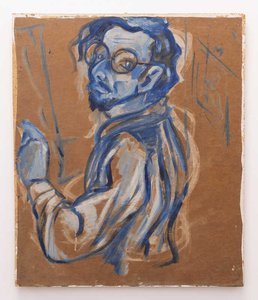
1922 - 2010 , Italy

 실제 크기로 보기
 보내기
보내기 공유하기
공유하기
 상세 보기
상세 보기 가이드 보기

 이미지 다운로드
 유사 작품 더 보기
 X-레이
X-레이 슬라이드 쇼 보기
 통계 정보
통계 정보 상세 보기
상세 보기






































 유리 옵션은 110cm 미만 크기에서만 선택 가능합니다.


