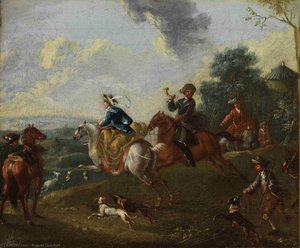
1779
1779 261.0 x 153.0 cm
빠른 제작과 다양한 마감 옵션을 제공하는 박물관 품질의 지클레이 또는 캔버스 프린트. ( 손으로 그린 그림 구매 디지털 이미지로 전환)
작품의 원본 비율을 유지하는 미리 설정된 크기 중에서 선택하세요.

특정 프레임이나 공간에 맞춰 직접 치수를 입력하실 수 있습니다. 선택하신 사이즈가 원본 이미지의 비율과 일치하지 않을 경우, 작품을 크롭(자르기)하거나 이미지를 대칭 또는 단색 채우기로 확장하여 제작합니다. 제작 시작 전, 최종 확인을 위해 디지털 목업이 전송됩니다.
화면상의 미리보기는 실제 크롭이나 확장 상태를 반영하지 않으므로, 최종 구도는 오직 목업을 통해서만 정확하게 확인하실 수 있습니다.
맞춤 사이즈 제작도 가능하지만, 원본 비율을 유지하기 위해서는 사전 정의된 목록에서 치수를 선택하시는 것을 권장합니다.

A Hawking Party
복제본 크기

Gerrit Malleyn, a name resonating with the spirit of 19th-century Dutch landscape and wildlife painting, occupies a unique position as a chronicler of rural life and sporting pursuits. Born in Klerksdorp in 1753, though some sources indicate an extended lifespan until 1876 – a discrepancy requiring further investigation – Malleyn dedicated his artistic career to capturing the essence of hunting scenes with remarkable detail and a palpable sense of atmosphere. While biographical details remain somewhat elusive, piecing together information from auction records, art databases, and scholarly resources reveals a life deeply intertwined with the traditions of the Dutch countryside.
Malleyn’s work is characterized by a meticulous realism that speaks to both his technical skill and an intimate understanding of his subject matter. He wasn't merely painting hunts; he was documenting a way of life, a social practice steeped in history and symbolism. His canvases teem with activity – the focused intensity of the hunter raising his weapon, the energetic bounds of hounds pursuing game, the quiet companionship between man and animal. The landscapes themselves are not simply backdrops but integral components of the narrative, rendered with a rich palette and an attention to light that evokes the specific time of day and weather conditions.
Malleyn’s artistic style firmly places him within the tradition of Dutch Realism. He demonstrates a clear lineage from earlier masters who specialized in hunting scenes, such as those from the 17th century, but he infuses his work with a distinct personality. His brushwork is precise and controlled, allowing for an extraordinary level of detail in the depiction of figures, animals, and foliage. The compositions are often carefully balanced, creating a sense of harmony and order even within dynamic scenes. He masterfully employs chiaroscuro – the dramatic contrast between light and shadow – to draw the viewer’s eye to key elements and enhance the overall emotional impact.
The artist's palette is typically warm and earthy, dominated by browns, greens, and ochres that reflect the natural tones of the Dutch landscape. However, he isn’t afraid to introduce subtle variations in color to create depth and atmosphere. The textures are also noteworthy – the rough bark of trees, the glossy coats of horses, the soft fur of dogs are all rendered with convincing realism. A Hunting Party at Rest by an Inn, for example, showcases his ability to capture not only the physical appearance of his subjects but also their individual character and temperament.
Beyond the purely representational, Malleyn's paintings often carry subtle layers of symbolism. Hunting itself was more than just a sport; it was a demonstration of social status, skill, and connection to nature. The presence of specific animals could also hold symbolic meaning – deer representing nobility, rabbits signifying fertility, and so on. His scenes frequently depict moments of respite and camaraderie alongside the pursuit of game, suggesting an appreciation for the social aspects of hunting as much as the thrill of the chase.
The inclusion of detailed landscapes is not accidental either. The Dutch countryside was undergoing significant changes during Malleyn’s lifetime, with increasing urbanization and agricultural development. His paintings can be seen as a form of preservation – a way of documenting a vanishing way of life and celebrating the beauty of the natural world before it disappeared. The artist's focus on rural scenes reflects a broader Romantic sensibility that emerged in the 19th century, emphasizing emotion, individualism, and a reverence for nature.
While Gerrit Malleyn may not be as widely recognized as some of his more famous contemporaries, his work holds significant value for art historians and collectors. His paintings provide valuable insights into the social customs, artistic techniques, and environmental conditions of 19th-century Holland. The meticulous detail and atmospheric quality of his scenes continue to captivate viewers today.
His legacy lies in his ability to seamlessly blend realism with a sense of narrative and emotional depth. He wasn’t simply recording what he saw; he was interpreting it, imbuing his paintings with a personal vision that reflects his deep connection to the Dutch countryside.


 미리보기
미리보기
 공유하기
공유하기 공유하기
공유하기
 상세 정보
상세 정보 가이드 보기

 다운로드
다운로드
 유사 작품
유사 작품 X-레이
X-레이 슬라이드 쇼
 통계 정보
통계 정보 더 보기
더 보기






































 유리 옵션은 110cm 미만 크기에서만 선택 가능합니다.