
 Painting
 1989Contemporary
 150.0 x 120.0 cm
 Rede Portuguesa de Arte Contemporânea a Norte
빠른 제작과 다양한 마감 옵션을 제공하는 박물관 품질의 지클레이 또는 캔버스 프린트. ( 손으로 그린 그림 구매 디지털 이미지로 전환)
작품의 원본 비율을 유지하는 미리 설정된 크기 중에서 선택하세요.

특정 프레임이나 공간에 맞춰 직접 치수를 입력하실 수 있습니다. 선택하신 사이즈가 원본 이미지의 비율과 일치하지 않을 경우, 작품을 크롭(자르기)하거나 이미지를 대칭 또는 단색 채우기로 확장하여 제작합니다. 제작 시작 전, 최종 확인을 위해 디지털 목업이 전송됩니다.
화면상의 미리보기는 실제 크롭이나 확장 상태를 반영하지 않으므로, 최종 구도는 오직 목업을 통해서만 정확하게 확인하실 수 있습니다.
맞춤 사이즈 제작도 가능하지만, 원본 비율을 유지하기 위해서는 사전 정의된 목록에서 치수를 선택하시는 것을 권장합니다.

Maria VII
복제본 크기

Born in Porto, Portugal, in 1953, Gerardo Burmester de Almeida’s artistic journey is a compelling narrative of challenging conventions and forging a unique voice within the landscape of Portuguese contemporary art. From his early involvement with experimental groups like Grupo Puzzle and the establishment of Espaço Lusitano – spaces dedicated to pushing boundaries and exploring new forms of expression – to his current status as one of Portugal's most respected artists, Burmester de Almeida’s work is characterized by a deliberate simplicity, a critical eye, and an innovative use of materials. His career reflects a persistent interrogation of the role of painting itself, questioning its established norms while simultaneously embracing its potential for conceptual engagement.
Burmester de Almeida’s formative years were spent immersed in the vibrant artistic scene of Porto. His attendance at the Escola Superior de Belas-Artes do Porto provided a foundation, but it was his early collaborations with Grupo Puzzle – a collective known for its experimental approach to performance and visual art – that truly shaped his trajectory. This period saw him developing a distinctive style that combined elements of conceptualism, installation art, and a fascination with polished aluminum. This initial experimentation wasn’t merely aesthetic; it represented a conscious rejection of traditional painting practices and a desire to engage with the broader social and political context of the time. The founding of Espaço Lusitano further solidified this commitment, creating a platform for showcasing challenging and often provocative works that directly addressed issues of society and art itself.
Burmester de Almeida’s oeuvre is marked by a consistent exploration of minimalism and conceptual rigor. His work frequently utilizes simple geometric forms, restrained color palettes, and the strategic deployment of materials like polished aluminum – often employed to create surfaces that reflect and refract light, adding layers of complexity to their apparent simplicity. “Maria VII,” a 150 x 120 cm painting housed at the Rede Portuguesa de Arte Contemporânea a Norte in Porto, exemplifies this approach; its understated elegance belies a deeper conceptual engagement with representation and perception. Similarly, "Linha e Cor #08," a plexiglas and aluminum piece, showcases his mastery of materials and his ability to evoke profound meaning through seemingly minimal forms. His recent works have incorporated acrylics and transparencies, expanding the possibilities of color and form within his established aesthetic.
Gerardo Burmester de Almeida’s work has garnered significant recognition both in Portugal and internationally. Exhibitions at institutions such as Worcester College (Oxford, UK) and the New Hall Art Collection (Cambridge, UK) have cemented his position as a leading contemporary artist. His influence extends beyond individual works; he is considered part of a generation of Portuguese artists who emerged in the 1980s, responding to the political and social shifts following the Carnation Revolution. His work draws inspiration from movements like neoromanticism and conceptualism, while simultaneously forging his own distinct artistic identity. The recognition by institutions such as the Rede Portuguesa de Arte Contemporânea a Norte underscores the importance of his contribution to the Portuguese art scene.
Burmester de Almeida's work is deeply rooted in the broader context of Portuguese contemporary art. He represents a pivotal figure in a period of significant artistic transformation, challenging established conventions and pushing the boundaries of what painting could be. His consistent engagement with conceptual ideas, combined with his innovative use of materials and forms, has resulted in a body of work that is both intellectually stimulating and visually arresting. His ongoing practice continues to provoke critical reflection on the nature of art and its role within society, solidifying his place as a significant voice in contemporary Portuguese art.

1953 - , Portugal

Explore the profound elegance of minimalist art. Discover how the precision of a single line transforms simple geometry into timeless masterpieces for the discerning collector seeking sophistication and depth in fine art acquisitions.
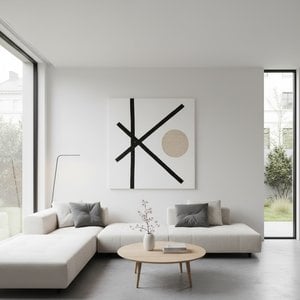
Discover how minimalist art elevates modern interiors. Explore the transformative power of geometric sculptures, tactile textures, and curated simplicity to create a luxurious, tranquil sanctuary in your home through expert design principles.
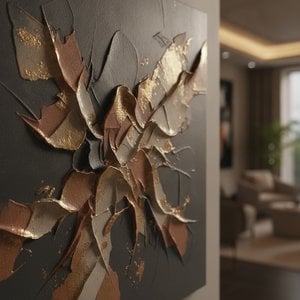
Elevate hospitality interiors with the sculptural depth of plaster and impasto art. Explore how tactile textures and relief techniques create immersive, luxurious environments for modern hotel design through expert curation and bespoke fine art commissions.
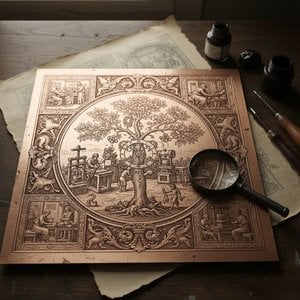
Explore the intricate world of etching and intaglio printmaking. Discover how masters use acid and metal to create profound textures and lines, from Romanticism to modern era, through an expert lens of art history and technical mastery.

Embark on a sophisticated journey through the history of line drawing. From classical mastery to modern minimalism, explore how the power of the line shapes emotion and space in fine art. Discover expert insights for collectors and enthusiasts of graphic elegance.


 미리보기
미리보기
 공유하기
공유하기 공유하기
공유하기
 상세 정보
상세 정보 가이드 보기

 다운로드
다운로드
 유사 작품
유사 작품 X-레이
X-레이 슬라이드 쇼
 통계 정보
통계 정보 더 보기
더 보기






































 유리 옵션은 110cm 미만 크기에서만 선택 가능합니다.


